EN


Machine Vision Lighting for Membrane Inspection: Two Practical Cases
Transparent and semi-transparent membranes are difficult to inspect because they may transmit or scatter illumination instead of producing a strong visible edge. A practical machine vision system must make the membrane-present and membrane-absent states look consistently different without depending on software enhancement alone. In these two tests, the inspection goal was presence detection. Two membrane structures required different lighting geometries: a dome light for a steel-ring membrane and a low-angle ring light for a dome membrane.
Why Lighting Geometry Matters in Membrane Presence Detection
A membrane may be physically present while remaining almost invisible under unsuitable illumination. The lighting must therefore interact with the membrane and fixture in a way that creates a repeatable intensity or color change inside the inspection region.
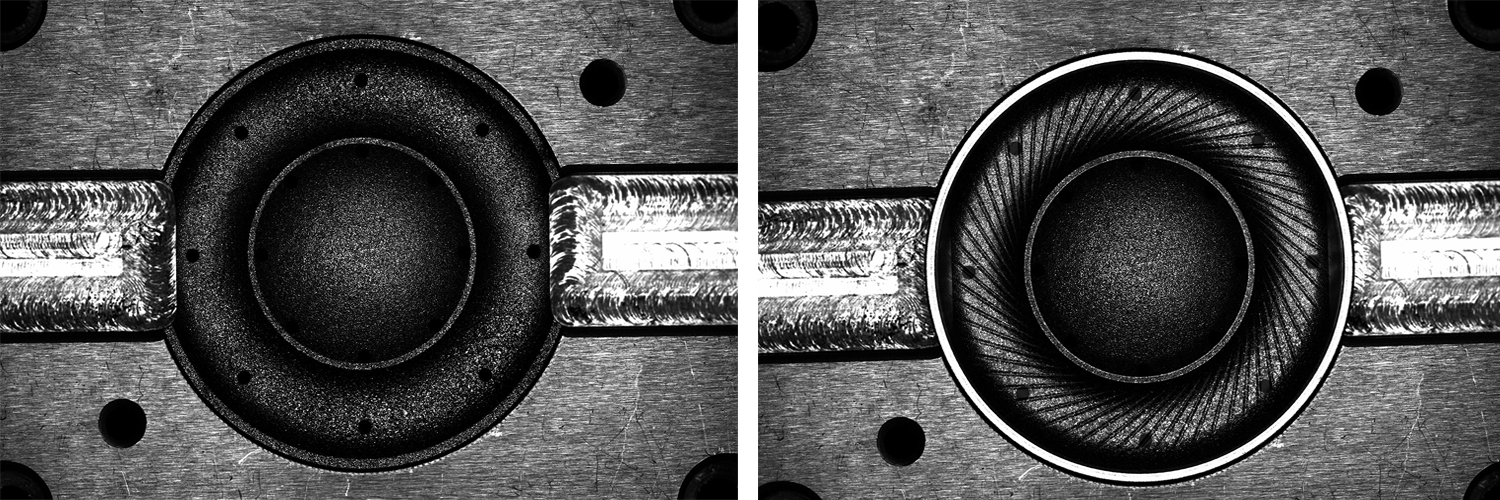
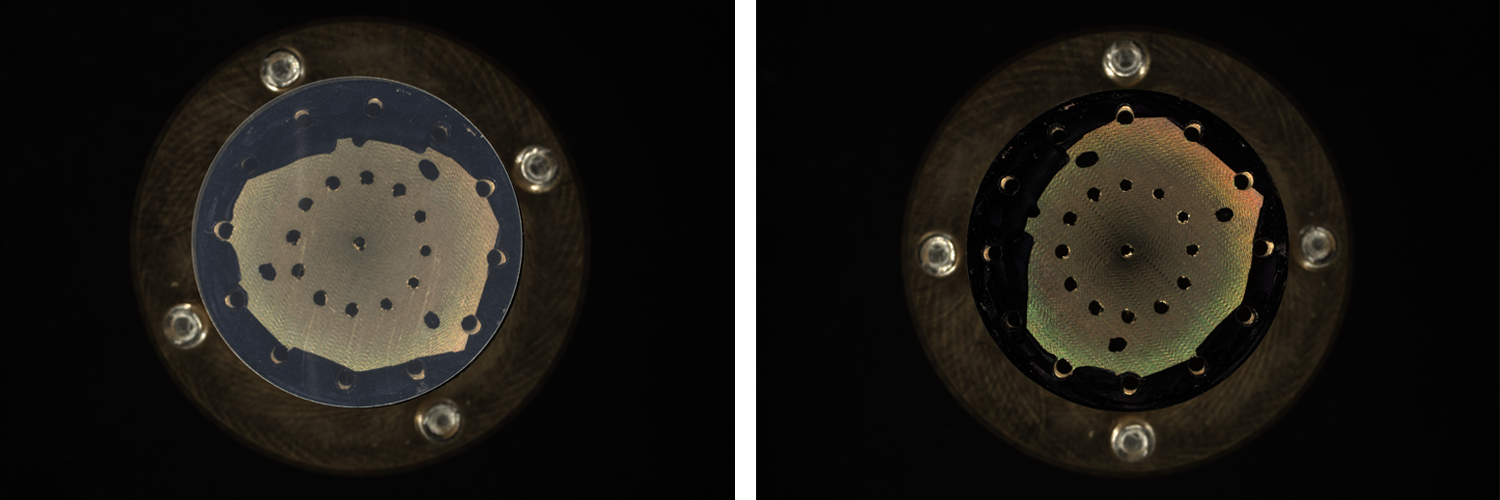
For the steel-ring sample, a monochrome image was sufficient because the membrane changed the ring from dark to bright under frontal diffuse illumination. For the dome-membrane sample, a color camera preserved the visible tonal difference: the fixture ring appeared black without the membrane and milky white when the membrane was installed.
These tests show why the light should be selected from the optical behavior of the part rather than from brightness alone. Surface shape, transparency, field of view, working distance, camera type, and mounting space all influenced the final configuration. The supplied images demonstrate clear visual separation, but no accuracy, cycle-time, or repeatability figures were provided; those values should be confirmed during production validation.
Case 1: Steel-Ring Membrane Inspection with a Dome Light
The first setup used frontal diffuse illumination from a bowl-shaped dome light. Its broad reflective surface distributed light around the steel-ring fixture and produced a high-contrast monochrome image. In the supplied results, the fixture ring remained black when the membrane was absent and became bright white when the membrane was present. This state change gives the vision algorithm a direct region-of-interest signal for presence checking.
The imaging configuration consisted of an MV-CS200-10GM 20 MP monochrome area-scan camera, a 35 mm fixed-focus lens, and a KM-3DM13034-W-24V-S dome light. The lens working distance was 180 mm, the field of view was 67 × 45 mm, and the light installation height was 93 mm.
A dome light was appropriate because the membrane and circular fixture required broad, even frontal illumination. For production deployment, the team should lock exposure and gain, shield the station from changing ambient light, and validate samples from normal, missing-membrane, shifted-membrane, and batch-variation conditions.
Case 2: Dome-Membrane Inspection with a Low-Angle Ring Light
The second sample had a different geometry and required a lower lighting angle. A horizontally directed low-angle ring light illuminated the dome-membrane area while the color camera recorded the resulting RGB contrast. Without the membrane, the circular fixture region appeared black. With the membrane installed, the same region appeared milky white, making the two states visually distinguishable.
This setup used an MV-CU120-10GC 12 MP color area-scan camera, a 16 mm fixed-focus lens with a 1 mm extension ring, and a KM-2RN12085A0-W-24V(1.3)-D ring light. The lens working distance was 80 mm, the field of view was 37 × 28 mm, and the light installation height was 23 mm.
The low-angle arrangement was selected to reveal the membrane response while preserving the circular feature and surrounding holes. Before release to the production line, the inspection should be tested after thermal stabilization and under the expected part-position tolerance. Thresholds should be based on multiple good and defective samples rather than a single reference image.
Engineering Takeaway
These cases demonstrate that similar presence-detection tasks may need different lighting solutions. The steel-ring membrane benefited from diffuse dome illumination and monochrome contrast, while the dome membrane required low-angle ring illumination and color information. The correct choice depended on how each membrane interacted with light, not simply on camera resolution.
For a new membrane inspection project, provide the part drawing, sample images, membrane material, field of view, working distance, line speed, camera model, and acceptance criteria. A controlled sample test can then compare lighting geometries and document the final camera, lens, light, exposure, gain, and mounting conditions. This record makes the result easier to reproduce when the system is installed or duplicated. The production team should also save reference images for both accepted states and recheck the threshold after maintenance, fixture replacement, or illumination adjustment. This prevents an undocumented hardware change from becoming a new source of false results.
Send HIFLY your good and missing-membrane samples for an application-specific lighting test and configuration recommendation.