EN
EN


Can a machine vision camera with built-in FPGA accelerate real-time image processing tasks?
An FPGA machine vision camera represents a significant advancement in how industrial systems handle image data. By embedding a Field-Programmable Gate Array directly inside the camera housing, the FPGA machine vision camera moves critical processing tasks away from the host computer and onto dedicated parallel hardware. This architectural shift is precisely why engineers and system integrators are asking whether the FPGA machine vision camera can truly accelerate real-time image processing tasks — and the answer is a clear yes, under the right conditions.
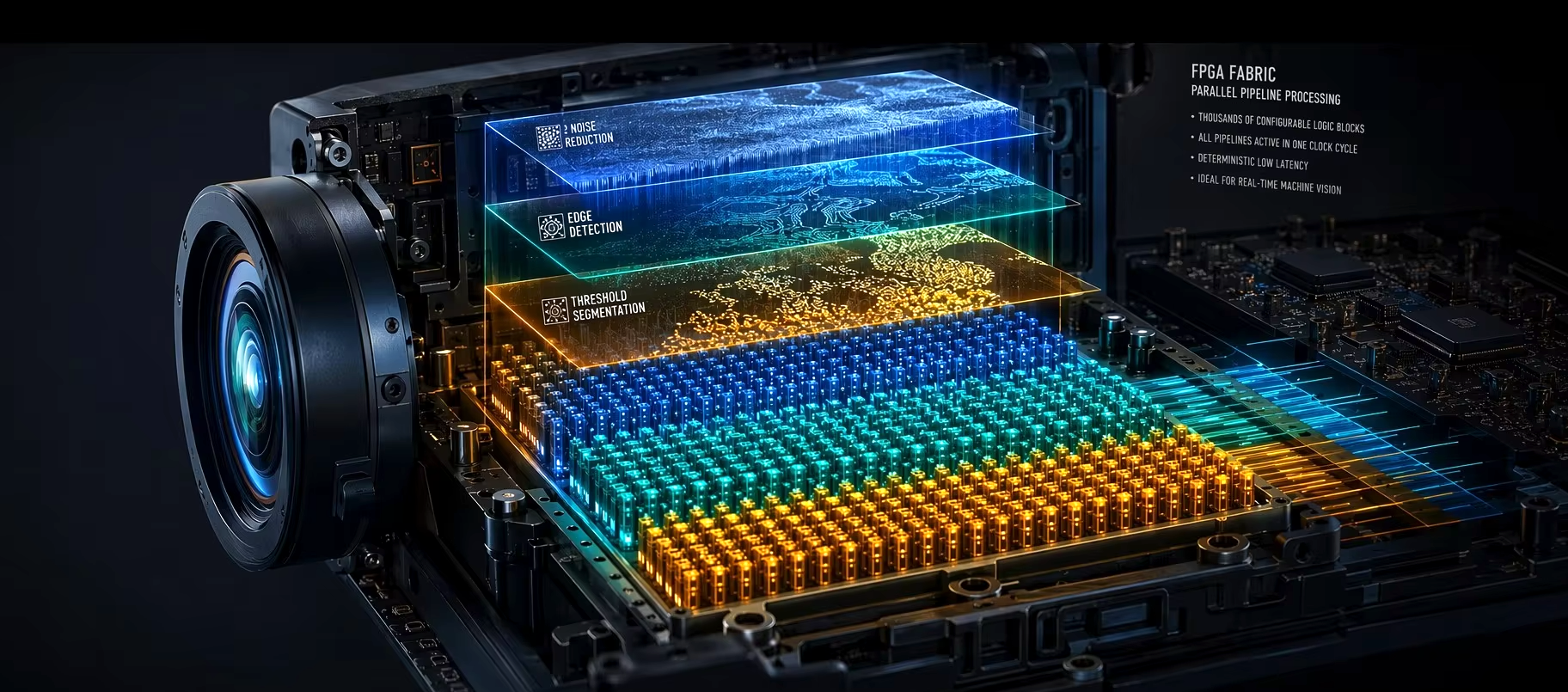
The FPGA machine vision camera is not a simple upgrade in sensor resolution. It is a fundamental redesign of where and how image computation occurs. When a traditional camera captures a frame, it sends raw pixel data to a PC or embedded processor, which then runs software pipelines to filter, detect, or classify objects. The FPGA machine vision camera eliminates much of that latency by executing pre-programmed logic gates in parallel, directly on the captured data stream. For applications that demand microsecond-level response times, the FPGA machine vision camera delivers a decisive performance edge.
The Architecture Behind FPGA Acceleration
How the Built-In FPGA Processes Image Data
Inside every FPGA machine vision camera, the FPGA fabric consists of thousands of configurable logic blocks that operate simultaneously. Unlike a CPU, which processes instructions sequentially, the FPGA machine vision camera executes multiple image processing steps — such as noise reduction, edge detection, and threshold segmentation — all within a single clock cycle pipeline. This parallelism is the core reason the FPGA machine vision camera can handle high frame rates without dropping data or introducing processing delays. The FPGA machine vision camera essentially becomes a smart sensor rather than a passive capture device.
Latency Reduction in High-Speed Inspection
One of the most measurable benefits of the FPGA machine vision camera is deterministic, ultra-low latency. In production lines running at high speed, even a delay of a few milliseconds can cause a defective part to pass undetected or a good part to be incorrectly rejected. The FPGA machine vision camera processes each frame before it even leaves the camera, meaning decisions can be triggered directly from camera outputs rather than waiting for a PC response. This tight control loop is what makes the FPGA machine vision camera especially valuable in automated optical inspection and precision sorting systems.
Key Processing Tasks Accelerated by the FPGA
Pre-Processing and Image Enhancement
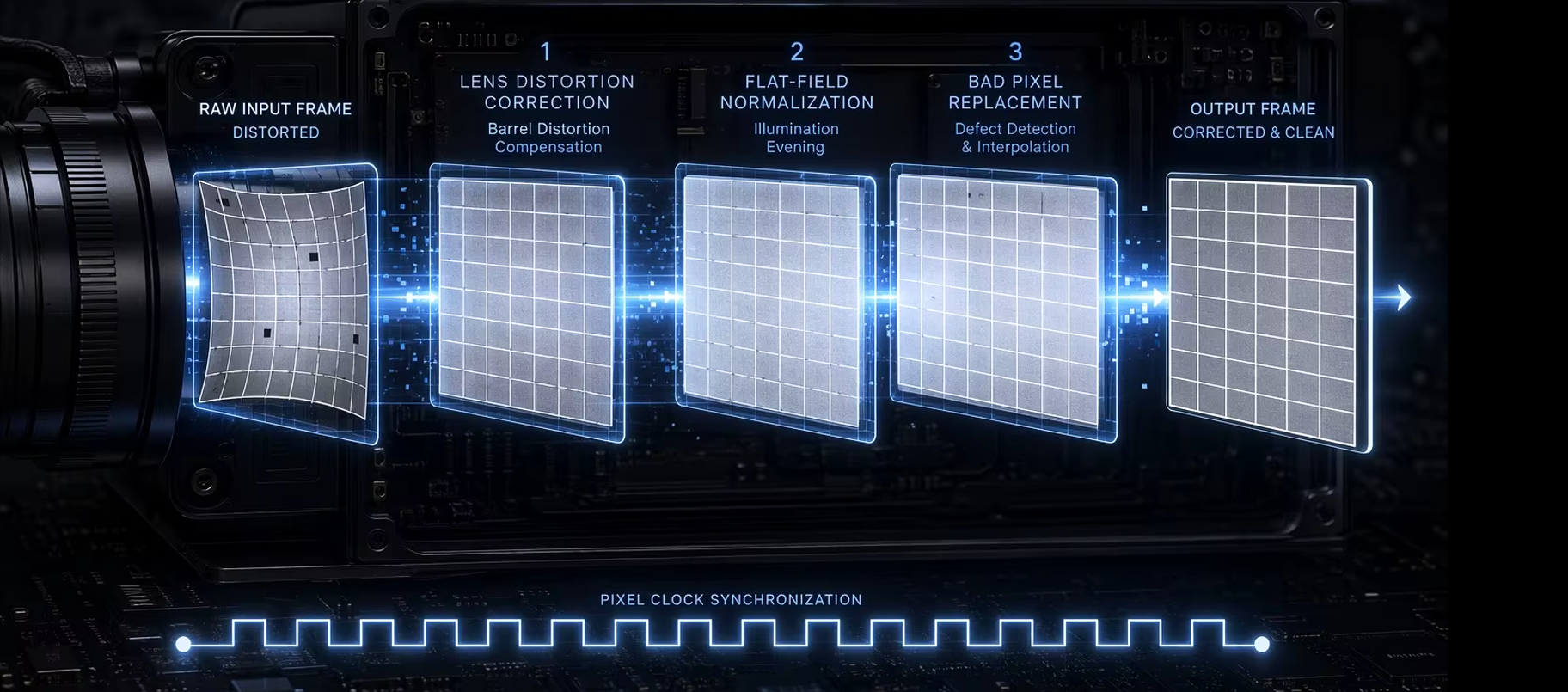
The FPGA machine vision camera handles several computationally intensive pre-processing tasks in real time. Lens distortion correction, flat-field normalization, and bad-pixel replacement are all operations that the FPGA machine vision camera can execute at the pixel clock rate, ensuring that every frame delivered to the host is already corrected and ready for analysis. Without an FPGA machine vision camera, these tasks would consume significant CPU cycles on the host side and introduce variable latency depending on system load. The FPGA machine vision camera offloads this burden entirely, freeing the host processor for higher-level logic such as classification or reporting.
Feature Extraction and Trigger Logic
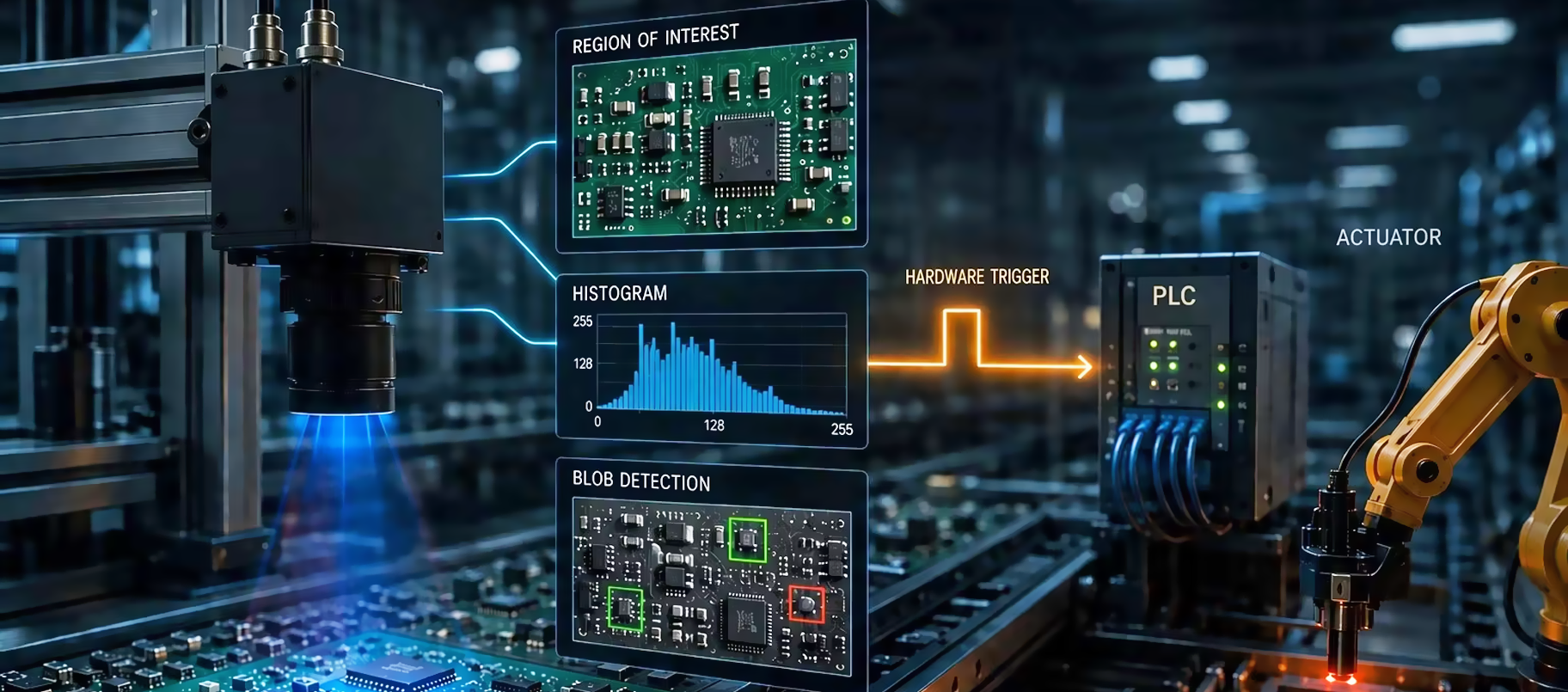
Beyond simple pre-processing, the FPGA machine vision camera can execute region-of-interest cropping, histogram generation, and even basic blob detection before data leaves the sensor. This means that in many applications, the FPGA machine vision camera sends only relevant, pre-filtered data over the interface — dramatically reducing bandwidth requirements. The FPGA machine vision camera can also generate hardware trigger signals based on detected image features, enabling it to synchronize downstream equipment like actuators or PLCs without any software-level delay. This hardware-level feedback loop is a unique capability of the FPGA machine vision camera that purely software-based systems cannot replicate.
Industrial Applications Where FPGA Cameras Deliver Results
Automated Optical Inspection and Quality Control
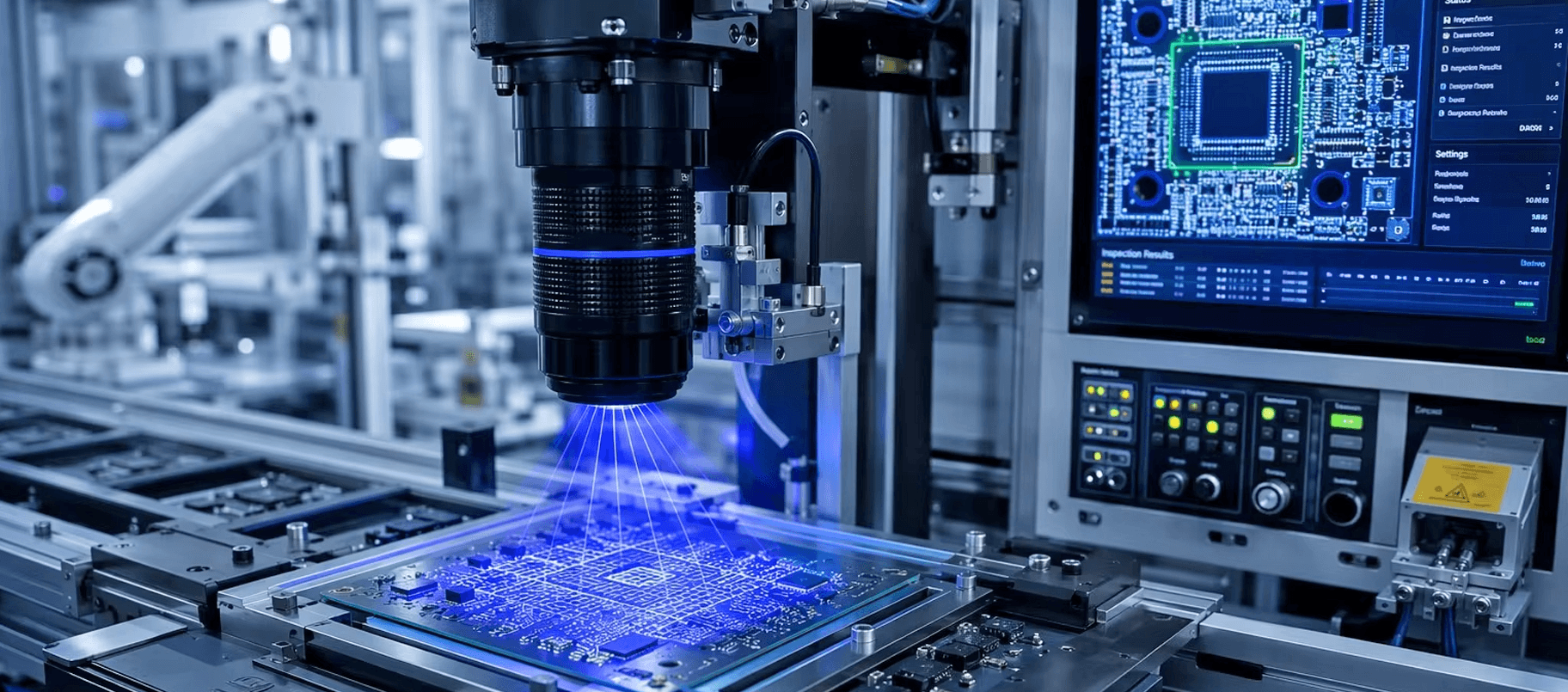
In semiconductor and electronics manufacturing, the FPGA machine vision camera is widely deployed for surface defect detection, solder joint inspection, and dimensional measurement. The FPGA machine vision camera processes frames at full line speed, detecting sub-pixel defects with consistent accuracy regardless of production throughput variations. Because the FPGA machine vision camera makes inspection decisions at the hardware level, it integrates cleanly into existing PLC-based control architectures. Engineers rely on the FPGA machine vision camera to maintain quality standards without introducing software overhead that could slow down the line.
Robotics Guidance and Motion Control
Collaborative robots and high-speed pick-and-place systems depend on the FPGA machine vision camera for real-time pose estimation and object localization. In these environments, the FPGA machine vision camera provides consistent frame-to-frame latency that is critical for servo loop stability. A conventional camera relying on host-based processing introduces jitter into the control loop, which degrades positioning accuracy. The FPGA machine vision camera eliminates this jitter by delivering processed position data with fixed, hardware-guaranteed timing. As robots move to tighter tolerances and faster cycle times, the FPGA machine vision camera becomes an enabling component rather than simply a peripheral.
FAQ
Does an FPGA machine vision camera require specialized programming skills?
Configuring an FPGA machine vision camera typically involves working with FPGA development tools or pre-built IP cores provided by the camera manufacturer. Many modern FPGA machine vision camera models come with standard processing functions pre-loaded, so system integrators can deploy them without writing FPGA code from scratch. For advanced custom algorithms, VHDL or Verilog skills may be needed, but off-the-shelf FPGA machine vision camera firmware covers most standard industrial tasks.
How does the FPGA machine vision camera compare to GPU-based processing?
A GPU is powerful for batch deep learning inference but introduces non-deterministic latency because it operates as a shared resource managed by a software stack. The FPGA machine vision camera, by contrast, offers deterministic hardware timing that is essential for hard real-time control systems. For tasks requiring guaranteed response times at the microsecond level, the FPGA machine vision camera outperforms GPU-based approaches. GPUs remain preferable for complex AI classification tasks, while the FPGA machine vision camera excels at low-latency signal conditioning and hardware synchronization.
What interface standards does an FPGA machine vision camera typically support?
Most industrial FPGA machine vision camera models support GigE Vision, USB3 Vision, or Camera Link HS, all of which include standardized GenICam parameter access. Some FPGA machine vision camera designs also support CoaXPress for ultra-high bandwidth applications. The interface choice affects maximum frame rate and cable distance, but the internal FPGA machine vision camera architecture remains consistent across interface types, always delivering pre-processed image data to the host system.