EN
EN


Why does a machine vision camera with auto-iris control adapt better to changing light?
A machine vision camera deployed in a real industrial environment rarely operates under perfectly stable lighting. Conveyor lines shift between shadow and direct light, outdoor inspection systems face clouds and sunlight changes, and factory floors have uneven illumination zones. When a machine vision camera lacks the ability to respond to these variations, image quality degrades, defect detection accuracy drops, and entire inspection pipelines become unreliable.
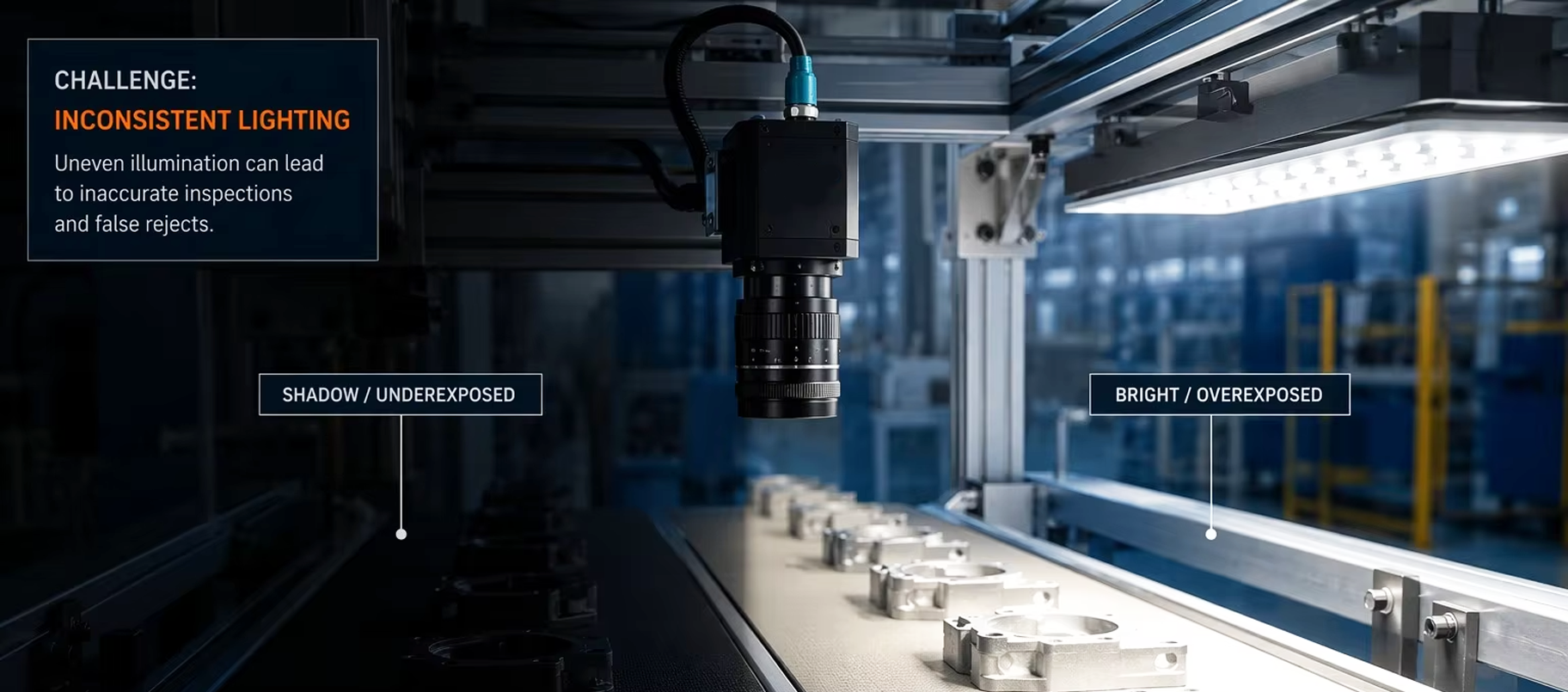
Auto-iris control is a hardware and firmware mechanism built into a machine vision camera that automatically adjusts the lens aperture in response to ambient light intensity. Unlike fixed-aperture systems, a machine vision camera equipped with auto-iris control continuously monitors incoming light and modulates the iris opening to maintain a consistent exposure level. This capability is not a luxury feature — it is a core engineering requirement for any machine vision camera expected to perform reliably in variable-light environments.
How Auto-Iris Control Works Inside a Machine Vision Camera
The Feedback Loop Behind Iris Adjustment
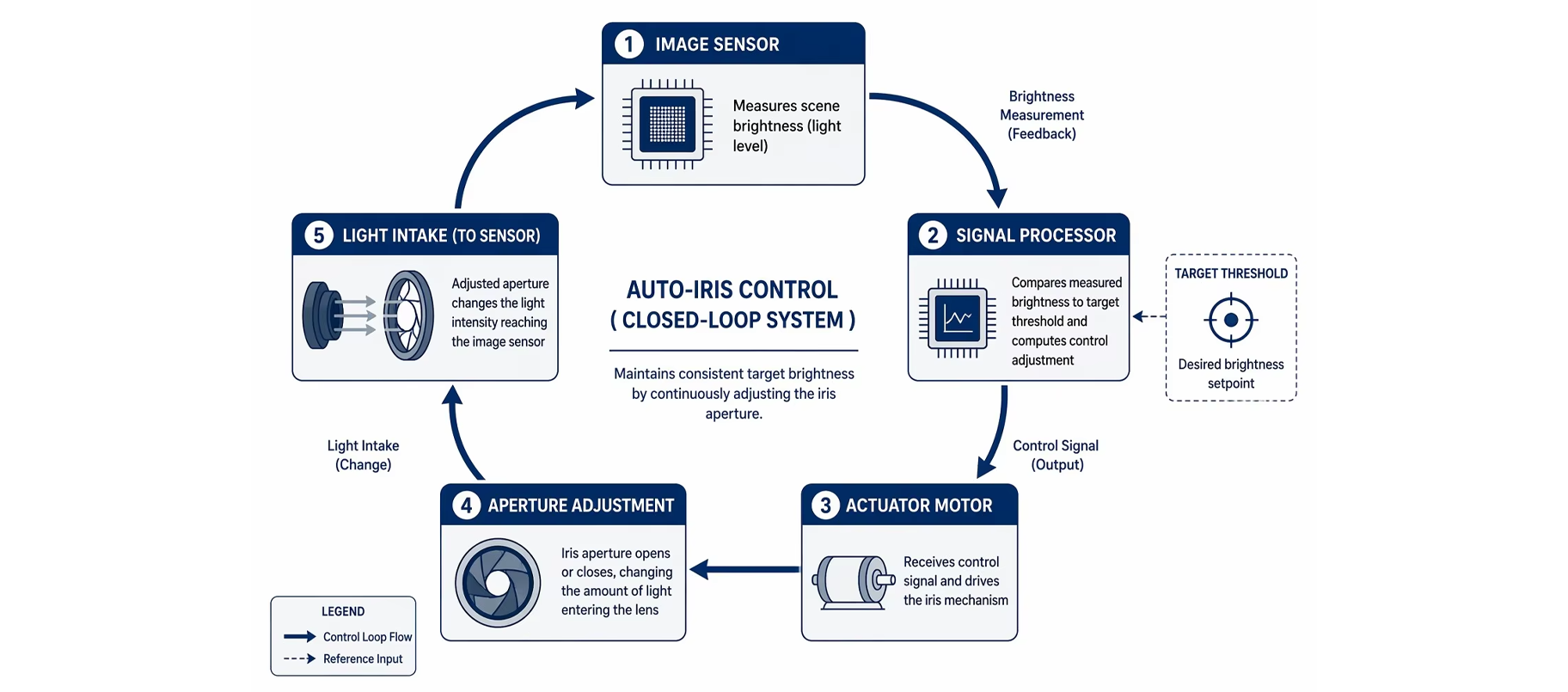
Every machine vision camera with auto-iris control relies on a closed-loop feedback system. The machine vision camera sensor continuously measures the brightness of the captured frame. When detected brightness exceeds the target threshold, the machine vision camera signals the lens actuator to reduce the aperture. When brightness falls below the desired level, the machine vision camera widens the aperture to allow more light in. This continuous adjustment cycle allows the machine vision camera to respond to lighting changes in real time, often within milliseconds.
The precision of this feedback loop is critical. A machine vision camera with a poorly tuned auto-iris mechanism will produce oscillating exposure values, creating flickering images that confuse downstream algorithms. A well-engineered machine vision camera calibrates the feedback loop to converge quickly without overshooting, ensuring each frame is consistently exposed regardless of ambient light fluctuations.
Integration with Sensor Gain and Shutter Speed
Auto-iris control in a machine vision camera does not operate in isolation. It typically works alongside the camera's electronic shutter speed and sensor gain settings. When the machine vision camera detects a sudden bright spike, the auto-iris narrows first. If narrowing alone is insufficient, the machine vision camera can also reduce sensor gain or shorten shutter duration. This layered response makes a machine vision camera with auto-iris far more adaptive than one relying solely on software gain adjustments, which introduce noise artifacts at high amplification levels.
Why Changing Light Specifically Challenges a Machine Vision Camera
The Problem of Overexposure and Underexposure
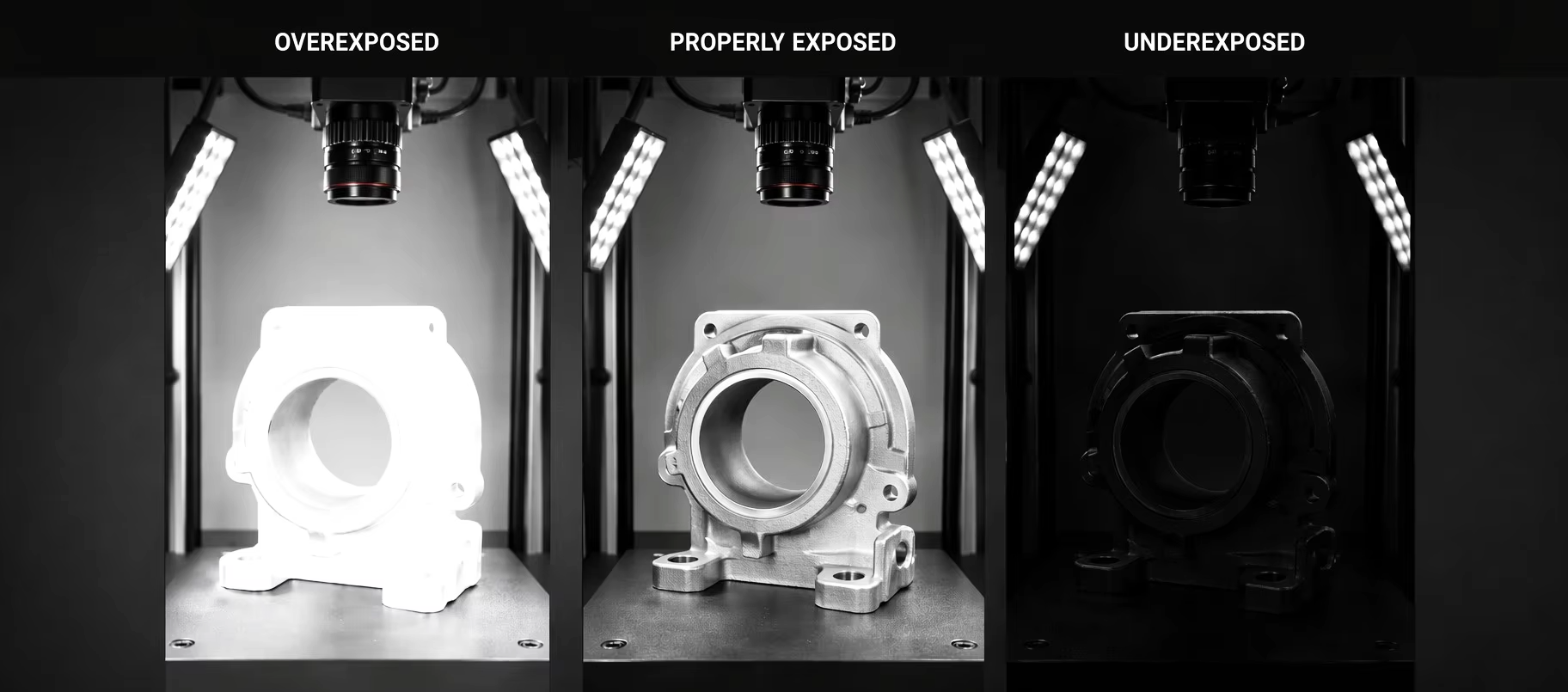
Any machine vision camera without adaptive light control is vulnerable to two failure modes: overexposure and underexposure. An overexposed machine vision camera produces blown-out highlights where critical surface details vanish. An underexposed machine vision camera generates dark, noisy images where low-contrast defects become invisible. Both conditions undermine the core mission of a machine vision camera — to deliver sharp, consistent images that enable accurate automated decisions.
In environments where light can shift by several stops within seconds, a static machine vision camera simply cannot keep pace. Auto-iris control solves this by allowing the machine vision camera to track real-world illumination changes dynamically. Whether the machine vision camera is installed near a window, along a rooftop inspection line, or inside a facility with variable artificial lighting, auto-iris ensures the machine vision camera always captures within a usable exposure range.
Motion Blur and Depth-of-Field Tradeoffs
One underappreciated advantage of auto-iris in a machine vision camera is its impact on depth of field. As a machine vision camera narrows its aperture to compensate for bright conditions, the depth of field naturally increases. This means the machine vision camera captures sharper focus across a broader range of object distances — a direct benefit for inspection tasks involving parts at varying heights. Conversely, when a machine vision camera opens its aperture in dim conditions, depth of field decreases, but sufficient light is maintained for a clean exposure. This tradeoff is automatically managed by the machine vision camera without requiring manual operator intervention.
Practical Applications Where a Machine Vision Camera Needs Auto-Iris Control
Outdoor and Semi-Outdoor Inspection Systems
A machine vision camera used in outdoor inspection faces constant light variation from weather, time of day, and seasonal sun angles. Without auto-iris, the machine vision camera would require frequent manual recalibration, creating costly downtime. With auto-iris, the machine vision camera self-adjusts to morning haze, afternoon glare, and overcast diffusion without operator input. Solar panel inspection, vehicle surface scanning, and agricultural sorting lines all benefit significantly from a machine vision camera with this capability.
Mixed-Light Manufacturing Environments
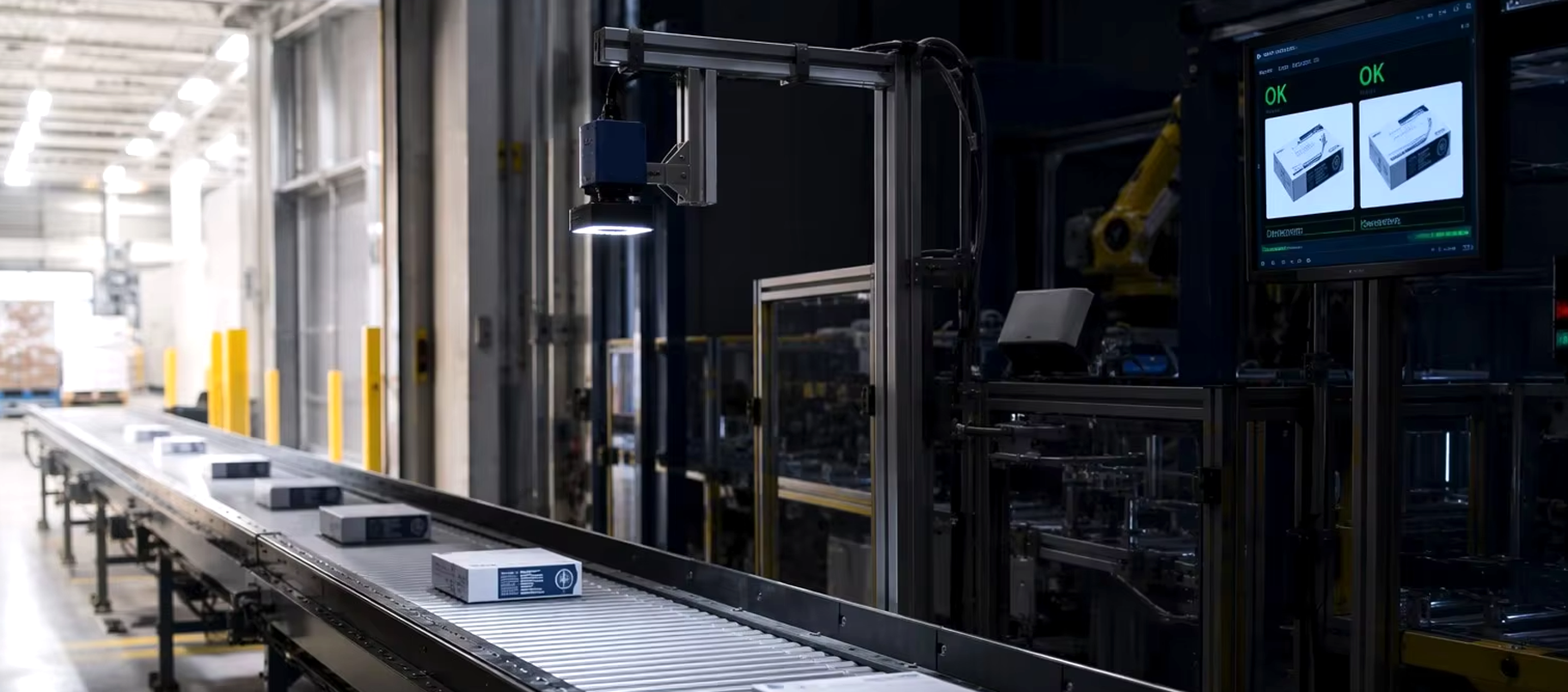
Inside factories, a machine vision camera may scan products moving between a brightly lit loading zone and a dimly lit assembly station. Each transition represents a challenge for a fixed-aperture machine vision camera. An auto-iris-equipped machine vision camera handles this seamlessly, maintaining consistent image quality across the entire line. Electronics inspection, pharmaceutical packaging verification, and automotive parts assembly are production environments where a machine vision camera with auto-iris control delivers measurable improvements in defect detection consistency.
FAQ
Can a machine vision camera use software exposure control instead of auto-iris?
Software-based exposure control in a machine vision camera adjusts gain and shutter speed electronically without changing the physical aperture. While this is faster to implement, it introduces sensor noise at high gain levels. A machine vision camera with auto-iris control avoids excessive gain by physically managing light intake, producing cleaner images in wide dynamic range conditions.
Does auto-iris affect the speed of a machine vision camera in high-throughput lines?
Modern auto-iris mechanisms in a machine vision camera are engineered to converge within milliseconds, making them suitable for high-speed production lines. The machine vision camera adjusts aperture without interrupting frame capture, ensuring throughput is maintained. However, selecting a machine vision camera with a fast-response iris actuator is important for applications with extremely rapid light transitions.
Is auto-iris control necessary for every machine vision camera application?
Not every machine vision camera application requires auto-iris control. In controlled lab environments with stable, consistent artificial lighting, a machine vision camera with a fixed aperture and well-tuned static exposure settings may perform adequately. Auto-iris becomes essential when the machine vision camera must operate across a wide range of illumination conditions without constant manual reconfiguration.