EN
EN


Porozumění různým rolím v systémech řízení vidění
Systémy strojového vidění závisí na několika komponentách, které společně zachycují obrazy, řídí osvětlení, zpracovávají informace a spouštějí kontrolní akce. Mezi tyto komponenty patří světlo pro strojové vidění řídicí jednotka a programovatelný logický řadič (PLC), jejichž funkce se někdy mohou zdát překrývající se. Oba mohou odesílat řídicí signály, spravovat časování a komunikovat s jinými zařízeními, avšak jsou navrženy pro odlišné účely.
Pro výrobce zakázkových zařízení pro automatizovanou kontrolu je pochopení rozdílu mezi kontrolor světla pro strojové vidění a PLC velmi užitečné při návrhu systémů. Mělo by být osvětlení řízeno přímo prostřednictvím PLC? Je nutná samostatná řídicí jednotka pro světla strojového vidění? Jaké jsou výhody a omezení každého přístupu?
Řídicí jednotka pro osvětlení strojového vidění je speciálně navržena pro řízení osvětlení strojového vidění. V závislosti na modelu umožňuje úpravu jasu, řízení spouštění, výstup na více kanálů a komunikační funkce. PLC je naopak širší průmyslovou řídicí jednotkou určenou k koordinaci strojů, senzorů, akčních členů, výrobních sekvencí a dalšího zařízení.
Správná volba závisí na konkrétním systému inspekce. V některých aplikacích může být pro základní řízení osvětlení postačující PLC. V jiných případech poskytuje specializovaná řídicí jednotka pro osvětlení strojového vidění přesnější a pohodlnější řízení osvětlení.
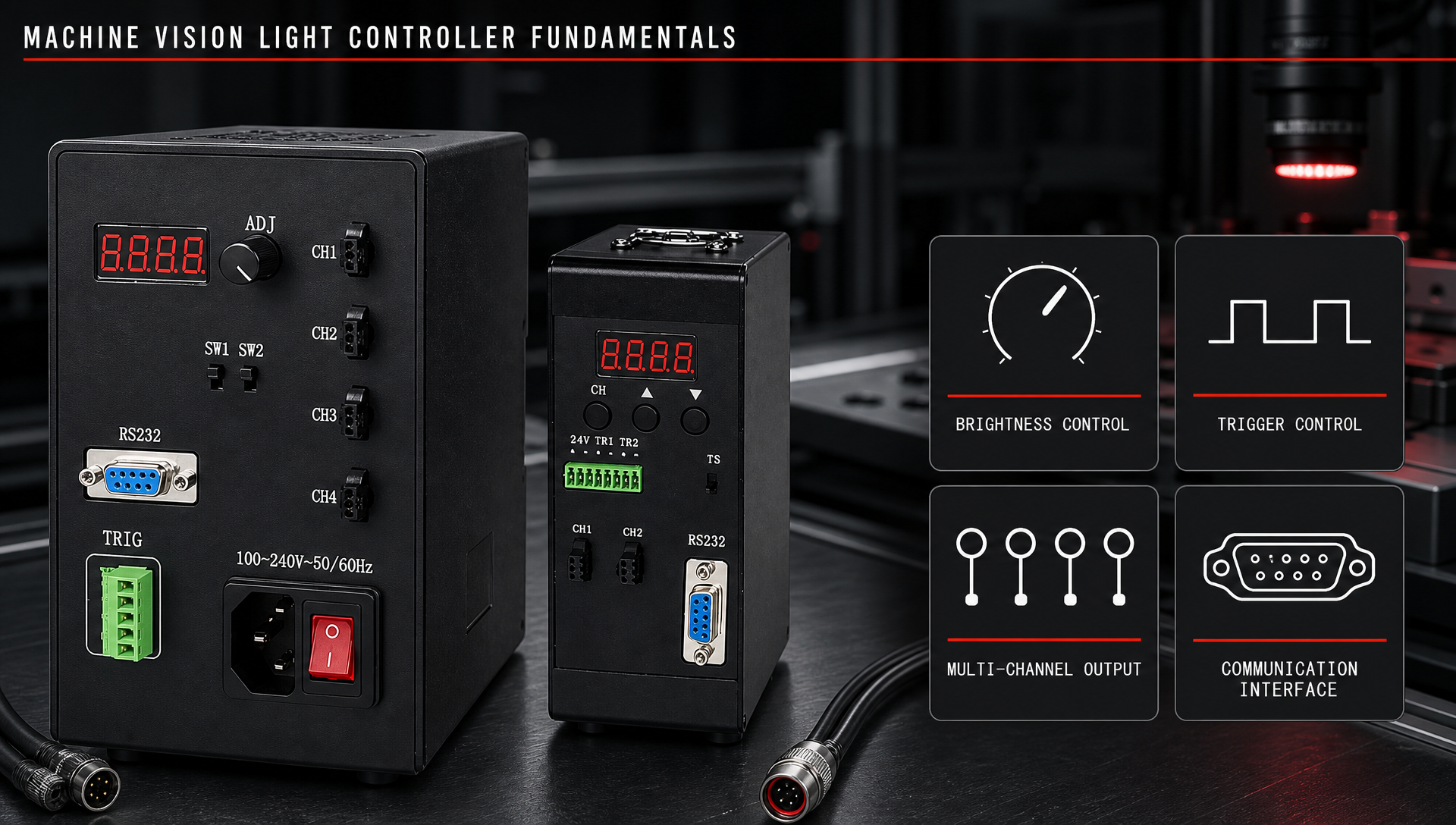
Základy řídicí jednotky pro osvětlení strojového vidění
Specializované řízení osvětlení
Čím se liší řídicí jednotka pro osvětlení strojového vidění od univerzálního PLC? Hlavní rozdíl spočívá ve specializaci.
Řídicí jednotka pro osvětlení strojového vidění je navržena s ohledem na požadavky průmyslového osvětlení.
Může regulovat výstup světel pro strojové vidění podle požadavků aplikace zpracování obrazu.
Umožňuje úpravu jasnosti, díky čemuž mohou inženýři přesně doladit osvětlení během nastavování systému a optimalizace inspekce.
Funkce spouštění umožňují synchronizaci světla s kamerami, senzory nebo inspekčními událostmi.
Modely s více kanály mohou také nezávisle řídit několik zdrojů osvětlení.
Pro výrobce zařízení (OEM) tato specializace může snížit množství dodatečného programování potřebného pro řízení osvětlení.
Specializovaný řadič světel pro strojové vidění je proto zvláště užitečný, pokud má osvětlení přímý vliv na kvalitu obrazu a opakovatelnost inspekce.
Běžné konfigurace řadičů pro strojové vidění
Ne každá aplikace strojového vidění vyžaduje stejnou architekturu řadiče. Některé stroje používají jediné světlo, zatímco jiné kombinují několik zdrojů osvětlení pro různé inspekční úhly nebo vlastnosti výrobku.
Inženýři OEM mohou potřebovat řídit kruhová světla, tyčová světla, zářivky, koaxiální světla nebo jiné konfigurace osvětlení pro strojové vidění. Řadič osvětlení pro strojové vidění s více kanály umožňuje jednodušší nezávislé nastavení osvětlení.
Různé výstupní kapacity mohou být také důležité. Kompaktní kontrolní stanice může vyžadovat pouze řadič s nízkým výkonem, zatímco náročnější aplikace může vyžadovat řešení s vysokým výkonem.
HIFLY nabízí různé kategorie řadičů pro průmyslové aplikace strojového vidění, čímž umožňuje inženýrům OEM porovnávat počet kanálů, výstupní kapacitu a požadavky na řízení v rámci jednoho sortimentu produktů.
Trh sortiment řadičů pro strojové vidění lze prozkoumat při rozhodování, která architektura řadiče nejlépe odpovídá konkrétnímu kontrolnímu systému.
Základy PLC v aplikacích strojového vidění

Obecné řízení automatizace
PLC má mnohem širší roli než řadič osvětlení pro strojové vidění. Obvykle je zodpovědný za koordinaci celého stroje, nikoli za zaměření se výhradně na osvětlení.
PLC může přijímat signály ze senzorů a řídit motory, válce, dopravníky, ventily a další komponenty automatizace.
Může spouštět naprogramované sekvence, které určují, kdy se výrobky pohybují, zastavují, procházejí kontrolou, jsou odmítnuty nebo pokračují výrobou.
V aplikaci strojového vidění může PLC také komunikovat se systémem kamer a osvětlovacím zařízením.
To činí PLC velmi cenným, je-li vizuální kontrola pouze jednou součástí rozsáhlejší automatické výrobní linky.
Široká funkcionalita PLC však také znamená, že řízení osvětlení nemusí být jeho hlavní silnou stránkou.
Pokud vyžaduje osvětlení častou úpravu jasnosti, přesné spouštění nebo specializované řízení osvětlení, může dodatečný řadič osvětlení pro strojové vidění zjednodušit systém.
Řízení osvětlení na bázi PLC
Může PLC řídit osvětlení pro strojové vidění? Ano. PLC může poslat výstupní signál ke spínání zdroje světla nebo k řízení osvětlovacího zařízení, pokud jsou k dispozici požadované rozhraní.
Pro jednoduché aplikace to může být dostačující. Například stroj od výrobce (OEM) může potřebovat pouze zapnout světlo před pořízením obrazu a po dokončení zhasnout.
Základní spínání se však liší od podrobného řízení osvětlení. Pokud aplikace vyžaduje více úrovní jasu, nezávislé kanály, rychlé spouštění nebo specializované parametry osvětlení, může PLC vyžadovat dodatečné moduly nebo programování.
Tým výrobce (OEM) musí pak zvážit čas potřebný pro inženýrskou práci, složitost zapojení, požadavky na komunikaci a dostupný hardware PLC.
Řadič osvětlení pro strojové vidění může tyto specifické požadavky na osvětlení řešit přímočařeji, zatímco PLC může zůstat zodpovědné za širší řídicí sekvenci stroje.
Výhody řadiče osvětlení pro strojové vidění
Přesnější správa osvětlení
Nejsilnější výhodou řídicího zařízení pro strojové vidění je jeho specializované zaměření. Namísto použití obecného průmyslového řídicího systému ke správě všech aspektů osvětlení mohou inženýři OEM využít komponentu speciálně navrženou pro řízení osvětlení.
Tím lze usnadnit nastavení parametrů osvětlení během uvedení stroje do provozu.
Jas lze upravit podle expozice kamery a inspekčního objektu.
V případě, že aplikace vyžaduje více podmínek osvětlení, lze různé kanály nakonfigurovat pro různé zdroje světla.
Ovládání spouštění lze také synchronizovat s inspekčním cyklem.
Tato specializovaná funkčnost může pomoci snížit nadbytečnou programovací práci.
U OEM vyrábějících standardizované inspekční stroje může specializované řídicí zařízení pro strojové vidění usnadnit reprodukovatelnost nastavení osvětlení mezi jednotlivými kusy.
Zjednodušená integrace pro osvětlení strojového vidění
Proč přidávat další řídicí jednotku místo použití pouze PLC? V mnoha případech je odpověď jednodušší integrace.
Řídicí jednotka pro osvětlení strojového vidění může fungovat jako prostřední řídicí vrstva mezi osvětlením strojového vidění a hlavním automatizačním systémem.
PLC může vydát spouštěcí nebo řídicí příkaz, zatímco specializovaná řídicí jednotka zpracuje výstup pro osvětlení.
Toto rozdělení odpovědností může celkový systém učinit snadněji pochopitelným a údržbářsky příznivějším.
Umožňuje také inženýrům upravovat parametry osvětlení bez změny základního programu PLC.
U výrobků OEM s různými konfiguracemi osvětlení může toto oddělení poskytnout dodatečnou flexibilitu během přizpůsobování.
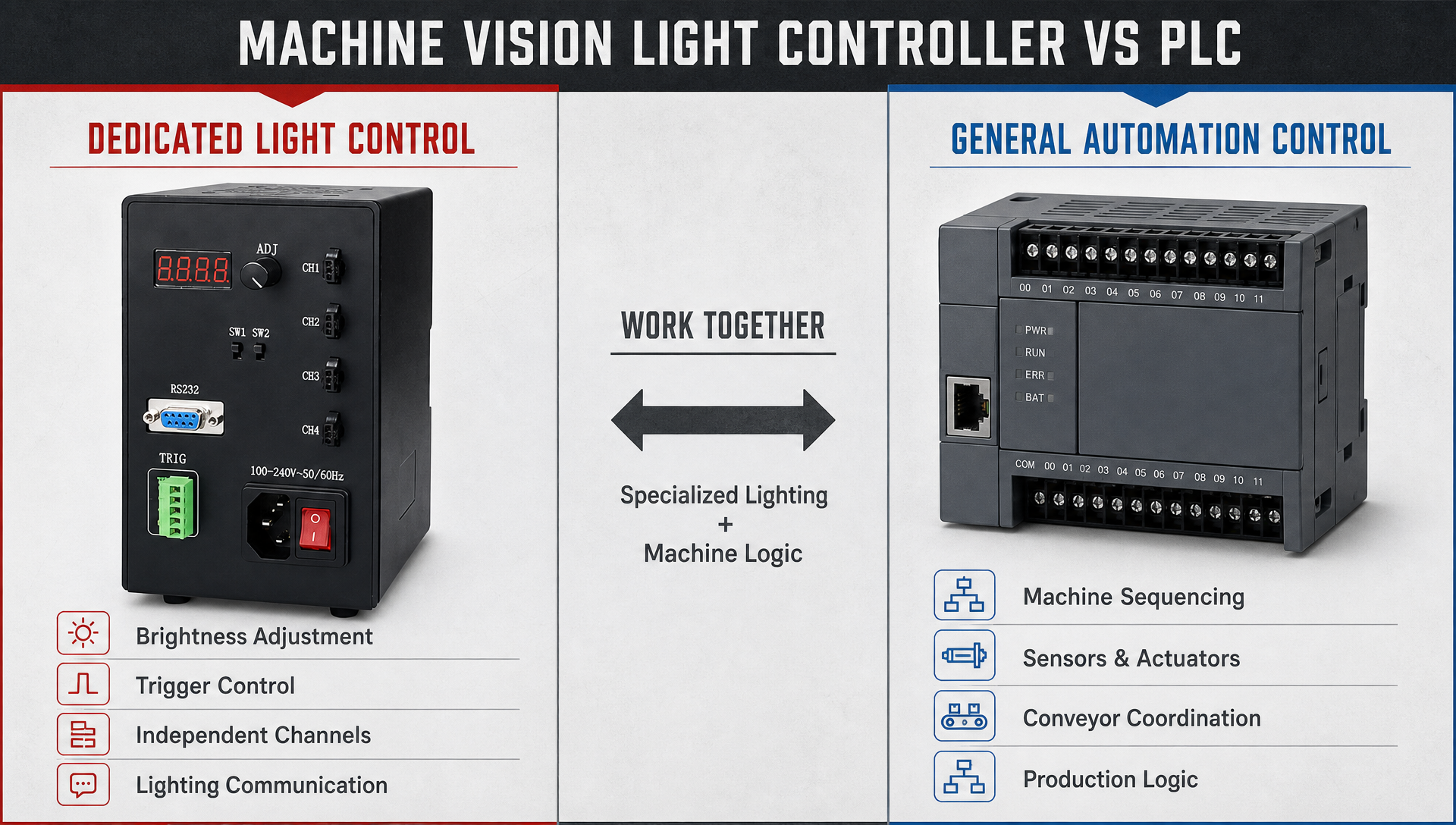
Lepší podpora vícekanálového osvětlení
Systémy inspekce s více zdroji světla se mohou stát komplikovanými, pokud každý zdroj světla vyžaduje nezávislé řízení. Řídicí jednotka pro osvětlení strojového vidění s více kanály může tuto architekturu zjednodušit.
Namísto vytváření samostatných řídicích zařízení pro každé světlo lze několik světel řídit prostřednictvím jednoho specializovaného řadiče.
Inženýři mohou upravit každý kanál podle požadavků na kontrolu.
Toto je užitečné, pokud potřebuje kamera pro různé fáze kontroly odlišné podmínky osvětlení.
Může také snížit počet samostatných řídicích zařízení instalovaných uvnitř strojní skříně.
Pro výrobce strojů (OEM) může menší počet nezávislých komponent usnadnit správu zapojení a dokumentace systému.
Příslušný řadič pro průmyslové vidění tedy může poskytnout praktické řešení pro stroje využívající několik zdrojů světla.
Nevýhody řadiče pro průmyslové vidění
Další vybavení
Specializovaný řadič pro průmyslové vidění není vždy nutný. Hlavní nevýhodou je, že do systému přidává další hardwarovou součást.
Inženýři OEM musí ve skříni vyhradit prostor pro tento řadič.
Mezi PLC, řadičem, osvětlovacím systémem a napájecím zdrojem může být také nutné přidat další kabely.
Řídicí jednotka může vyžadovat vlastní upevnění a úvahy týkající se údržby.
U velmi jednoduché inspekční aplikace tyto dodatečné požadavky nemusí přinést dostatečnou hodnotu, aby bylo ospravedlnitelné použít vyhrazenou řídicí jednotku.
Pokud stroj vyžaduje pouze základní ovládání osvětlení zapnutí/vypnutí, může být výstup PLC dostačující.
Rozhodnutí by proto mělo být založeno na skutečných požadavcích na osvětlení, nikoli na předpokladu, že vyhrazená řídicí jednotka pro strojové vidění je vždy lepší volbou.
Další úvahy o nákladech
Řídicí jednotka pro strojové vidění navíc zvyšuje náklady na materiálový list zařízení. U projektů OEM citlivých na náklady je nutné tyto náklady posoudit ve vztahu k výhodám, které tato jednotka přináší.
Pokud PLC již disponuje vhodnými výstupy a osvětlovací systém vyžaduje pouze jednoduché spínání, přidání vyhrazené řídicí jednotky může zvýšit náklady bez výrazného zlepšení výkonu.
Náklady však nesmí být posuzovány pouze na základě pořizovací ceny.
Inženýrské hodiny, čas pro uvedení do provozu, zapojení, odstraňování závad a údržba mohou také ovlivnit celkové náklady na systém.
Řadič osvětlení pro strojové vidění může tyto nepřímé náklady snížit, je-li řízení osvětlení složité.
Výrobci originálního vybavení (OEM) by proto měli porovnávat celkové požadavky na integraci, nikoli pouze cenu řadiče versus výstup PLC.
Výhody řízení osvětlení pomocí PLC
Centrální správa stroje
Jednou z hlavních výhod použití PLC pro řízení osvětlení je centrální automatizovaná správa. PLC může koordinovat osvětlení s dopravníky, senzory, akčními členy, kamerami a inspekčními sekvencemi.
To může být výhodné, pokud již stroj disponuje sofistikovanou architekturou PLC.
Spouštění osvětlení lze začlenit přímo do stávající sekvence stroje.
Inženýři mohou také vyhnout přidání dalšího komunikačního rozhraní, pokud PLC dokáže přímo řídit požadované osvětlovací zařízení.
U strojů s relativně jednoduchými požadavky na osvětlení se tento přístup může ukázat jako účinný.
Může také usnadnit správu architektury řízení, je-li PLC již centrálním řídicím zařízením celého stroje.
Méně samostatných součástí
Použití PLC pro základní řízení osvětlení může snížit počet samostatných hardwarových komponent.
V řídicí skříni může být také méně zařízení.
Při systému osvětlení, který vyžaduje pouze jednoduché spínací signály, lze potenciálně zjednodušit zapojení.
Údržbové týmy mohou při odstraňování poruch v jednoduchých systémech dávat také přednost centralizované architektuře.
Tento přístup se může ukázat jako zvláště praktický u kontrolních strojů s nízkou složitostí.
Menší počet komponent však neznamená automaticky lepší výkon osvětlení.
Pokud aplikace strojového vidění vyžaduje pokročilé řízení jasu nebo více nezávislých kanálů osvětlení, může specializovaný řídicí systém pro strojové vidění stále poskytnout vhodnější řešení.
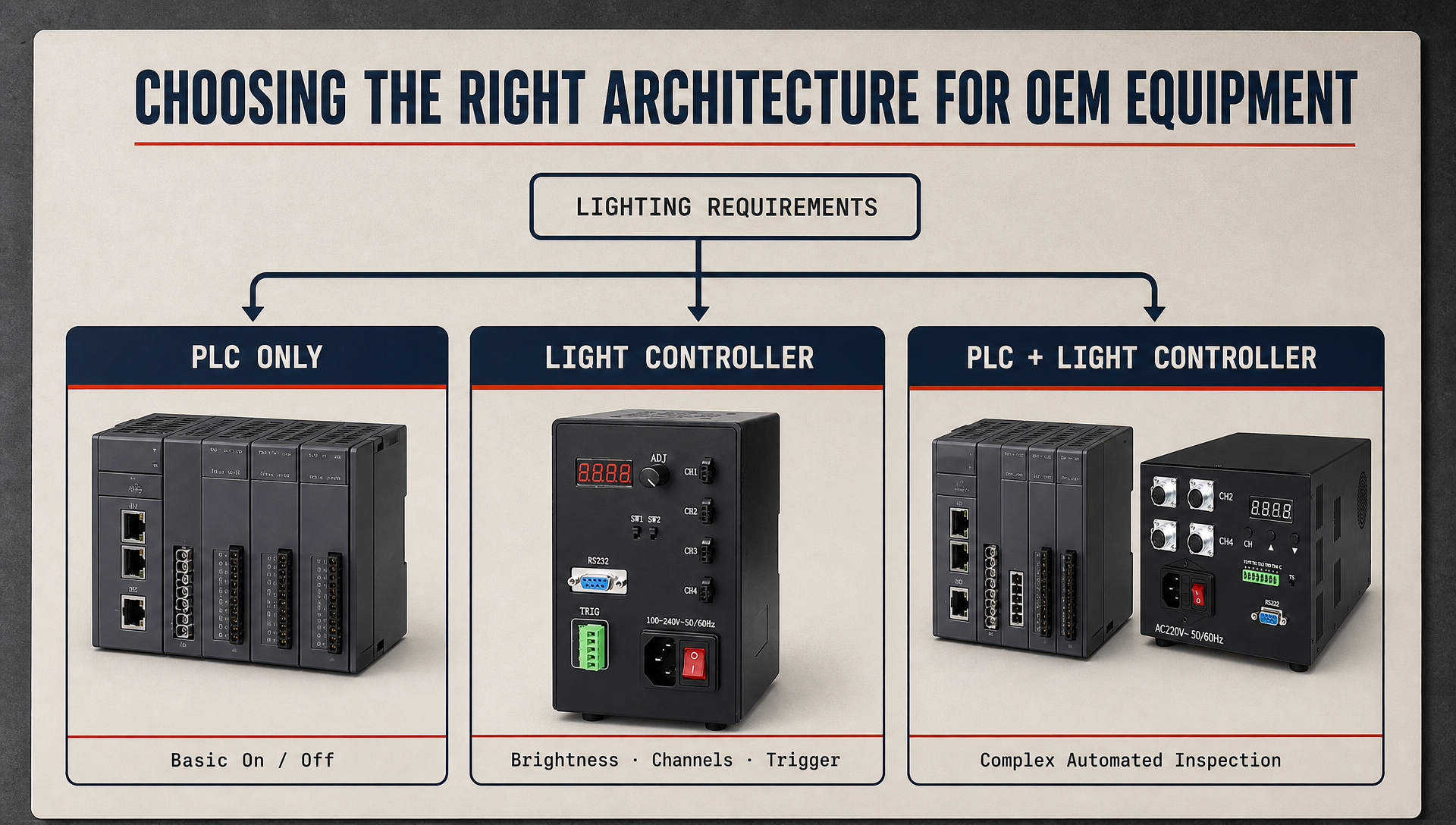
Nevýhody řízení osvětlení pomocí PLC
Omezené funkce specifické pro osvětlení
PLC je vysoce flexibilní, avšak tato flexibilita neznamená, že je optimalizován pro každý úkol související s osvětlením.
Pokročilé řízení osvětlení může vyžadovat další analogové moduly, komunikační moduly nebo specializovaný hardware.
Nastavení jasu může také vyžadovat více programování ve srovnání s použitím specializovaného řadiče.
Pokud je třeba řídit několik světel nezávisle, může se program PLC stát složitějším.
Požadavky na časování mohou také vyžadovat pečlivou koordinaci mezi logikou PLC, expozicí kamery a výstupem osvětlení.
V míře, v jaké se inspekční systém stává sofistikovanějším, mohou tyto dodatečné inženýrské požadavky snížit jednoduchost architektury založené výhradně na PLC.
V takových případech může řadič osvětlení pro strojové vidění převzít odpovědnost za funkce specifické pro osvětlení, zatímco PLC se zaměří na celkovou koordinaci stroje.
Více programování a práce při uvedení do provozu
Kolik inženýrského času bude řízení osvětlení vyžadovat? Toto je důležitá otázka pro výrobce originálních zařízení (OEM).
Řešení založené na PLC může vyžadovat, aby inženýři vytvořili dodatečnou logiku pro jas, časování, výběr kanálu a světelné sekvence.
Každá změna konfigurace osvětlení může vyžadovat odpovídající úpravy v programu PLC.
Toto může být nepohodlné, pokud jsou stroje OEM přizpůsobeny různým výrobkům nebo procesům inspekce.
Řadič osvětlení pro strojové vidění může oddělit parametry osvětlení od hlavní strojové sekvence.
Toto oddělení může zjednodušit uvedení do provozu a úpravu parametrů, zejména v případech, kdy je nutné často optimalizovat podmínky osvětlení.
Porovnání řadiče osvětlení pro strojové vidění a PLC
Funkce a použití
Nejdůležitější rozdíl spočívá v zamýšleném použití. Řadič osvětlení pro strojové vidění je primárně určen pro osvětlení v aplikacích strojového vidění.
PLC je určen k koordinaci širších úloh průmyslové automatizace.
Řadič osvětlení pro strojové vidění se zaměřuje na výstup osvětlení, jas, spouštění a správu kanálů.
PLC se zaměřuje na strojovou logiku, sekvencování, senzory, akční členy a výrobní procesy.
Žádná z těchto součástí by neměla být automaticky považována za náhradu druhé.
V mnoha systémech OEM je nejvhodnější architekturou umožnit PLC a řadiči osvětlení pro strojové vidění plnit doplňkové funkce.
Náklady a složitost systému
Náklady závisí výrazně na složitosti aplikace. Řešení osvětlení pouze s PLC může být ekonomické, pokud jsou požadavky na osvětlení jednoduché.
Specializovaný řadič osvětlení pro strojové vidění může nabývat stále větší hodnoty s rostoucím počtem světel, parametrů jasu a požadavků na spouštění.
Řadič osvětlení pro strojové vidění přináší dodatečné náklady na hardware, ale může snížit úsilí spojené s programováním a uvedením do provozu.
Řešení s PLC může snížit počet hardwarových komponent, avšak pro pokročilé řízení osvětlení může vyžadovat dodatečné moduly nebo inženýrskou práci.
Výrobci originálních zařízení (OEM) proto měli by vyhodnotit jak počáteční náklady na hardware, tak celkové náklady na integraci.
Nejlepší volbou je konfigurace, která poskytuje požadovaný výkon bez zbytečné složitosti.
Výběr správné architektury pro vybavení OEM
Kdy je upřednostňován řídicí systém pro osvětlení strojového vidění
Specializovaný řídicí systém pro osvětlení strojového vidění je obecně vhodné zvážit tehdy, má-li osvětlení významný vliv na kvalitu kontrolních procesů.
Může být zvláště užitečný, pokud systém vyžaduje nastavitelnou jasnost nebo více nezávislých kanálů osvětlení.
Spouštěné osvětlení je dalším důvodem, proč zvážit specializovaný řídicí systém.
Výkonné světelné zdroje pro strojové vidění mohou rovněž vyžadovat řídicí systém navržený tak, aby zvládl jejich výstupní požadavky.
U výrobních strojů OEM s opakující se výrobou a standardizovanými konfiguracemi strojového vidění umožňuje specializované řízení osvětlení dosáhnout konzistentnějšího nastavení a údržby.
Sortiment společnosti HIFLY zahrnuje řadiče navržené pro různé požadavky na počet kanálů a výkon, čímž pomáhají inženýrům OEM vybrat konfiguraci podle skutečného systému inspekce.
Kdy stačí PLC
PLC může stačit v případě, že systém osvětlení vyžaduje pouze základní ovládání zapnutí/vypnutí.
To se může vztahovat na jednoduché stanice inspekce, kde úroveň osvětlení zůstává stálá.
Může to také fungovat, pokud má stávající PLC vhodné výstupy a osvětlovací zařízení lze ovládat přímo.
U aplikací s pouze jedním světlem a jednoduchou inspekční sekvencí nemusí být přidání specializovaného řadiče nutné.
Inženýři OEM by měli vyhýbat se přidávání hardwaru jen proto, že je k dispozici.
Cílem by mělo být vytvoření efektivní architektury, která splňuje požadavky inspekce a zároveň udržuje složitost systému pod kontrolou.
Kdy oba komponenty pracují společně
Musí si OEM vybrat mezi řadičem pro strojové vidění a PLC? Ne nutně.
V mnoha průmyslových kontrolních systémech použití obou komponent umožňuje nejjasnější rozdělení odpovědností.
PLC může řídit celkovou sekvenci stroje, pohyb výrobků, senzory a časování kontroly.
Řadič osvětlení pro strojové vidění může řídit jas, osvětlovací kanály a spouštění osvětlení.
Tato architektura umožňuje každému komponentu zaměřit se na funkce, pro které je navržen.
U složitých kontrolních zařízení může taková spolupráce zajistit rovnováhu mezi centralizovaným řízením automatizace a specializovaným řízením osvětlení.
Trh DCS-2C100W-24PS high-power controller je jedním příkladem specializovaného řadiče osvětlení, který lze zvážit v případě, že aplikace výrobce vyžaduje vyšší výkon osvětlení a specializované řídicí funkce.
Výběr řadiče osvětlení pro strojové vidění pro integraci výrobce zařízení
Elektrické a řídicí požadavky
Před výběrem řadiče osvětlení pro strojové vidění by měli inženýři výrobce zařízení nejprve potvrdit elektrické požadavky osvětlovacího systému.
Napětí, proud, výstupní výkon a počet kanálů musí odpovídat připojeným světlům.
Měl by být také zohledněn požadovaný rozsah nastavení jasu.
Inženýři poté posoudí požadavky na spouštění a komunikační rozhraní.
Nesmí být opomíjeny mechanické rozměry a podmínky instalace.
Kontrolou těchto požadavků před nákupem mohou výrobci originálních zařízení (OEM) snížit problémy s kompatibilitou během montáže a uvedení stroje do provozu.
Požadavky na integraci a údržbu
Integrace systému není dokončena pouze tehdy, když řídicí jednotka úspěšně rozsvítí světlo. Inženýři OEM by měli také zvážit, jak bude zařízení nakonfigurováno, udržováno a aktualizováno.
Mohou technici snadno upravit parametry osvětlení?
Je řídicí jednotka schopna uchovat požadovaná nastavení?
Je zapojení jednoduché?
Lze osvětlovací systém rozšířit v případě změny konfigurace stroje?
Tyto otázky jsou zvláště důležité pro výrobce zařízení (OEM) vyrábějící vybavení šaržově.
Řadič osvětlení pro strojové vidění, který splňuje jak technické, tak údržbové požadavky, může pomoci vytvořit opakovatelnější návrh stroje.
Pro vícekanálové aplikace lze Řadič osvětlení pro strojové vidění DCS3-4C080W vyhodnotit jako specializovanou možnost řízení osvětlení pro aplikace vyžadující více osvětlovacích kanálů.
Docházení k konečnému rozhodnutí OEM
Hodnocení kompletního systému
Neexistuje univerzální odpověď na otázku, zda je lepší řadič osvětlení pro strojové vidění nebo PLC. Správná volba závisí na architektuře osvětlení a na celkovém automatizačním systému.
Pokud osvětlení vyžaduje pouze základní spínání, může být řízení pomocí PLC postačující.
Pokud je zapojena úprava jasu, více kanálů, spouštěné osvětlení nebo vyšší požadavky na výstup, specializovaný řídicí systém pro průmyslové vidění může přinést zřetelné výhody.
Pokud má stroj složité požadavky na automatizaci, použití obou zařízení může nabídnout nejvhodnější architekturu.
Inženýři OEM proto musí vyhodnotit společně kameru, osvětlení, PLC, řídicí jednotku, software a mechanický systém.
Cílem není pouze minimalizovat počet komponent, nýbrž vytvořit stabilní a udržitelný kontrolní systém.
Vyvážení výkonu a nákladů
Náklady stále zůstávají důležitým faktorem při vývoji zařízení OEM. Nejlevnější konfigurace hardwaru však není vždy nejekonomičtějším řešením.
Návrh pouze s PLC se na první pohled může jevit jednodušší, avšak dodatečné programování a uvádění do provozu mohou zvýšit inženýrské náklady.
Specializovaný řídicí systém pro průmyslové vidění může zvýšit náklady na hardware, zároveň však snižuje složitost integrace osvětlení.
Správná rovnováha závisí na objemu výroby, složitosti kontrolních úkonů, požadavcích na osvětlení a očekávané míře přizpůsobení stroje.
U výrobců originálního vybavení (OEM), kteří vyrábějí standardizované zařízení, opakovatelné řízení osvětlení může také snížit rozdíly při uvedení jednotlivých strojů do provozu.
Dobře navržený řadič osvětlení pro strojové vidění tak může přinést hodnotu přesahující jeho přímou hardwarovou cenu.
Často kladené otázky
Může PLC nahradit řadič osvětlení pro strojové vidění?
PLC může nahradit řadič osvětlení pro strojové vidění u jednoduchých aplikací osvětlení, kde je vyžadováno pouze základní spínání.
Řízení pokročilých funkcí osvětlení však může vyžadovat u PLC dodatečné moduly nebo programování.
Nastavení jasnosti, více nezávislých kanálů a spouštěné osvětlení činí specializované řízení osvětlení užitečnějším.
Před výběrem architektury založené výhradně na PLC by proto měla být zohledněna složitost kontrolního systému.
U jednoduchých strojů může řízení pomocí PLC postačovat.
Pro náročnější aplikace strojového vidění může specializovaný řídicí systém pro osvětlení nabídnout pokročilejší funkce.
Jaká je hlavní výhoda řídicího systému pro osvětlení strojového vidění oproti PLC?
Hlavní výhodou je specializované řízení osvětlení.
Řídicí systém pro osvětlení strojového vidění je navržen speciálně pro správu osvětlení pro strojové vidění.
V závislosti na modelu může poskytovat funkce, jako je úprava jasu, řízení více kanálů a spouštění.
PLC je navržen pro širší průmyslovou automatizaci, nikoli pouze pro řízení osvětlení.
Použití specializovaného řídicího systému může snížit množství programování zaměřeného výhradně na osvětlení.
Může také usnadnit oddělení konfigurace osvětlení od hlavní logiky řízení stroje.
Měli by výrobci zařízení (OEM) používat jak PLC, tak řídicí systém pro osvětlení strojového vidění?
Použití obou zařízení může být praktickým řešením pro složité automatické kontrolní zařízení.
PLC může řídit celkovou sekvenci stroje a automatizaci výroby.
Řadič osvětlení pro strojové vidění může řídit parametry osvětlení a časování osvětlení.
Toto rozdělení umožňuje každému komponentu plnit jeho specializovanou roli.
Může také zjednodušit údržbu systému a úpravy parametrů osvětlení.
Konečná architektura by měla záviset na počtu světel, požadavcích na řízení, složitosti stroje a cílech integrace výrobce zařízení (OEM).
Jak má výrobce zařízení (OEM) vybrat řadič osvětlení pro strojové vidění?
Inženýři OEM by měli začít kontrolou napětí, proudu, výkonu a požadavků na kanály osvětlovacího systému.
Poté by měli posoudit nastavení jasu, spouštěcí funkce a komunikační rozhraní.
Měly by být také zohledněny fyzické rozměry a tepelné požadavky.
Řadič by měl být kompatibilní s osvětlením pro strojové vidění i stávající architekturou automatizace.
Pro větší projekty OEM by měli inženýři také zvážit údržbu, opakovatelnost a potenciální přizpůsobení.
Výběr řadiče osvětlení pro strojové vidění podle kompletního systému může pomoci vytvořit stabilnější a efektivnější řešení pro kontrolu.