EN
EN


Preferred Light Source Scheme for Milk Powder Can Lid Diameter Detection
Milk powder can lids are circular flat components made of metal or plastic with distinct edge contours. Diameter detection belongs to dimensional measurement and edge positioning scenarios, and the matched light source solutions and selection rationales are specified as follows:
1. Optimal Recommendation: Annular Shadowless Light Source (Diffuse Annular Light Source)
Application Scenario
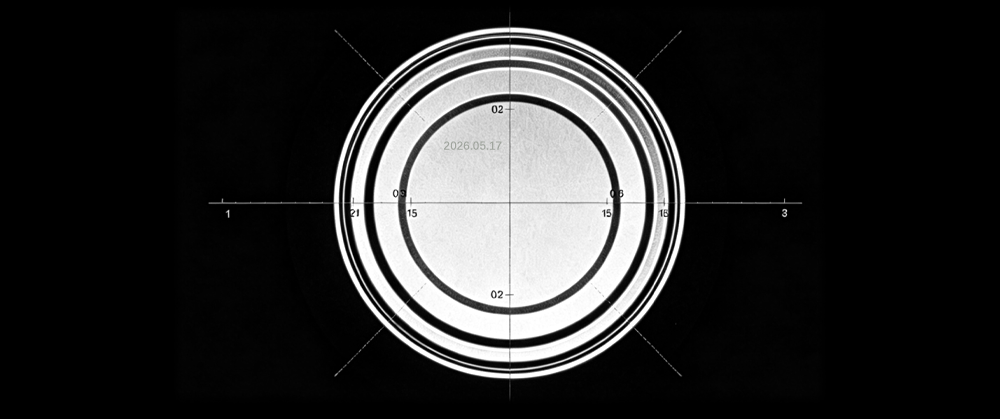
This light source is applicable for top-down imaging of the entire can lid to extract outer circle contours and implement diameter and roundness measurement, serving as the most widely adopted solution in industrial detection.
Delivers 360° uniform light emission, completely eliminating light reflection and shadow interference
Avoids local highlight overexposure on metal can lid surfaces
Forms clear black-and-white boundaries at edge contours, facilitating direct edge capture and circle fitting algorithms for accurate diameter measurement
Key Selection Specifications
Adopt wide-angle diffuse annular light source; narrow-angle direct annular light source is strictly not recommended
The inner diameter of the light source shall be 20mm to 40mm larger than the diameter of the milk powder can lid
2. Alternative Scheme 1: Area Light Source (Bottom Backlight)
Applicable Scenarios
Suitable for detection stations where milk powder cans are fixed by fixtures and illuminated from the bottom.
Presents the can lid as a distinct black silhouette via backlight imaging, with ultra-clean and sharp edge contours
Achieves the highest dimensional measurement accuracy and resists interference from surface patterns and printed logos
Ideal for assembly line vertical placement and bottom contraposition imaging detection

3. Alternative Scheme 2: Opposed Bar Light Sources
Applicable Scenarios
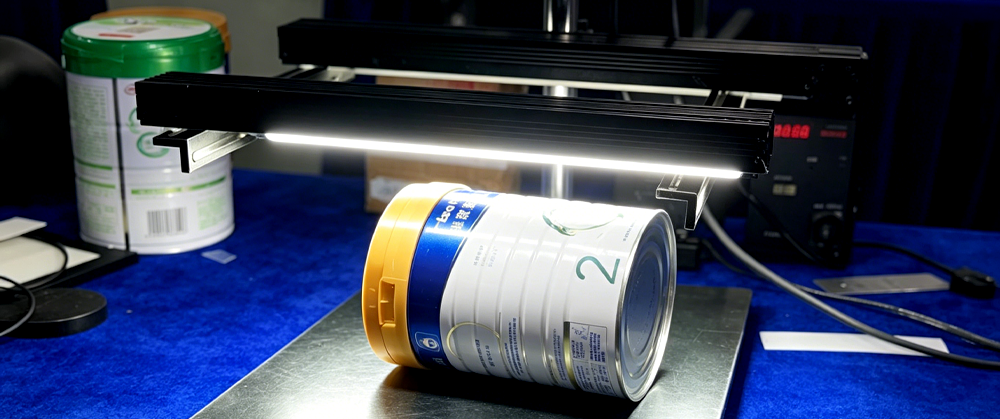
Applied for oblique side lighting to capture left and right edge contours for diameter ranging detection.
Cost-effective, suitable for simple and low-cost detection workstations
Limitation: Metal can lids are prone to light reflection; diffuser plates and precise light source angle adjustment are required
Unrecommended Light Sources to Avoid Detection Failures
Point light source and coaxial light source: Prone to central overexposure and dark, blurred edges, leading to inaccurate contour extraction, thus not applicable for full-circle diameter detection
Quick Summary of Selection
1. Conventional top-down imaging detection → Diffuse annular shadowless light source (First Choice)
2. High-precision dimensional measurement with surface interference resistance → Bottom backlit area light source
3. Low-cost simple detection workstation → Dual oblique opposed bar light sources