EN
EN


Ring light vs bar light vs coaxial light: which machine vision light delivers the best defect contrast?
Selecting the right machine vision light is critical to achieving optimal defect detection and image quality in industrial inspection systems. The choice between a ring light, bar light, and coaxial light fundamentally shapes how your system captures surface details, identifies flaws, and maintains consistent results across production runs. Each machine vision light technology offers distinct optical characteristics, illumination patterns, and suitability for different inspection scenarios. Understanding the strengths and limitations of each machine vision light type ensures you deploy the right solution for your defect contrast requirements and operational environment.
The performance of your machine vision inspection system depends heavily on illumination quality, angle of incidence, and how effectively the chosen machine vision light reveals surface anomalies. Surface texture, material reflectivity, component geometry, and defect type all influence which machine vision light delivers superior contrast. This article compares ring lights, bar lights, and coaxial lights across critical performance dimensions, helping you make an informed decision that aligns with your production demands and image processing requirements.
Ring Light Technology and Defect Detection Capability
How Ring Lights Deliver Uniform Circumferential Illumination
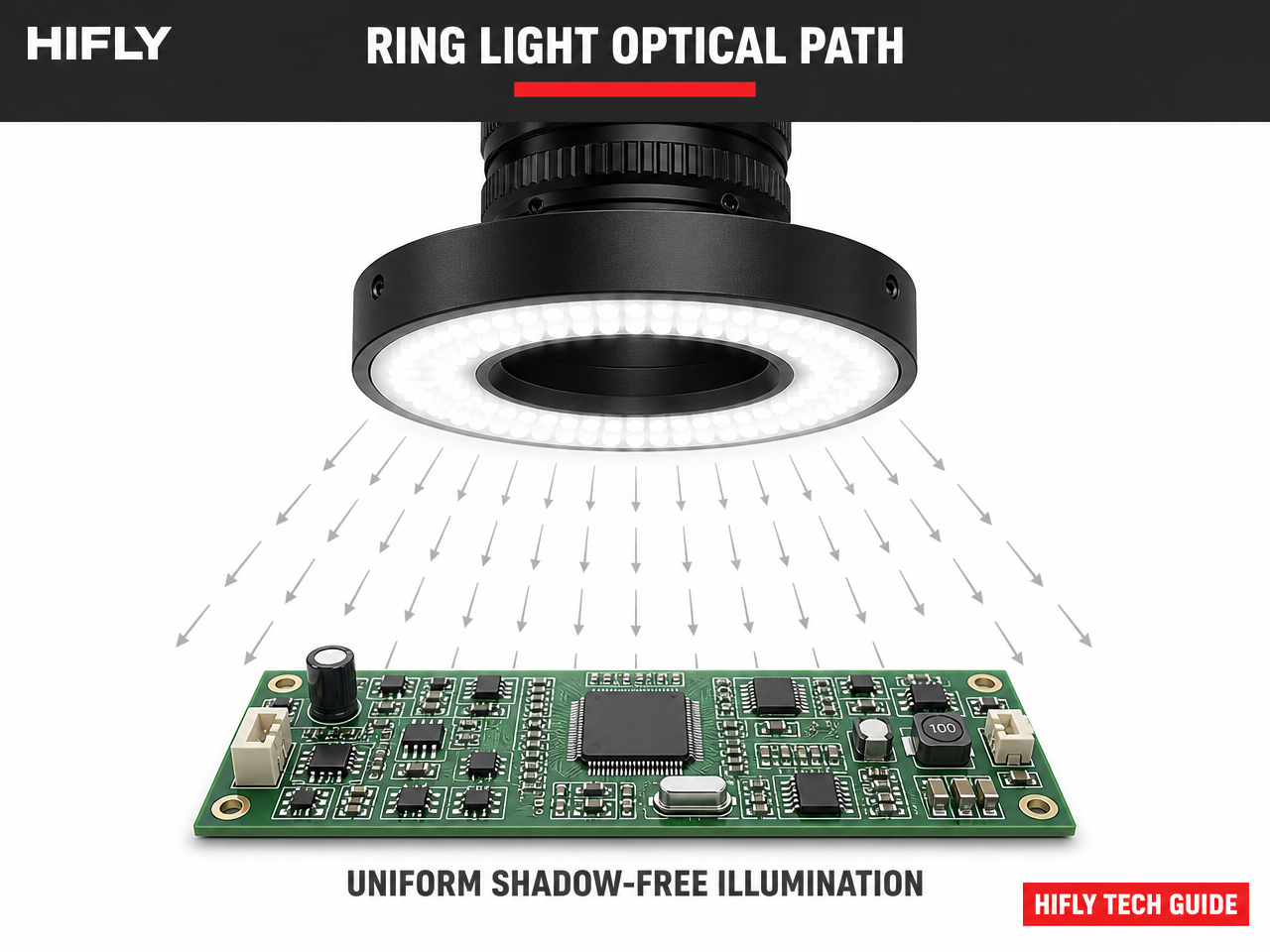
A ring light produces even, diffuse illumination from all directions around the optical axis, creating minimal shadows and uniform brightness across the inspection area. This machine vision light design positions LEDs in a circular arrangement surrounding the camera lens, ensuring symmetrical light distribution that reduces harsh highlights and dark zones. The resulting illumination pattern is ideal for inspecting round components, circuit boards, and products where shadow elimination is essential for consistent defect visibility.
The machine vision light generated by ring configuration excels at revealing surface discontinuities, scratches, and discoloration on smooth materials because the uniform angle of incidence minimizes directional shadowing. This characteristic makes the ring light particularly effective for detecting printing defects, coating inconsistencies, and minor surface irregularities that require soft, shadow-free lighting. The machine vision light's circumferential geometry also simplifies optical design integration, as the ring mounts directly around the lens without complex angle adjustments.
Applications Where Ring Light Machine Vision Outperforms
Ring-based machine vision light excels in electronics inspection, where detecting solder joints, component placement accuracy, and PCB surface quality demands shadowless imaging. Medical device manufacturing benefits from this machine vision light's ability to reveal surface contamination and material defects on cylindrical or radial components. Cosmetics and pharmaceutical packaging also leverage ring light machine vision for identifying printing misalignment, color deviations, and label placement errors with uniform illumination.
Bar Light Geometry and Directional Contrast Enhancement
Angled Light Delivery and Shadow Enhancement in Machine Vision
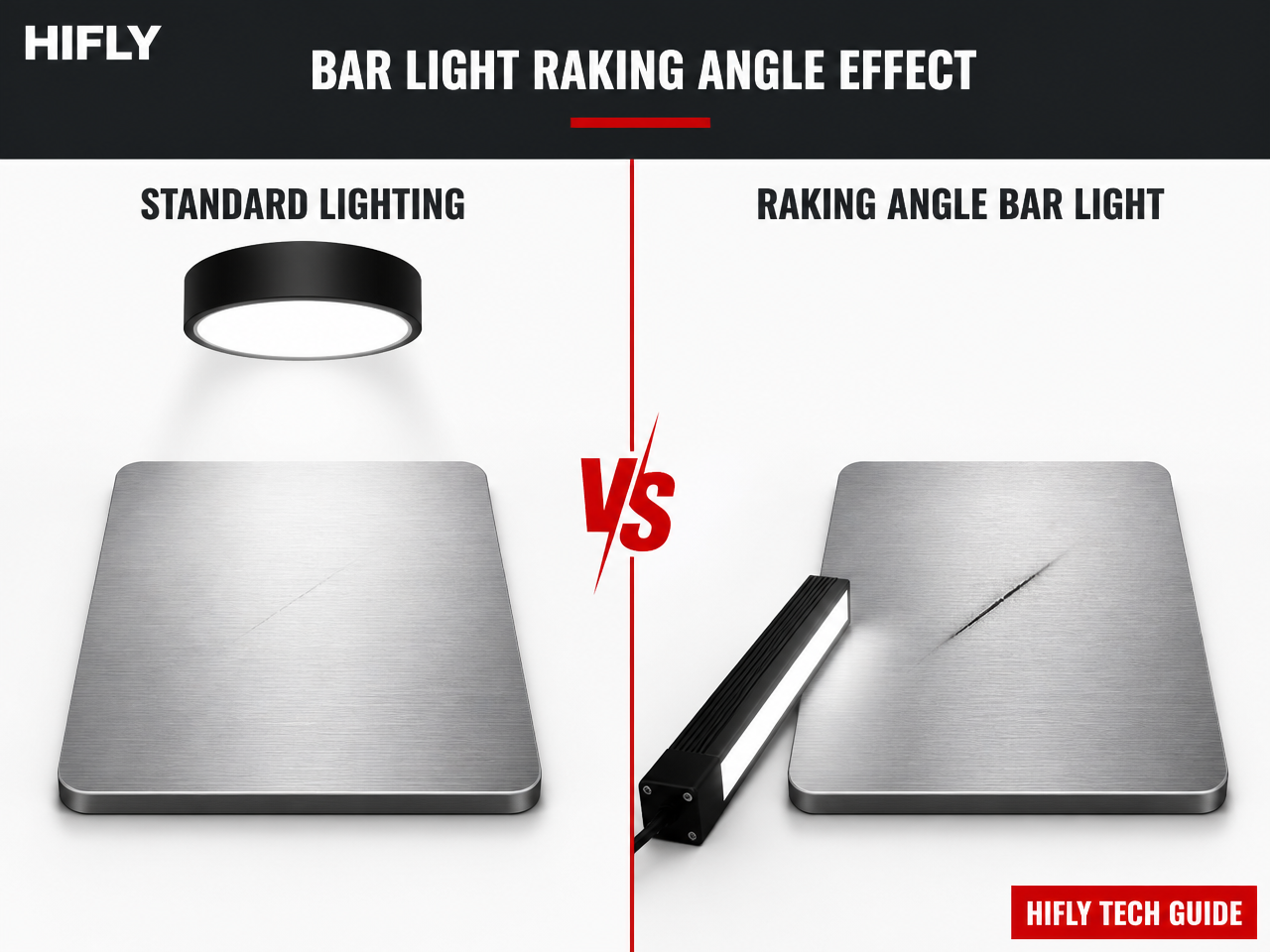
A bar light delivers illumination from a linear source positioned at an acute angle to the inspection surface, creating pronounced shadows and highlight contrast that accentuates surface texture and raised defects. This machine vision light design excels at revealing edge deformation, raised burrs, surface roughness, and dimensional variations through directional shadowing. The bar light's angled geometry produces a raking light effect that makes subtle topographical defects highly visible, making this machine vision light ideal for texture analysis and three-dimensional anomaly detection.
The machine vision light contrast created by directional bar illumination is superior for detecting dents, creases, and mechanical damage on metal parts, molded plastics, and stamped components where surface relief indicates quality issues. This machine vision light's linear configuration allows operators to orient the bar at optimized angles for specific defect types, providing flexibility that round-source solutions cannot match. The shadow patterns inherent to bar light machine vision make previously invisible micro-imperfections immediately apparent to image processing algorithms.
Industrial Applications Demanding Bar Light Machine Vision
Automotive manufacturing relies on bar light machine vision to detect surface scratches, swirl marks, and assembly indentations on body panels and precision-machined components. Steel and aluminum fabrication benefit from directional bar light machine vision that reveals rolled surface defects, lamination issues, and material contamination through enhanced edge contrast. Heavy equipment manufacturing employs this machine vision light for identifying surface irregularities that compromise coating adhesion or protective properties on large structural parts.
Coaxial Light System and Reflection-Based Inspection
Coaxial Alignment and Internal Defect Revelation
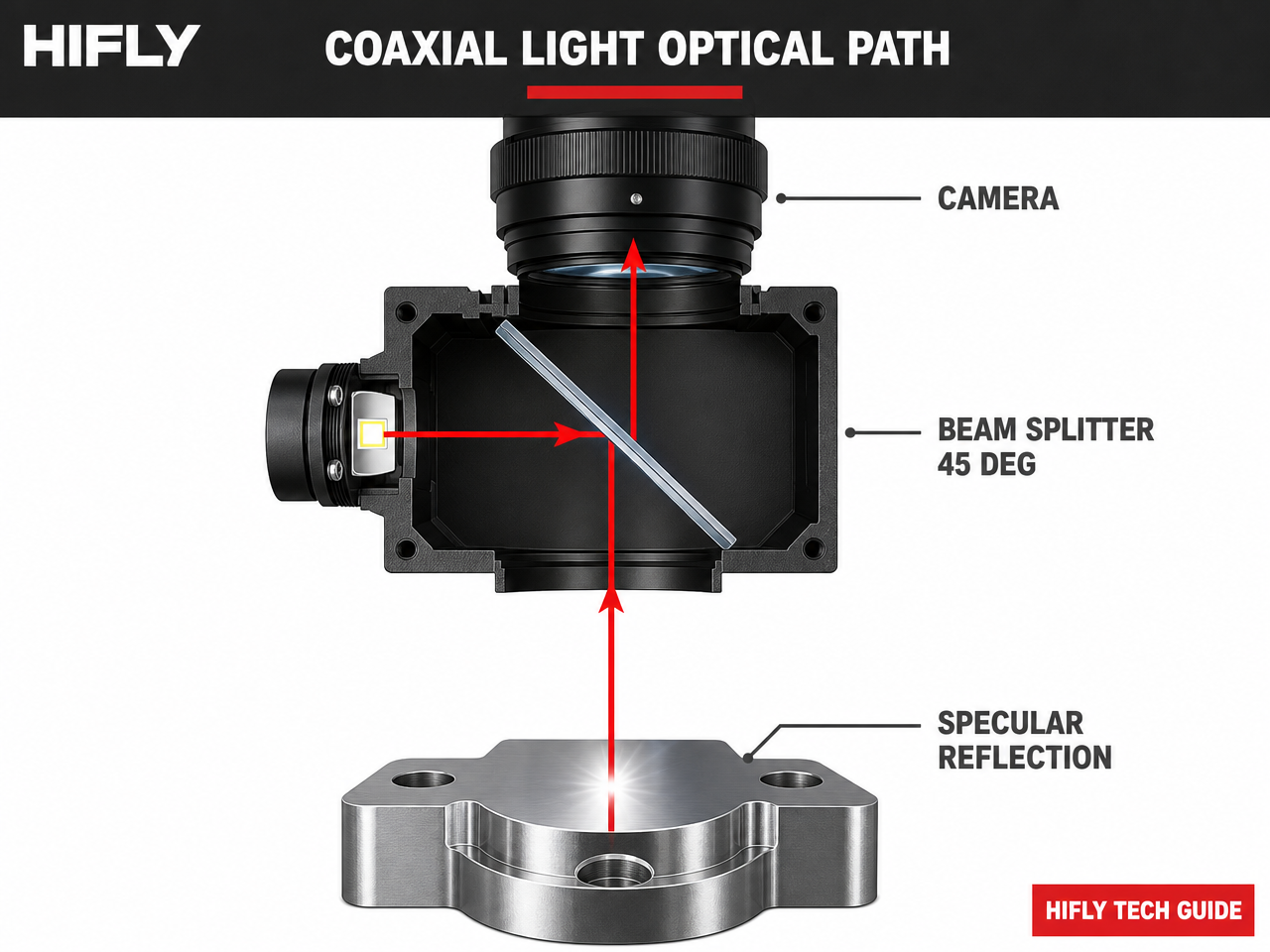
Coaxial machine vision light delivers illumination along the same optical axis as the camera, using a specialized beam splitter or prism to position the light source directly behind the lens. This unique machine vision light geometry creates perfect alignment between light source and camera viewing angle, producing reflective contrast that internal or subsurface defects cannot escape. The coaxial machine vision light's axial illumination is particularly effective for inspecting transparent materials, reading surface-applied markings, and detecting subsurface contamination in glass or plastic components.
The machine vision light path in coaxial systems exploits specular reflection and Fresnel effect principles, where surface defects disrupt uniform reflection patterns and become clearly visible to the camera. This machine vision light approach is superior for dimensional verification, surface film detection, and identifying cracks or chips on reflective materials where other light sources produce inadequate contrast. Coaxial machine vision light provides exceptional performance on polished metal surfaces, where the perfectly aligned illumination reveals even tiny surface imperfections.
Precision Applications Leveraging Coaxial Machine Vision Light
Semiconductor inspection and wafer surface analysis depend on coaxial machine vision light to detect particles, scratches, and fabrication defects on highly reflective silicon surfaces. Optical lens manufacturing uses this machine vision light to reveal surface scratches, coating defects, and anti-reflective layer anomalies that compromise optical performance. Precision bearing and fastener production employs coaxial machine vision light for identifying surface contamination, micro-cracks, and material defects that affect component reliability and dimensional accuracy.
Comparative Performance Factors Across Machine Vision Light Types
Contrast Generation and Defect Visibility Trade-offs
Ring-based machine vision light maximizes uniformity and minimizes shadows, sacrificing contrast acuity for consistent brightness across irregular surfaces. Bar light machine vision prioritizes directional contrast and shadow enhancement, delivering superior visibility of topographical defects at the cost of complex positioning requirements. Coaxial machine vision light excels at reflection-based contrast, making it ideal for specular surfaces but less suitable for diffuse materials. Each machine vision light type presents distinct trade-offs between uniformity, contrast intensity, shadow elimination, and defect type sensitivity.
Material-Specific Machine Vision Light Selection
Matte or textured surfaces benefit most from bar light machine vision, where directional shadows maximize visibility of raised defects and surface irregularities. Shiny metal components and reflective parts perform optimally with coaxial machine vision light, leveraging specular reflection for subsurface anomaly detection. Circuit boards and flat assemblies leverage ring light machine vision for uniform shadowless imaging that reveals solder defects and placement errors without directional bias. Transparent materials require coaxial machine vision light to detect internal contamination and subsurface defects invisible to diffuse illumination sources.
Integration Considerations and System Design Impact
Optical Path Complexity and Machine Vision Light Installation
Ring light machine vision systems offer straightforward integration, as the circular geometry mounts directly around lens assemblies without complex beam manipulation or angle calculations. Bar light machine vision requires careful positioning and angle optimization, necessitating adjustable mounting hardware and calibration procedures. Coaxial machine vision light demands specialized optical components including beam splitters or dichroic mirrors, increasing system cost and optical complexity. Your integration environment, space constraints, and lens focal length all influence which machine vision light technology fits your hardware architecture.
Processing Algorithm Compatibility with Machine Vision Light Output
Image processing algorithms designed for edge detection and feature extraction perform exceptionally well with bar light machine vision, leveraging shadow information for precise defect localization. Segmentation and thresholding algorithms adapt readily to coaxial machine vision light's reflection-based contrast patterns, particularly for dimensional verification. Ring light machine vision produces uniformly illuminated images that simplify blob analysis and color-based defect classification. Selecting machine vision light technology that aligns with your image processing methodology ensures optimal algorithm performance and reliable defect classification across production variations.
FAQ
Which machine vision light is best for detecting surface scratches on plastic components?
Bar light machine vision delivers superior scratch detection on plastic surfaces through directional illumination that creates pronounced shadows along scratch edges. The raking light effect inherent to bar light machine vision makes shallow scratches and abrasion marks highly visible compared to ring light uniformity. For plastic materials with matte finishes, the angled machine vision light geometry provides contrast intensity that shadowless ring light illumination cannot achieve, making bar light the optimal choice for scratch inspection.
Can coaxial machine vision light detect internal defects in transparent plastic parts?
Coaxial machine vision light excels at detecting internal contamination and subsurface defects in transparent materials through reflection-based contrast mechanisms. The axial illumination path of coaxial machine vision light allows light to penetrate transparent components and reveal particles, air bubbles, and material inclusions invisible to external illumination sources. This machine vision light approach is particularly effective for transparent plastic inspection where internal quality verification is critical to final product integrity.
How does machine vision light choice affect image processing speed and algorithm performance?
Ring light machine vision produces uniform illumination that simplifies histogram analysis and reduces preprocessing requirements, enabling faster image segmentation algorithms. Bar light machine vision introduces shadow information that edge detection algorithms leverage directly, requiring minimal enhancement but demanding careful gradient analysis. Coaxial machine vision light generates consistent reflection patterns that speed up feature extraction and defect classification. The optimal machine vision light choice balances illumination characteristics with your algorithm's computational efficiency and defect classification methodology.