EN
EN


What are the best machine vision lights to buy in 2026? Full review of brightness, uniformity, and lifespan
Selecting the right machine vision lights is critical for achieving consistent image quality, accurate inspection results, and reliable industrial automation. The performance of your machine vision lights directly impacts defect detection rates, measurement accuracy, and overall system ROI. In 2026, machine vision lights have evolved significantly with advances in LED technology, offering superior brightness, exceptional uniformity, and extended operational lifespan compared to older halogen or fluorescent alternatives.
Modern machine vision lights combine several critical performance dimensions that manufacturers must evaluate carefully. Brightness determines whether your camera can capture fine details in challenging lighting conditions, uniformity ensures consistent image data across the field of view, and lifespan directly affects maintenance costs and system uptime. Understanding these factors helps industrial teams make informed purchasing decisions that balance performance requirements with total cost of ownership.

Understanding Machine Vision Light Performance Standards
Brightness and Illumination Requirements
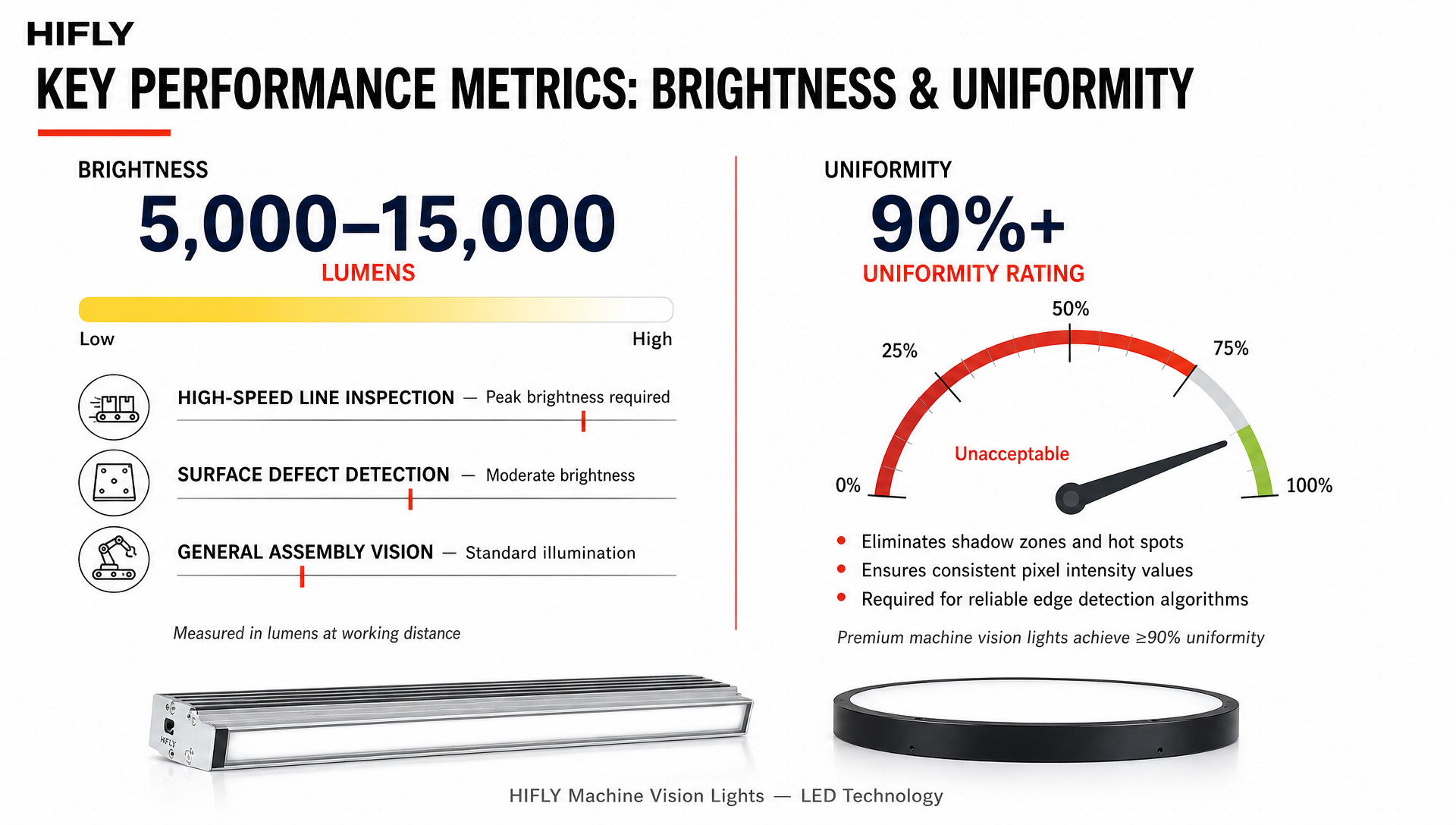
The brightness of machine vision lights is measured in lumens and illuminance, critical metrics that determine how effectively your imaging system can capture object details. Machine vision lights must deliver sufficient illumination to overcome ambient light interference and provide clear contrast for edge detection and feature recognition algorithms. For high-speed inspection lines, machine vision lights with peak brightness ratings of 5,000 to 15,000 lumens ensure rapid frame capture without motion blur or image degradation.
Different inspection scenarios demand different brightness levels from machine vision lights. Tight tolerance measurements on small components require intense, focused illumination, while broader surface inspection tasks may use distributed lighting patterns. Advanced machine vision lights now feature adjustable brightness levels, allowing operators to fine-tune illumination intensity based on material reflectivity, surface finish, and camera sensitivity settings.
Uniformity and Light Distribution
Light uniformity is a defining characteristic of premium machine vision lights, ensuring that every region of the camera's field of view receives consistent illumination. Poor uniformity from machine vision lights creates shadowed zones and hot spots, leading to measurement errors and unreliable defect detection. Modern machine vision lights employ advanced optical designs with specialized diffusers, reflectors, and LED array configurations that achieve uniformity ratings of 90% or higher across the entire imaging area.
The uniformity of machine vision lights directly influences the reliability of image processing algorithms. Computer vision software relies on consistent pixel intensity values to accurately identify edges, measure dimensions, and detect surface defects. When machine vision lights fail to provide uniform illumination, software must apply complex compensation algorithms that increase processing time and reduce detection confidence levels.
Lifespan, Reliability, and Total Cost of Ownership
LED Technology and Operational Longevity
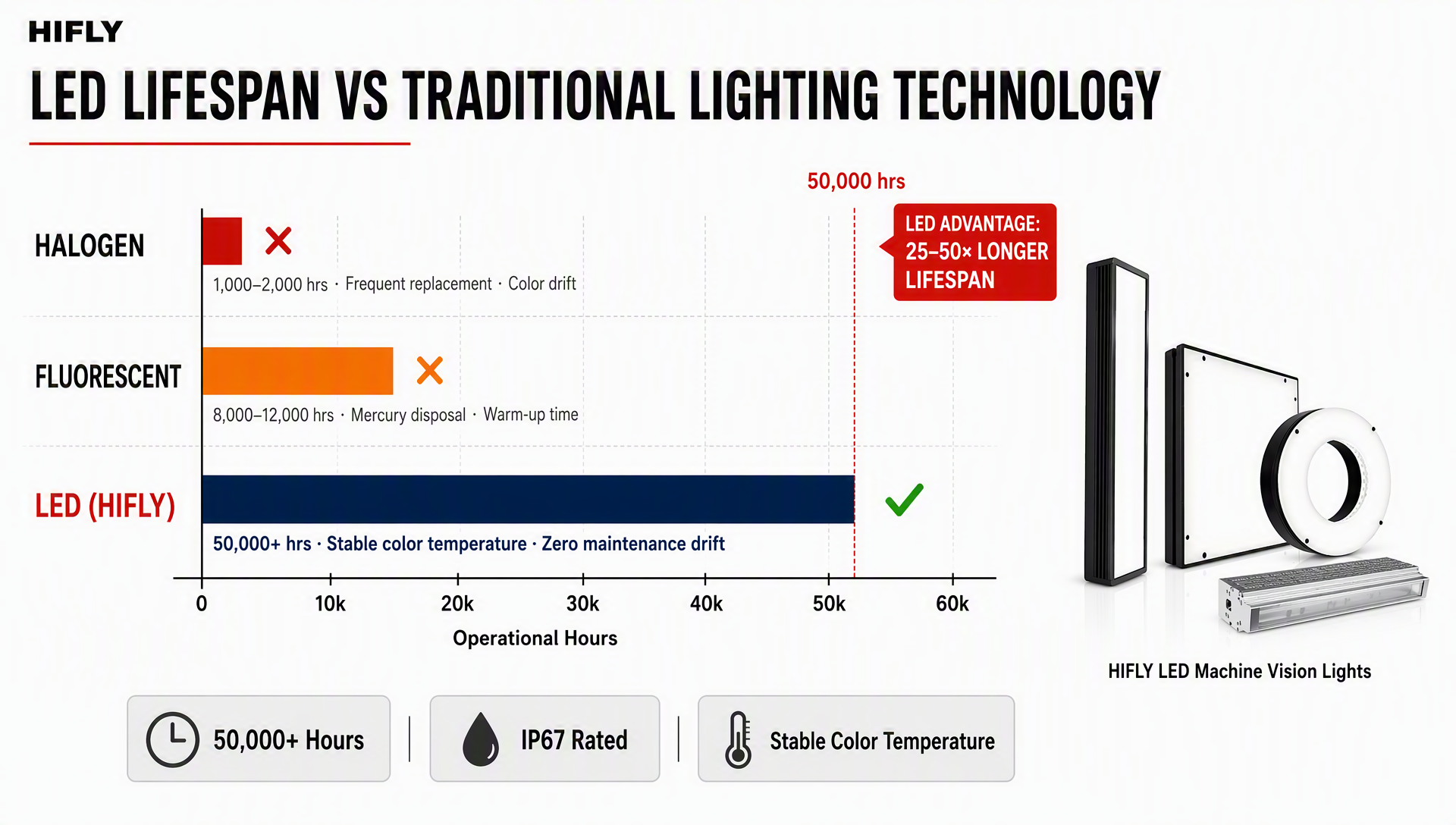
LED-based machine vision lights have revolutionized industrial imaging with rated lifespans exceeding 50,000 hours, compared to 1,000 to 2,000 hours for traditional halogen sources. This longevity of machine vision lights translates to reduced replacement frequency, lower inventory requirements, and more predictable maintenance scheduling. In continuous operation environments, premium machine vision lights deliver consistent color temperature and brightness output throughout their entire lifespan, maintaining imaging accuracy without calibration drift.
The thermal stability of modern machine vision lights represents another critical advantage for industrial applications. Unlike older technologies, machine vision lights with advanced heat dissipation systems maintain stable operating temperatures that prevent color shift, brightness degradation, and premature component failure. This thermal consistency ensures that machine vision lights perform identically during the first hour and the 50,000th hour of operation.
Maintenance Impact and System Uptime
The extended lifespan of machine vision lights dramatically improves production line reliability and reduces unplanned downtime. In high-volume manufacturing environments, machine vision lights that require frequent replacement create production interruptions, inventory management challenges, and hidden labor costs. By investing in durable machine vision lights with proven track records, manufacturers maintain consistent inspection capability and avoid unexpected line stoppages that compromise production schedules.
Strategic selection of machine vision lights that match your operational duty cycle optimizes total cost of ownership and supports lean manufacturing principles. Machine vision lights specified for your exact application requirements deliver superior performance consistency while minimizing energy consumption, maintenance overhead, and environmental waste. Evaluating machine vision lights based on operational context ensures alignment between performance capabilities and real-world factory conditions.
Selecting Machine Vision Lights for Your Specific Application
Matching Specifications to Inspection Requirements
Choosing appropriate machine vision lights begins with defining your inspection objectives, environmental constraints, and performance metrics. High-speed surface defect detection demands machine vision lights with nanosecond pulse capabilities and peak brightness, while precision dimensional measurement requires machine vision lights optimized for contrast and edge definition. The specific material being inspected also influences machine vision light selection—reflective metals require different illumination strategies than matte ceramics or textured polymers.
Environmental factors significantly impact the performance and reliability of machine vision lights in industrial settings. Machine vision lights must withstand temperature fluctuations, moisture exposure, chemical splash, and mechanical vibration commonly encountered on factory floors. Ruggedized machine vision lights with IP67 or IP68 ratings, stainless steel construction, and conformal coatings maintain consistent performance in harsh manufacturing environments where consumer-grade lighting systems would fail rapidly.
Integration and Optical Configuration
The physical integration of machine vision lights with your camera and lens system requires careful attention to working distance, field of view, and optical geometry. Ring-configured machine vision lights deliver shadowless illumination ideal for detailed surface inspection, while coaxial machine vision lights minimize glare reflection on shiny components. Backlit or transmitted-light machine vision lights excel at edge detection and silhouette applications, creating sharp contrast between foreground objects and background.
Advanced machine vision lights now feature modular designs that allow rapid reconfiguration for different inspection tasks within the same production line. Flexible mounting systems, adjustable intensity controls, and interchangeable optical modules make modern machine vision lights adaptable to changing product specifications and inspection requirements. This adaptability extends the productive lifespan of machine vision light investments and supports factory flexibility initiatives.
FAQ
What brightness level should my machine vision lights provide for precision inspection?
The optimal brightness for machine vision lights depends on your camera sensor sensitivity, lens aperture, and desired exposure time. Most precision inspection applications require machine vision lights delivering 10,000 to 50,000 lux at the working distance, sufficient for capturing detailed surface features without overexposure. Consult your camera manufacturer's recommended illumination specifications and test candidate machine vision lights under representative sample materials before final procurement.
How does light uniformity affect inspection accuracy with machine vision lights?
Light uniformity from machine vision lights directly impacts measurement confidence and defect detection reliability. Non-uniform illumination from machine vision lights introduces systematic errors in pixel intensity values that confuse edge detection algorithms and create false positives in defect detection software. Machine vision lights achieving 90%+ uniformity eliminate shadowing artifacts and ensure consistent image quality across all regions of your camera's field of view.
Are expensive machine vision lights worth the investment compared to budget alternatives?
Premium machine vision lights offer superior lifespan, thermal stability, uniformity, and reliability that typically justify their higher initial cost through reduced maintenance, fewer production interruptions, and improved inspection accuracy. Budget machine vision lights may require replacement every 12 to 24 months, while quality machine vision lights operate reliably for 5 to 10 years or more. Calculating total cost of ownership including replacement labor, inventory holding, and production downtime risk usually favors investing in proven, durable machine vision lights.