EN
EN


Can a machine vision camera with HDR function reveal both highlights and shadows in one shot?
Yes, a machine vision camera with HDR can simultaneously reveal both bright highlights and dark shadows within a single captured image. This capability addresses one of the most persistent challenges in industrial imaging: high-contrast scenes where conventional cameras either blow out bright regions or lose detail in dark zones. A machine vision camera with HDR is specifically engineered to overcome this limitation, making it an essential tool in demanding inspection environments.
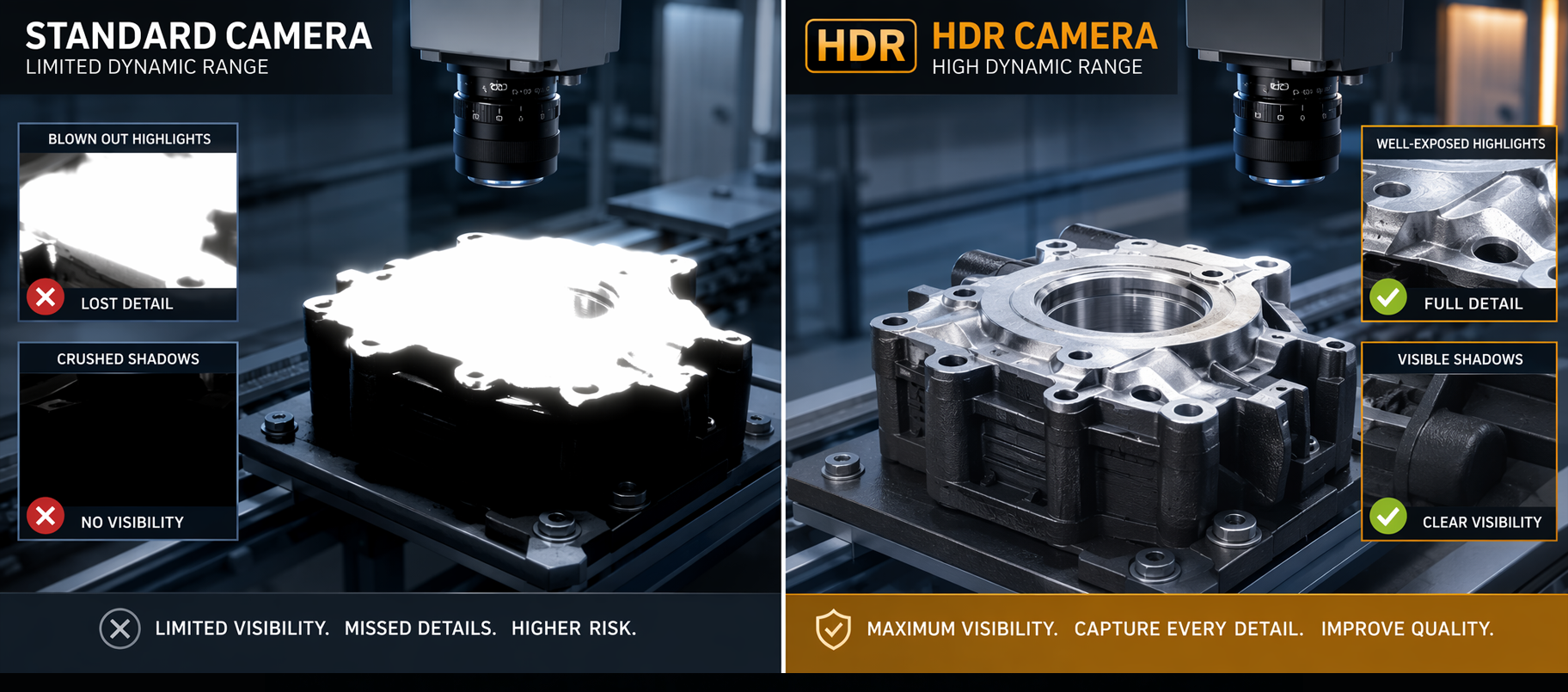
Understanding how a machine vision camera with HDR achieves this requires a closer look at sensor technology, exposure control, and image processing pipelines. Unlike a standard industrial camera that captures one exposure level per frame, a machine vision camera with HDR uses advanced multi-exposure or pixel-level sensitivity techniques to record a much wider range of luminance values in a single shot. The result is an image that retains crisp detail in both the brightest and darkest regions at the same time, without requiring multiple passes or post-processing merging steps that would slow down production lines.
How HDR Technology Works in Machine Vision
Multi-Exposure Pixel Architecture
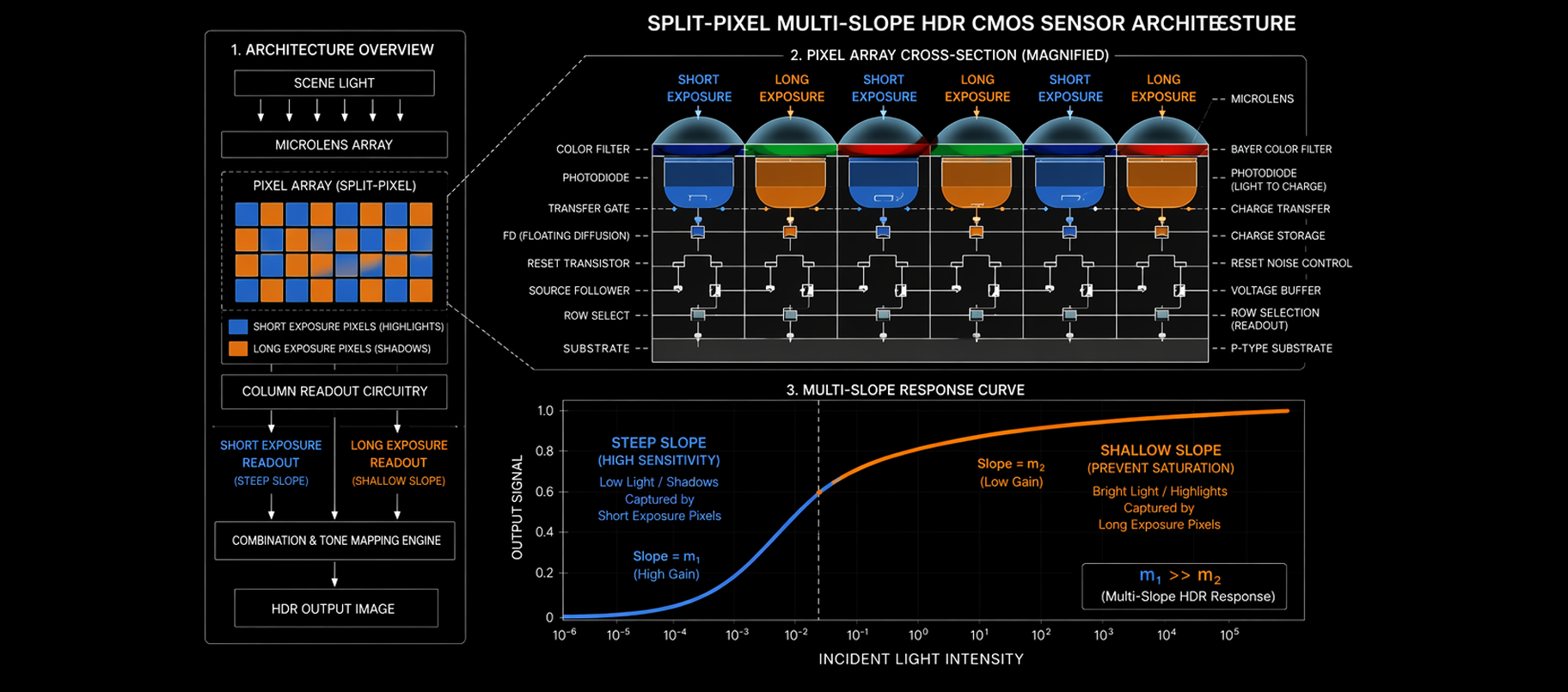
The core mechanism behind a machine vision camera with HDR lies in how its sensor handles different exposure levels simultaneously. Many modern sensors use a split-pixel or multi-slope exposure architecture, where individual pixels or pixel groups capture light at different sensitivity levels within a single integration period. A machine vision camera with HDR using this approach can encode both short and long exposure data into one readout cycle. This means the camera does not need to fire twice or merge two separate frames, which would introduce motion blur or alignment errors in fast-moving inspection scenarios.
A machine vision camera with HDR based on multi-slope exposure applies a non-linear response curve to incoming photons. When bright light saturates one part of the response curve, the lower-sensitivity segment continues to record useful data. The combined output from a machine vision camera with HDR produces a tone-mapped image that faithfully represents scene luminance across a dynamic range far exceeding that of a standard sensor. This is particularly valuable in applications where reflective metal surfaces coexist with dark rubber seals or matte black coatings.
On-Chip Processing and Real-Time Output
A machine vision camera with HDR does not just capture wide dynamic range data — it also needs to deliver that data in a format usable by downstream vision algorithms. Advanced on-chip processing inside a machine vision camera with HDR compresses the high dynamic range output into a standard bit-depth image while preserving relative contrast in both highlight and shadow regions. This compression is carefully tuned so that defect detection algorithms, dimensional measurement tools, and pattern recognition systems can still operate reliably on the output from a machine vision camera with HDR.
Industrial Scenarios Where HDR Imaging Is Critical
Reflective and Mixed-Surface Inspection
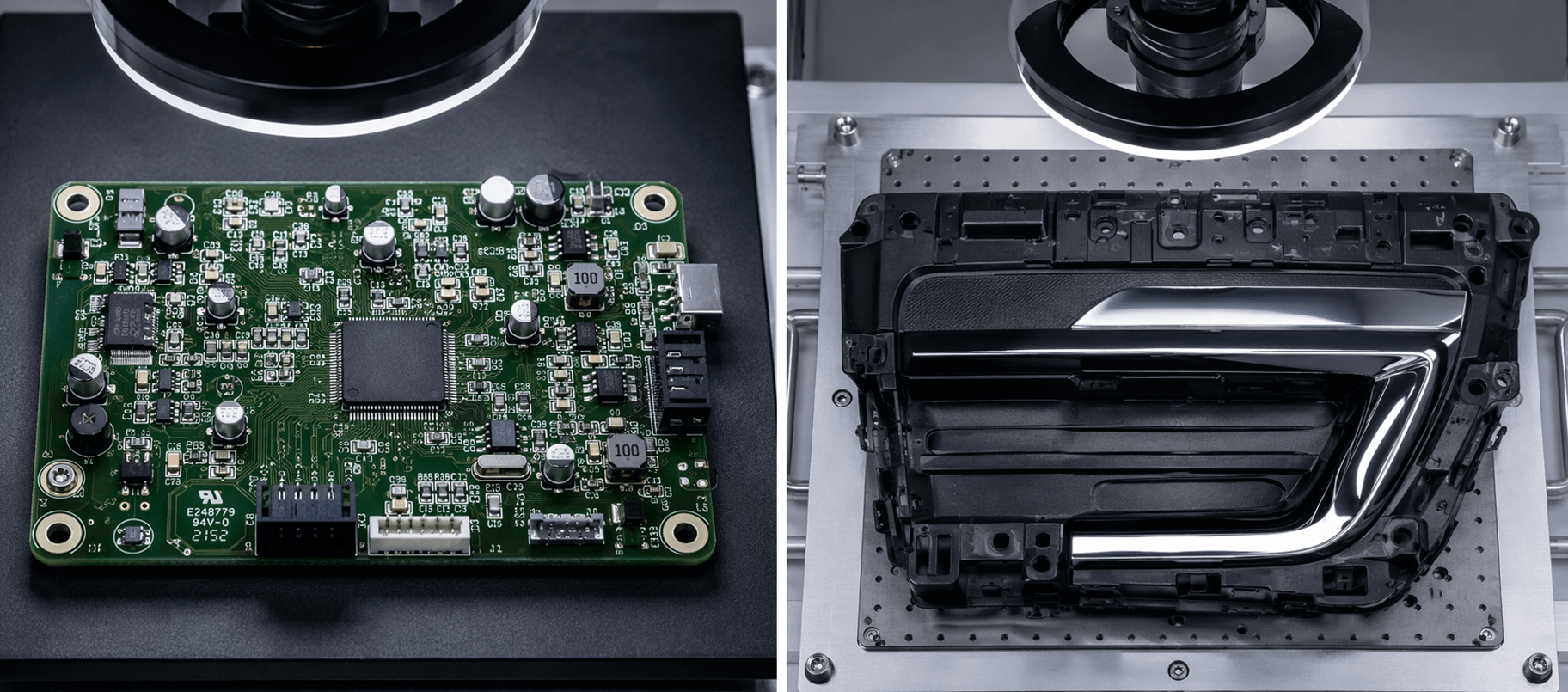
One of the most common use cases for a machine vision camera with HDR is the inspection of components that combine highly reflective and light-absorbing surfaces. Printed circuit boards, for example, feature shiny solder joints alongside dark substrate areas. Without a machine vision camera with HDR, engineers must compromise on exposure, either losing solder detail in bright hotspots or sacrificing visibility on the substrate. A machine vision camera with HDR eliminates this trade-off by delivering full detail across the entire surface in a single frame, improving throughput and inspection accuracy simultaneously.
Automotive part inspection presents a similar challenge. Polished chrome trim sits next to black plastic housings on the same assembly. A machine vision camera with HDR captures both materials faithfully in one shot, enabling consistent quality control without reconfiguring lighting or exposure settings for each part type. This flexibility is a direct productivity advantage in high-mix production environments where a machine vision camera with HDR must handle varying component finishes without manual intervention.
Outdoor and Variable Lighting Environments
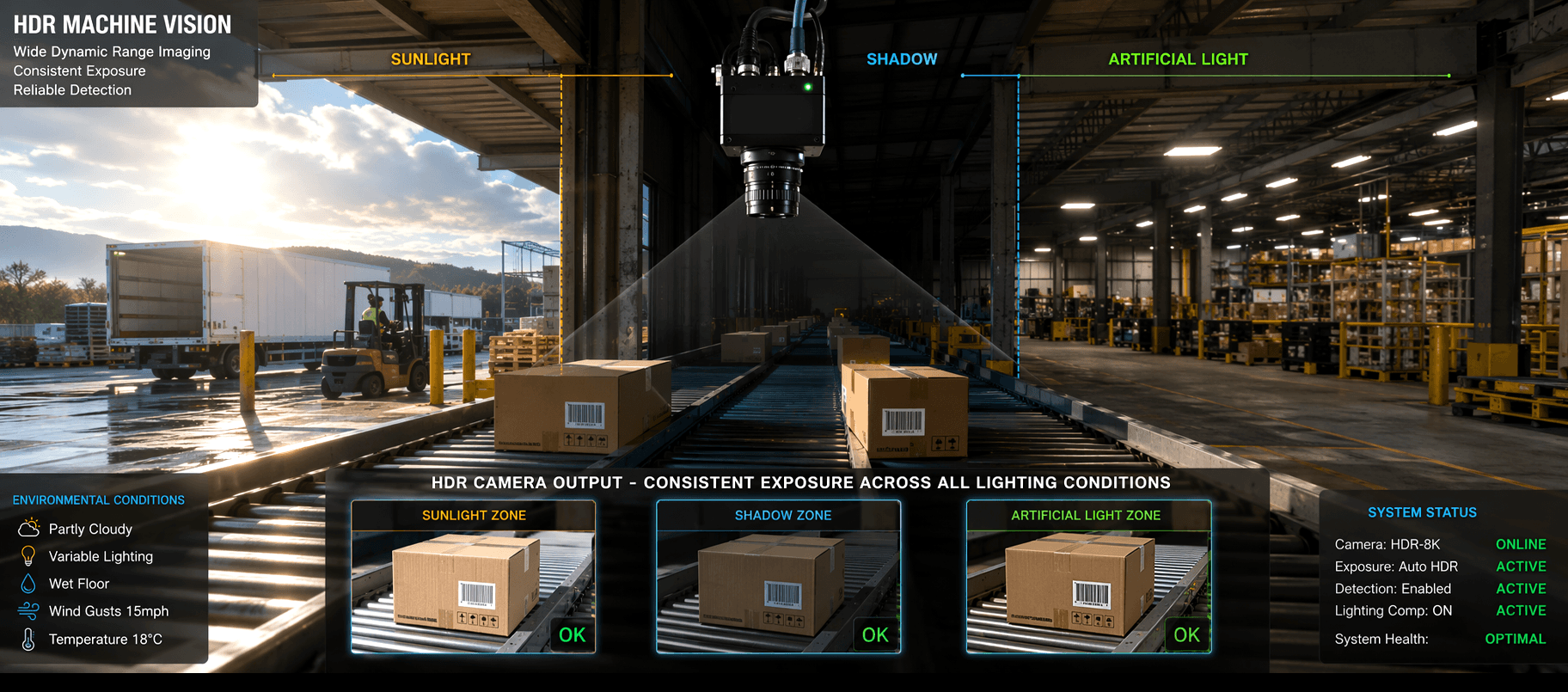
A machine vision camera with HDR also excels in environments where ambient lighting is uncontrolled or variable. Outdoor inspection stations, loading docks, and warehouse conveyor systems often experience shifting sunlight, shadows from passing objects, or mixed artificial and natural illumination. Under these conditions, a machine vision camera with HDR maintains consistent image quality without constant recalibration. The wide dynamic range of a machine vision camera with HDR absorbs sudden changes in scene brightness, ensuring that the vision system continues to deliver reliable pass or fail decisions regardless of lighting fluctuations.
Selecting the Right HDR Camera for Your Application
Key Specifications to Evaluate
When choosing a machine vision camera with HDR, the first parameter to examine is the specified dynamic range in decibels. A machine vision camera with HDR offering 100 dB or more is generally well-suited for high-contrast industrial scenes, while a machine vision camera with HDR in the 80–100 dB range may suffice for moderately challenging applications. Resolution, frame rate, and interface type are equally important. A machine vision camera with HDR used on a high-speed production line must maintain HDR frame rates that match belt speed, so confirming HDR-mode frame rate separately from standard-mode frame rate is essential before deployment.
Integration and Compatibility Considerations
A machine vision camera with HDR must also integrate smoothly with existing vision software and hardware. Confirm that the SDK provided with the machine vision camera with HDR exposes HDR mode controls programmatically, allowing engineers to tune exposure ratios and tone-mapping parameters from their inspection application. Verify that the output format of the machine vision camera with HDR is compatible with your image processing library. A machine vision camera with HDR that delivers data in a proprietary format may require additional conversion steps that reduce system speed. Choosing a machine vision camera with HDR that follows industry-standard interfaces and open SDK protocols simplifies integration and reduces commissioning time.
FAQ
Does a machine vision camera with HDR slow down frame rate compared to a standard camera?
In some implementations, a machine vision camera with HDR may operate at a slightly reduced frame rate in HDR mode because the sensor requires additional time to process multi-exposure data. However, many modern designs of a machine vision camera with HDR minimize this penalty through parallel on-chip processing, making the frame rate difference negligible for most industrial inspection tasks.
Can a machine vision camera with HDR replace specialized lighting setups?
A machine vision camera with HDR can reduce dependence on complex lighting rigs in high-contrast scenes, but it does not fully replace structured or directional lighting where surface topology or texture detection is required. Think of a machine vision camera with HDR as a complement to good lighting practice rather than a complete substitute.
Is a machine vision camera with HDR suitable for color inspection tasks?
Yes, a machine vision camera with HDR is available in color sensor variants and performs well in color inspection where both bright and dark color regions must be accurately classified. Color accuracy in a machine vision camera with HDR depends on the tone-mapping algorithm, so validating color fidelity during system commissioning is recommended for critical color-matching applications.