EN
EN


How to pick the right machine vision light for your task?
Selecting the right machine vision light is a critical decision that directly impacts image quality, detection accuracy, and overall system performance. How to pick machine vision light requires understanding your specific application requirements, from the surface characteristics of inspected objects to the speed and precision demands of your production line. A poorly chosen light can result in glare, shadows, inconsistent contrast, and ultimately failed inspections or costly false positives. This guide walks you through the essential factors to consider when learning how to pick machine vision light for your task.
When you know how to pick machine vision light effectively, you align your illumination strategy with the physics of light interaction on your target surface. Different object geometries—flat, curved, reflective, matte, or textured—demand different lighting approaches. The goal is not simply to add brightness, but to create the contrast and edge definition that your camera and image processing software need to make accurate decisions in milliseconds.
Understanding Wavelength and Spectrum Selection
Visible Spectrum Versus Near-Infrared Lighting
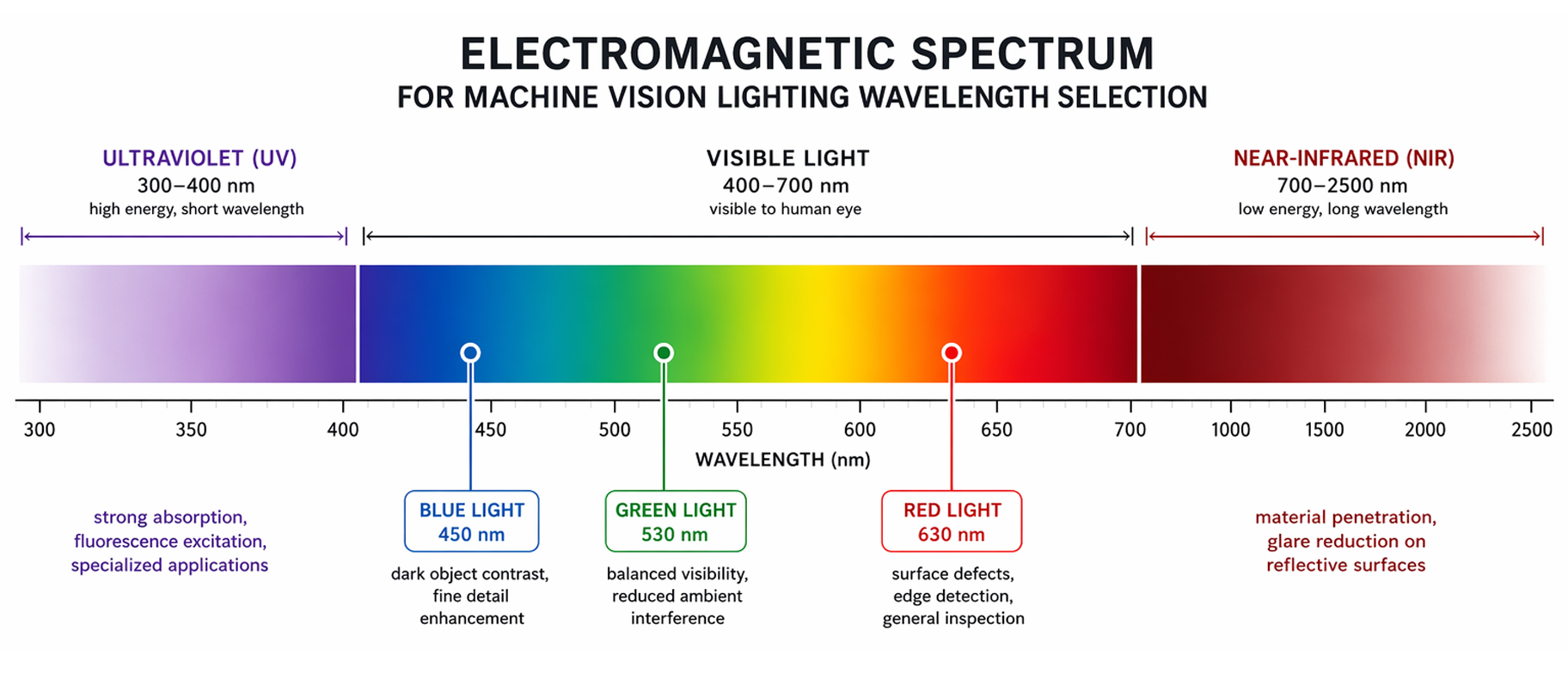
When you explore how to pick machine vision light, wavelength emerges as one of the most important physical parameters. Visible light ranges from approximately 400 to 700 nanometers, while near-infrared extends from 700 to 2500 nanometers. How to pick machine vision light often involves choosing between visible wavelengths—which work well for color-based tasks and general-purpose inspection—and infrared options that penetrate certain materials and reduce glare on highly reflective surfaces. Red light (around 630 nanometers) is popular for surface defects and edge detection, blue light (around 450 nanometers) excels at highlighting contrast on dark objects, and green light (around 530 nanometers) balances visibility and reduces ambient interference. Understanding how to pick machine vision light means recognizing that each wavelength interacts differently with your specific material and surface finish.
Matching Wavelength to Target Surface Properties
How to pick machine vision light for reflective materials requires careful wavelength selection because shiny metal surfaces, polished ceramics, and glossy plastic components reflect most incident light. If your surface is highly reflective, how to pick machine vision light becomes easier with longer wavelengths or diffuse, low-angle ring lights that reduce specular reflection. Conversely, how to pick machine vision light for dark or matte surfaces often favors shorter blue or UV wavelengths to generate sufficient contrast. Matte black surfaces typically absorb visible light strongly, so you may need higher intensity or supplementary infrared options. When deciding how to pick machine vision light, always conduct lighting trials with actual production samples to observe real-world contrast performance before committing to a system.
Geometry, Angle, and Intensity Configuration
Selecting the Right Lighting Geometry
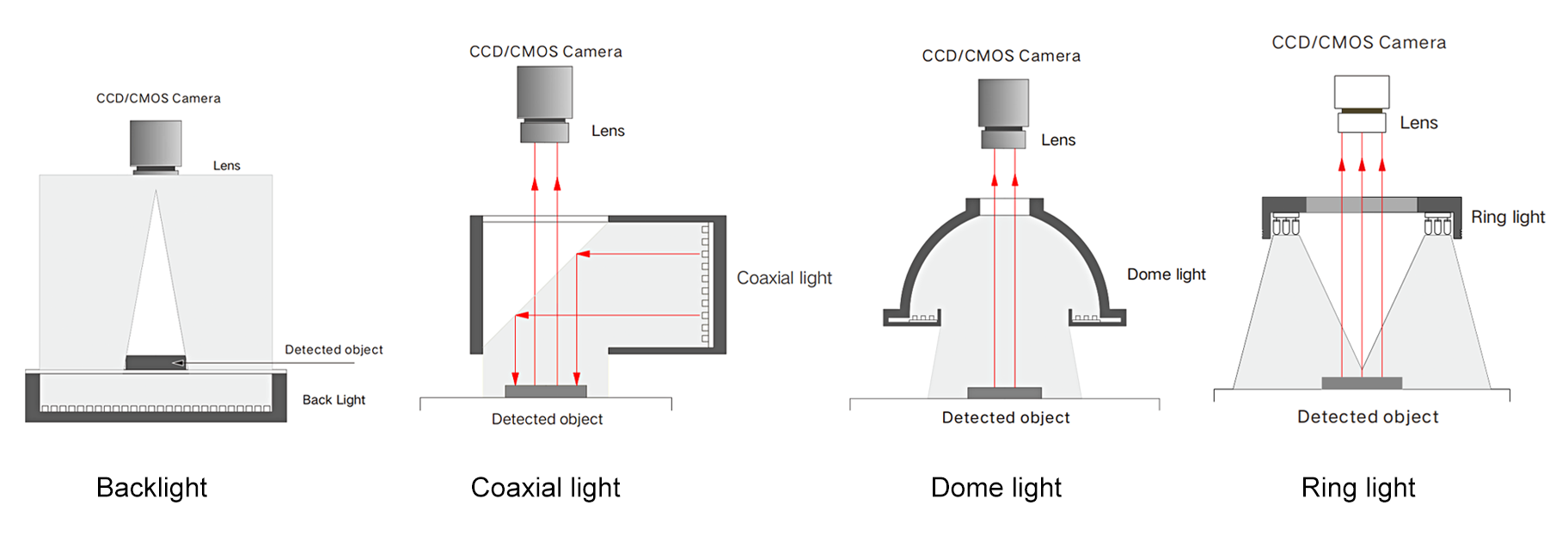
How to pick machine vision light geometry directly affects your ability to detect specific features and defects. Backlighting creates silhouettes ideal for edge detection and dimensional verification on transparent or semi-transparent parts. Coaxial lighting illuminates directly along the camera axis, minimizing shadows and providing uniform brightness on flat surfaces—this setup is essential when you need to pick machine vision light for printed text or surface markings. How to pick machine vision light for threaded components or complex geometries often requires dome or ring lighting, which approaches from multiple angles to reveal surface texture and irregularities. Dark field lighting (oblique angles around 45 to 60 degrees) highlights surface scratches, cracks, and microdents by creating strong edge contrast. When you learn how to pick machine vision light, understanding these geometry options is foundational to matching your inspection task.
Intensity, Uniformity, and Control Systems
How to pick machine vision light intensity depends on your camera sensor sensitivity, lens aperture, required exposure time, and production line speed. Insufficient intensity leads to noisy, dark images and longer exposure times that risk motion blur. Excessive intensity can blow out detail in bright regions and create harsh shadows elsewhere. How to pick machine vision light with proper intensity means calculating the light output in foot-lamberts or lumens and matching it to your camera's dynamic range and speed requirements. Uniformity is equally critical; uneven lighting creates brightness gradients that confuse image processing algorithms. Many modern systems now feature pulse width modulation (PWM) and real-time intensity feedback. When you pick machine vision light with PWM control, you gain the flexibility to adjust brightness on the fly without replacing hardware, significantly reducing commissioning time and enabling rapid adaptation to new part types.
Integration, Maintenance, and Long-Term Performance
Thermal Management and Lifetime Considerations
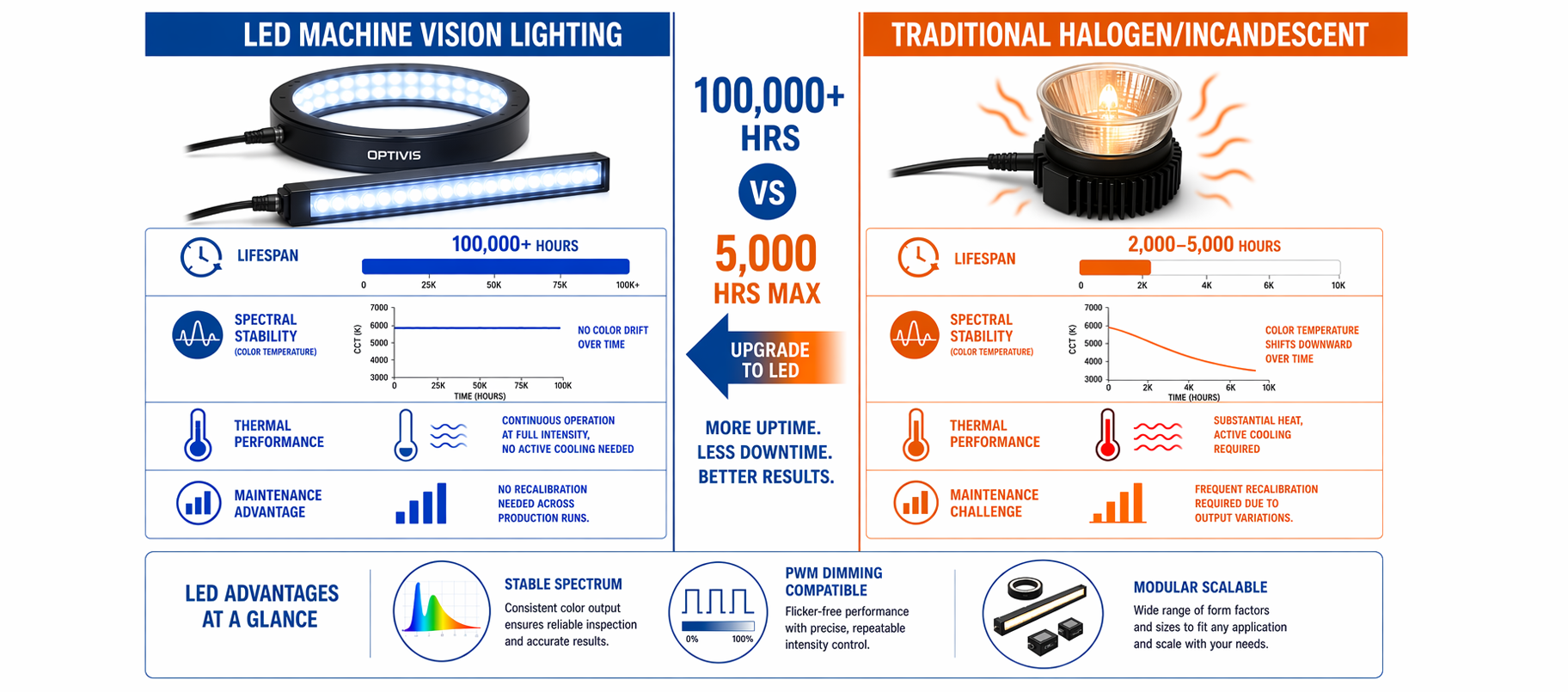
How to pick machine vision light for industrial environments means accounting for heat generation and thermal stress. Traditional halogen and incandescent lights generate substantial heat, limiting operating lifetime and requiring active cooling. Modern LED-based systems produce minimal heat, enabling continuous operation at full intensity without thermal degradation. When you decide how to pick machine vision light, LED technology offers lifespans exceeding 100,000 hours compared to 2,000 to 5,000 hours for traditional sources. Heat also affects color consistency; as halogen bulbs age, their color temperature shifts, altering contrast characteristics across production runs. How to pick machine vision light with LED systems ensures stable spectral output throughout the product lifetime, eliminating need for frequent recalibration.
Installation Flexibility and System Scalability
How to pick machine vision light requires considering mounting options, cable routing, and integration with your existing camera and controller infrastructure. Compact ring lights and line lights fit into tight spaces where traditional fixtures cannot operate. Fiber-coupled lighting systems allow the light source to remain remote from the imaging area, reducing heat at the inspection point and simplifying thermal management. When you pick machine vision light for high-speed production lines, scalability matters; you may need to expand from single-camera to multi-camera systems. Modular lighting controllers and standardized connectors make this transition seamless. How to pick machine vision light with scalability in mind saves engineering time and capital expenditure as your business grows.
FAQ
What is the most important factor when you pick machine vision light?
The most critical factor when you pick machine vision light is achieving sufficient contrast between your target feature and the background. No amount of resolution or processing power compensates for poor contrast. Contrast directly determines detection reliability, speed, and robustness against part-to-part variation. When you pick machine vision light, always prioritize contrast creation over raw brightness.
How do you know if you picked the wrong machine vision light?
You picked the wrong machine vision light if you experience inconsistent image quality, frequent false rejections or false accepts, glare or blown-out regions, harsh shadows obscuring features, or color shifts over time. These symptoms indicate wavelength mismatch, insufficient uniformity, inadequate thermal management, or geometry mismatch with your part geometry. When you pick machine vision light and encounter these issues, return to the selection criteria and conduct methodical lighting trials with alternative geometries and wavelengths.
Can you use the same machine vision light for different parts?
In many cases, when you pick machine vision light with versatile geometry and adjustable intensity, the same light can inspect multiple part types with minor parameter adjustments. Ring lights and dome lights especially offer flexibility across diverse surface geometries and materials. However, extreme differences in reflectivity, color, or material transparency often require re-evaluation. When you pick machine vision light for a manufacturing facility with multiple product lines, selecting flexible, PWM-controlled systems reduces long-term costs and commissioning effort while maintaining image quality across all part families.