EN
EN


Light Controller vs PWM Dimmer: What's the Real Difference?
In industrial automation and machine vision applications, the choice between a machine vision light controller and a generic PWM dimmer can significantly impact system performance, image quality, and long-term operational reliability. While both devices control light intensity, they operate under fundamentally different design philosophies and specifications. A machine vision light controller is engineered specifically to meet the exacting demands of vision inspection systems, whereas a generic PWM dimmer is designed for general lighting adjustment in consumer or basic industrial environments. Understanding these distinctions is critical for anyone deploying camera-based inspection systems, automated optical quality control, or precision image capture applications.
The performance gap between a machine vision light controller and a generic PWM dimmer becomes evident when examining strobe timing precision, electrical noise characteristics, and electromagnetic compatibility. A machine vision light controller delivers nanosecond-level synchronization with camera sensors, ensuring that illumination peaks occur at the exact moment of image capture. Generic PWM dimmers lack this level of coordination and introduce electrical noise that degrades image clarity and measurement accuracy in vision systems. This article explores the real-world implications of these differences and helps you make an informed selection for your specific application requirements.
Strobe Precision and Timing Synchronization
How Machine Vision Light Controllers Achieve Nanosecond Accuracy
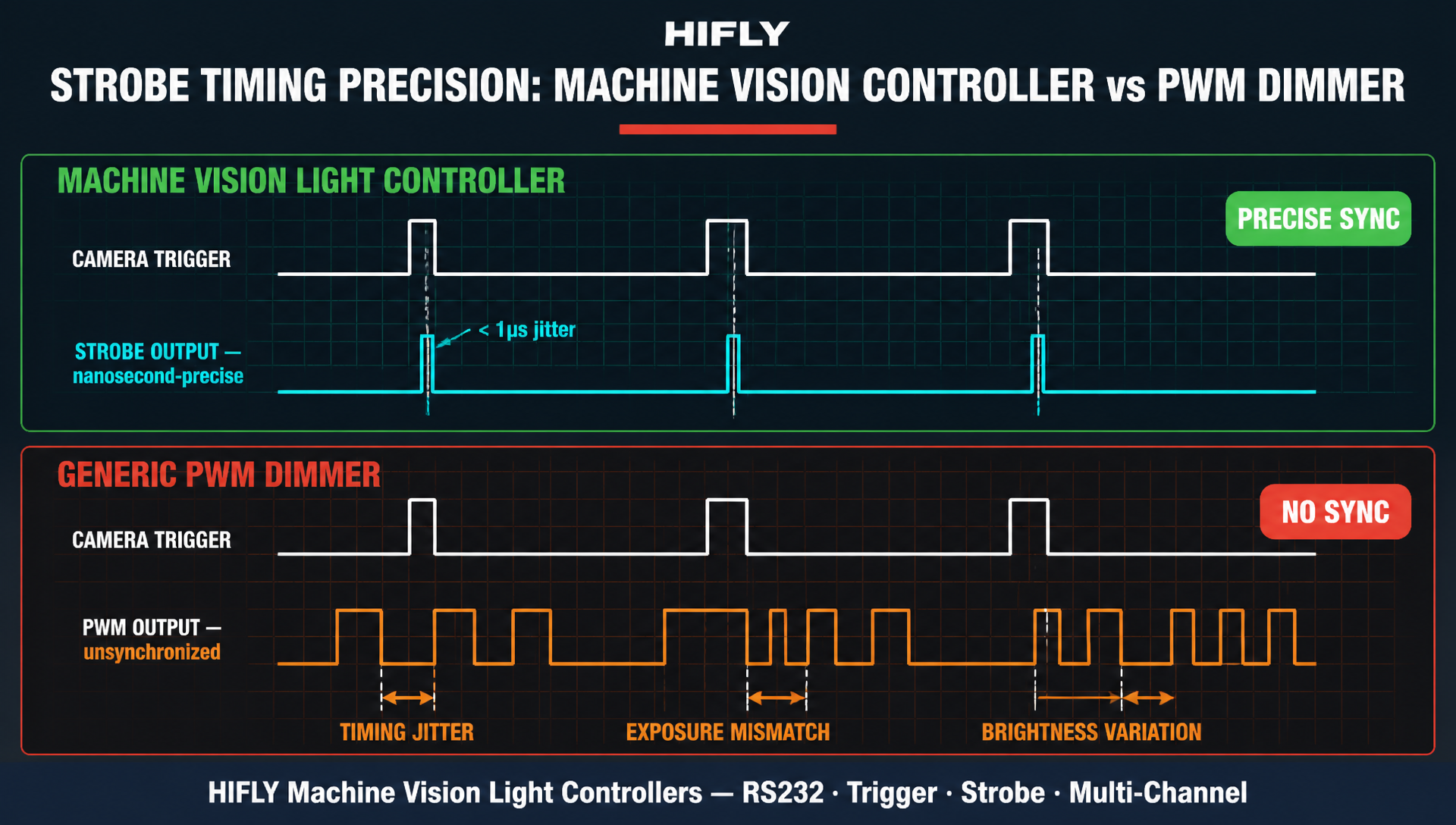
A machine vision light controller is built with dedicated hardware timing circuits that synchronize strobe pulses with camera frame capture windows. This synchronization occurs at microsecond and nanosecond scales, ensuring that the illumination event aligns precisely with the camera sensor's exposure window. When the camera sends a trigger signal, the machine vision light controller responds with a precisely timed light pulse that illuminates the target subject at the moment the sensor begins collecting photons. This timing precision eliminates motion blur in high-speed applications, reduces image artifacts, and ensures consistent exposure across repeated inspection cycles. The controller continuously monitors the camera's exposure timing and adjusts strobe duration and intensity in real-time to maintain optimal light delivery.
The internal architecture of a machine vision light controller includes specialized firmware and analog conditioning circuits that guarantee repeatable strobe performance across thousands of cycles without drift or timing slippage. Many industrial-grade machine vision light controllers offer programmable delay compensation, allowing technicians to account for system-level latency in cabling, connectors, and camera processing pipelines. This level of precision is essential in high-speed production lines where inspection cycles occur at rates of hundreds or thousands per minute.
Generic PWM Dimmer Timing Limitations
A generic PWM dimmer, by contrast, operates on a simple pulse-width modulation principle without synchronization to external sensors or cameras. The dimmer cycles at fixed frequencies, typically 1 to 10 kHz, and adjusts intensity by varying the ratio of on-time to off-time within each cycle. This approach works adequately for steady-state lighting in office environments or consumer applications but introduces timing uncertainty and jitter when used in vision inspection systems. The dimmer has no awareness of camera frame timing and cannot respond to sensor trigger signals in the nanosecond domain. When a camera captures an image during the dimmer's PWM cycle, illumination intensity may vary significantly depending on where in the cycle the exposure occurs. This variation produces inconsistent image brightness, color shifts, and measurement errors that accumulate as false positives or false negatives in quality inspection systems.
Additionally, generic PWM dimmers do not provide strobe capability in the true sense; they modulate brightness over longer time scales unsuitable for synchronizing with camera exposure windows. A machine vision light controller, by contrast, offers edge-triggered strobe outputs that pulse with nanosecond precision and remain dark between pulses, delivering high-intensity illumination only when needed.
Electrical Noise Immunity and Signal Integrity
Noise Generation Sources in Generic PWM Dimmers
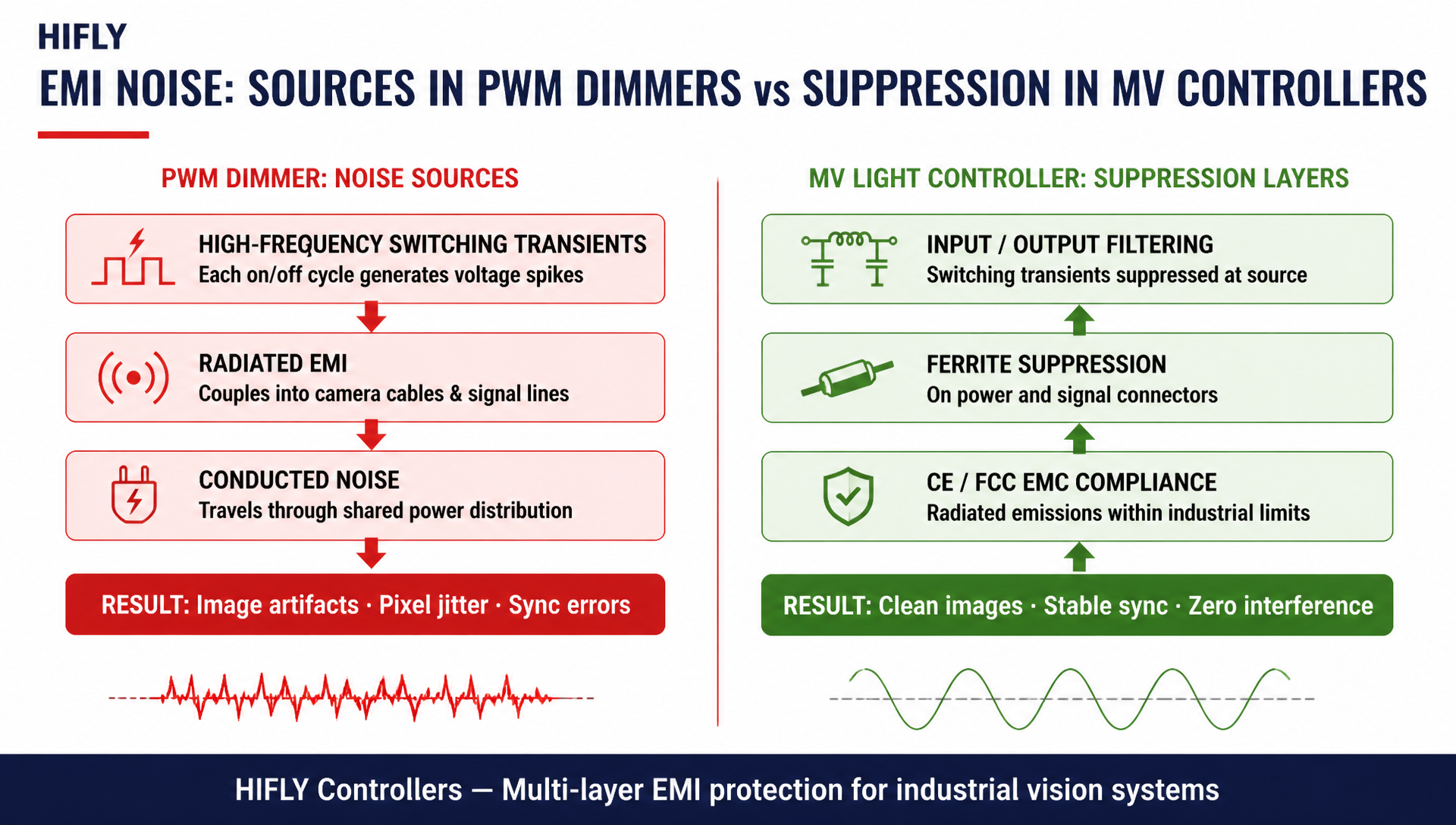
A generic PWM dimmer generates significant electrical noise during its switching cycles because it operates at power frequencies without filtering or electromagnetic shielding optimized for sensitive analog and digital signal environments. Each time the PWM transistor switches on or off, it creates voltage transients and electromagnetic radiation that couple into nearby signal cables, power distribution networks, and camera interfaces. This radiated and conducted noise degrades analog video signals, introduces artifacts in digital image streams, and interferes with low-level sensor signals used for focus adjustment, lens control, or intensity feedback. The generic PWM dimmer was never designed with this coupling risk in mind because consumer lighting applications tolerate or are oblivious to such noise.
In industrial environments where a machine vision light controller operates alongside cameras, vision processors, and motion control systems, the electrical noise from a generic PWM dimmer becomes a serious reliability concern. High-frequency switching transients radiate into shielded camera cables and signal lines, introducing jitter in pixel values and timing errors in synchronization signals. Vision system developers often discover this problem only after installation, when image quality degrades unexpectedly or intermittent inspection failures occur.
Noise Filtering and EMI Control in Machine Vision Light Controllers
A purpose-built machine vision light controller incorporates multiple layers of electromagnetic interference mitigation. The controller includes input and output filtering to suppress switching transients, ferrite suppression on power and signal connectors, and careful PCB layout that separates high-current switching circuits from sensitive analog and digital signal paths. The machine vision light controller also complies with CE or FCC electromagnetic compatibility standards applicable to industrial equipment, ensuring that radiated emissions remain within limits that protect surrounding instrumentation.
Furthermore, a machine vision light controller uses controlled switching techniques such as soft-start circuits and current-limiting to reduce the severity of transients when power is applied or removed. Some advanced machine vision light controllers employ active noise cancellation or synchronous rectification to further minimize switching noise at the source. These design features are absent from consumer-grade PWM dimmers, which prioritize cost reduction over electromagnetic compatibility with sensitive vision systems. When selecting lighting control for a vision application, choosing a machine vision light controller ensures that the lighting subsystem itself does not become a source of system-level noise that compromises image acquisition quality.
Practical System Integration and Performance Outcomes
Integration Requirements and Installation Complexity
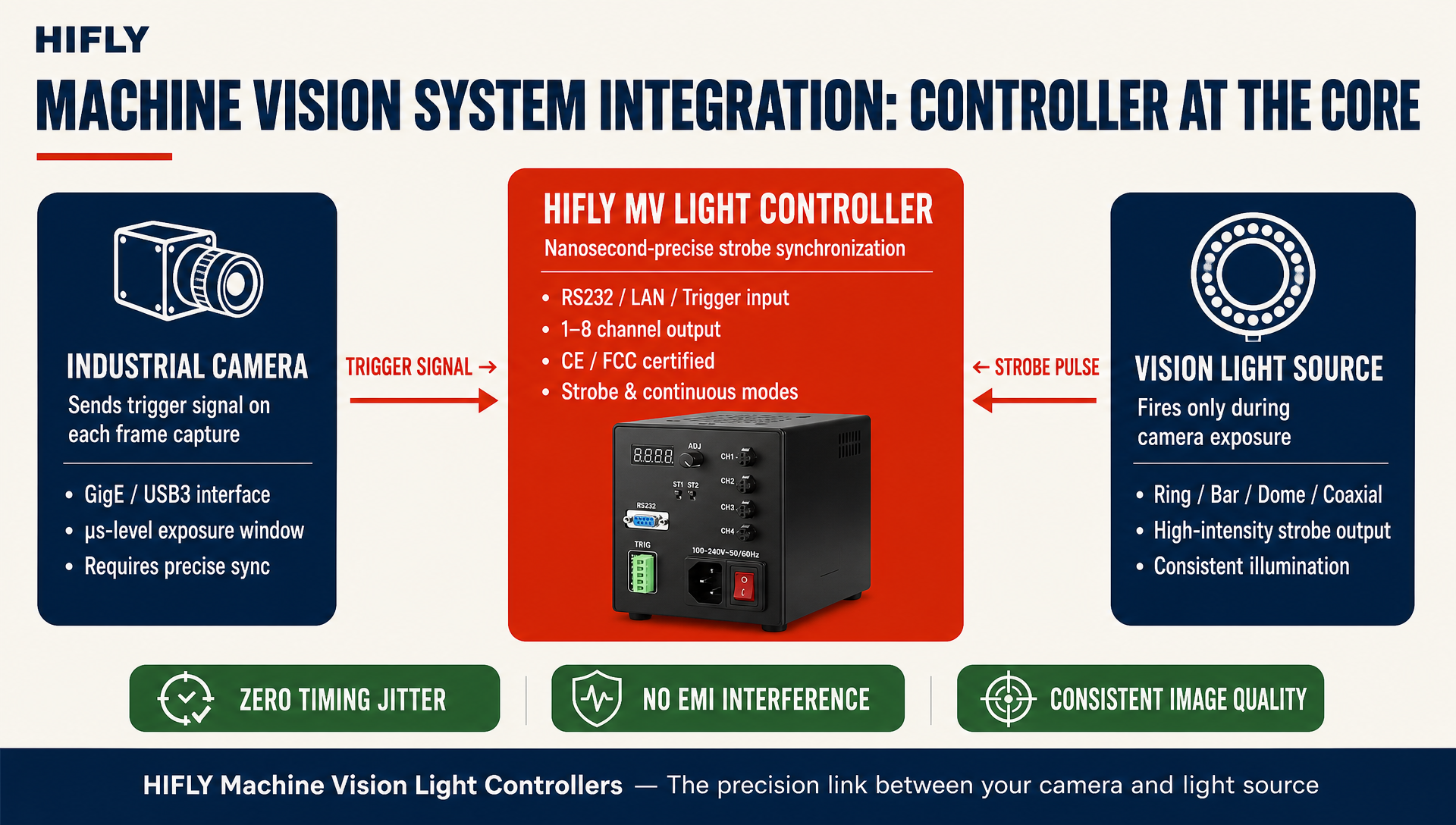
Integrating a machine vision light controller into a machine vision system requires understanding camera trigger protocols, strobe timing parameters, and electrical interface standards such as Coaxial or M12 connectors designed for industrial environments. The machine vision light controller documentation specifies timing margins, pulse duration ranges, and minimum/maximum intensity settings that must align with your camera's capabilities and application requirements. This integration effort is more demanding than simply plugging a generic PWM dimmer into a power outlet, but it yields systems that operate reliably and consistently.
Conversely, a generic PWM dimmer offers the illusion of simplicity because it requires only power input and manual or potentiometer-based intensity adjustment. However, when a generic PWM dimmer is deployed in a vision system, users typically encounter image quality issues, synchronization failures, or electromagnetic interference that necessitates troubleshooting and eventual replacement with a proper machine vision light controller. The apparent simplicity of initial installation is overshadowed by the hidden costs of diagnosis, rework, and system downtime.
Inspection Accuracy and Repeatability
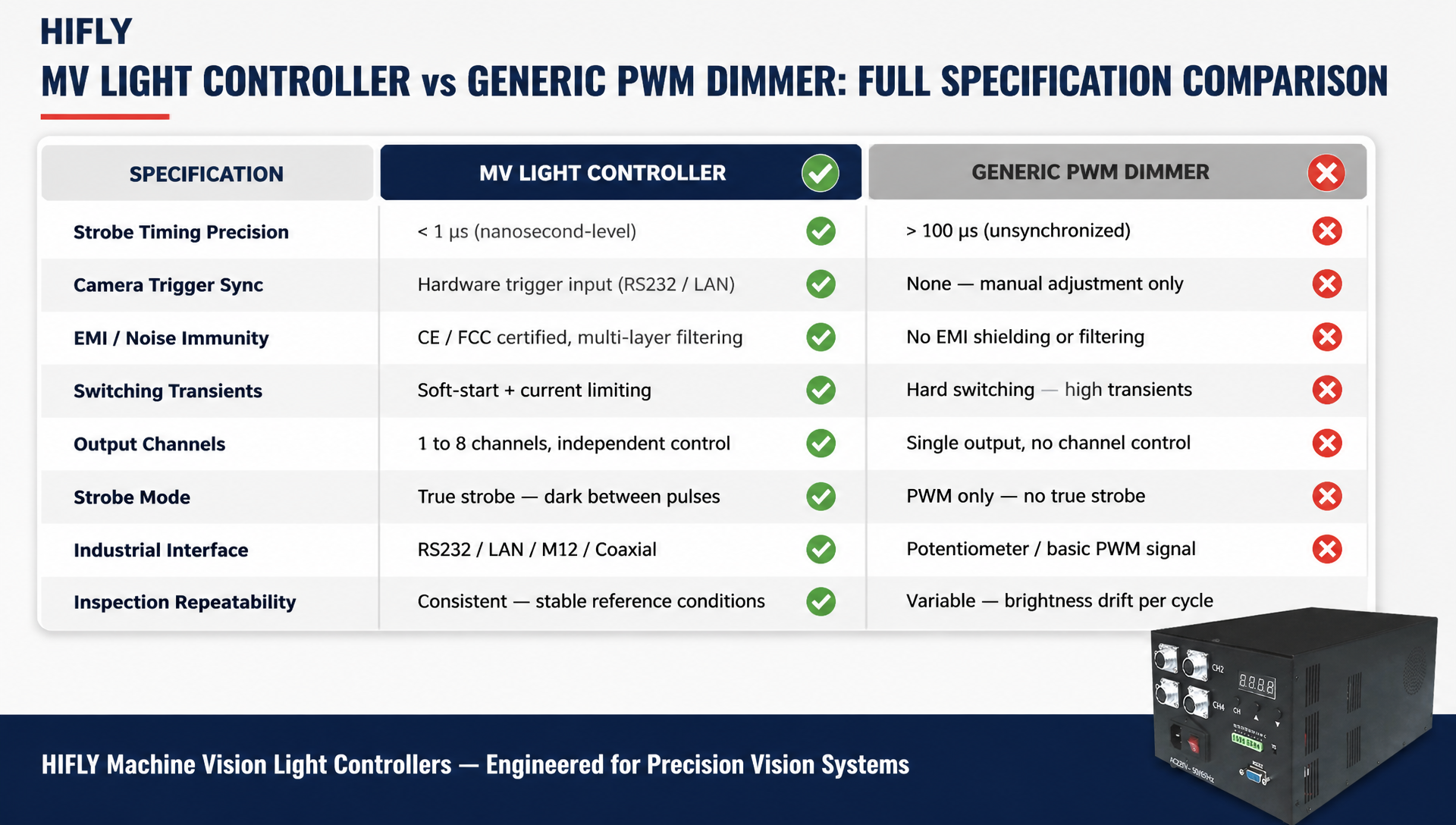
In production environments, the selection between a machine vision light controller and a generic PWM dimmer directly impacts inspection accuracy, defect detection rates, and false alarm frequencies. A machine vision light controller delivers consistent, predictable illumination that enables machine learning models, edge detection algorithms, and color analysis routines to operate with stable reference conditions. Defect detection thresholds remain valid across production runs because lighting conditions do not drift or exhibit cycle-to-cycle variation. A generic PWM dimmer, lacking synchronization and EMI control, produces image variability that forces operators to widen defect detection thresholds, reducing sensitivity and allowing marginal defects to pass inspection. Over weeks and months, the cumulative false negatives from using a generic PWM dimmer can represent significant product quality risk and customer returns.
Furthermore, a machine vision light controller enables confidence in automated reject decisions. When the lighting is consistent and strobe timing is precise, the vision system can reliably flag defects without human verification. A generic PWM dimmer introduces doubt that necessitates additional operator review or secondary inspection, reducing the productivity benefits of automation.
FAQ
Can I use a generic PWM dimmer if my vision application operates at low speeds?
Even at low inspection speeds, a machine vision light controller outperforms a generic PWM dimmer because it eliminates timing uncertainty and electrical noise that degrade image quality and repeatability. Slow-speed applications may tolerate occasional defects due to poor lighting, but the root cause remains unaddressed. A machine vision light controller ensures consistent, high-quality images regardless of inspection speed, supporting future system upgrades without redesign.
What is the typical cost difference between a machine vision light controller and a generic PWM dimmer?
A generic PWM dimmer may cost 30 to 50 percent less than a purpose-built machine vision light controller in initial purchase price. However, when accounting for integration labor, troubleshooting time, image quality issues, and eventual replacement with a proper machine vision light controller, the true cost of using a generic PWM dimmer typically exceeds the cost of selecting the correct controller from the beginning. For mission-critical inspection systems, the machine vision light controller delivers superior return on investment.
Does a machine vision light controller improve image quality in all lighting conditions?
A machine vision light controller maximizes the potential of your vision system by ensuring that illumination timing and intensity are optimized for the camera sensor and optics you have selected. While the controller cannot overcome fundamental limitations such as insufficient ambient light levels or poor optical design, it eliminates performance losses due to synchronization errors and electrical noise. Proper use of a machine vision light controller, paired with appropriate LED ring lights or structured light sources, produces consistently high-quality images that enable accurate defect detection and reliable automation.