EN
EN


Best Weld Monitoring Camera Solutions for Automation
For industrial OEMs, system integrators, and manufacturing stakeholders, a high-performance weld monitoring camera is the cornerstone of automated quality control for welding processes, enabling real-time defect detection, reduced rework, and compliance with stringent industry standards.
Why HDR and SWIR Imaging Are Essential for Reliable Weld Monitoring Camera Performance
High Dynamic Range (HDR) for Accurate Open-Arc and Spatter-Rich Environment Capture
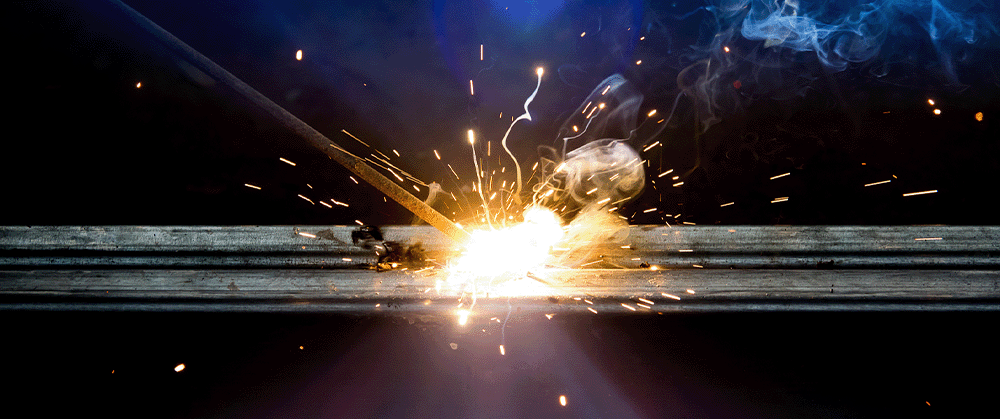
Welding arcs emit extreme brightness—often exceeding 10,000 lux—while spatter creates sudden, deep shadows that obscure critical defects. Standard cameras saturate in the arc or lose detail in shadowed zones, missing micron-level cracks and incomplete fusion. High Dynamic Range (HDR) technology resolves this by capturing multiple exposures in rapid succession—up to a 120 dB range—and intelligently fusing them within milliseconds. Underexposed frames preserve arc structure and electrode behavior; overexposed frames recover detail in dark spatter zones and joint roots. This dual-exposure strategy delivers consistent clarity across reflective aluminum, glare-prone stainless steel, and high-spatter GMAW processes. In automated lines, HDR-enabled weld monitoring cameras reduce false positives by 35% compared to conventional systems.
Short-Wave Infrared (SWIR) Cameras for Melt Pool, Fume Penetration, and Thermal Stability Analysis
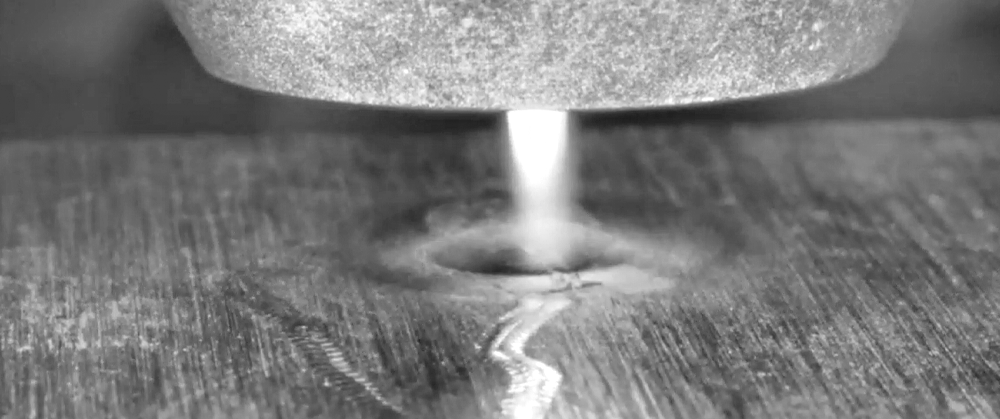
Smoke and metal fumes strongly absorb visible light but remain highly transmissive in the short-wave infrared (SWIR) band (900–1700 nm). SWIR cameras leverage this physical property to image through obstructions at up to 100 fps—enabling real-time observation of melt pool geometry, wetting behavior, and solidification dynamics. Crucially, they support thermal stability analysis: deviations in cooling rates beyond ±15°C/s correlate strongly with lack-of-fusion risks and are tracked continuously without contact. SWIR also detects subsurface porosity by resolving spectral emissivity shifts tied to trapped gas morphology—something standard thermal cameras cannot distinguish due to their coarse spatial resolution. With sub-50 μm resolution, SWIR enables precise, non-invasive penetration depth measurement, preventing heat-induced distortion in thin-gauge aerospace alloys. When integrated into production-grade weld monitoring systems, SWIR reduces defect escape rates by 40% in high-fume environments such as shipbuilding.
AI-Powered Defect Detection and Real-Time Analytics in Modern Weld Monitoring Camera Systems
How Deep Learning Algorithms Identify Porosity, Undercut, and Incomplete Fusion from Live Video Streams
Modern weld monitoring cameras embed deep learning models trained on millions of labeled weld images—spanning materials, processes, and joint types. These algorithms analyze live video streams at 60+ fps to detect three critical defect classes: porosity is identified by characteristic bubble clustering and persistence in the molten pool; undercut is flagged via geometric discontinuities along the weld toe; and incomplete fusion is inferred from thermal asymmetry, inconsistent material flow, and lack of root penetration signatures. Instant detection halts defective welds before downstream processing, and operators receive actionable alerts when parameters exceed pre-defined tolerance bands—enabling immediate intervention rather than post-process rework.
Balancing Automation and Oversight: Human-in-the-Loop Validation for Critical Welds
While AI delivers speed and scalability for routine inspections, mission-critical welds demand human-in-the-loop validation. Engineers use the weld monitoring camera’s synchronized playback interface to review AI-flagged segments—particularly for complex, context-sensitive failures like cold laps or fatigue-prone micro-defects that lack clear visual or thermal proxies. Pressure vessels, nuclear components, and medical device assemblies enforce dual-approval protocols: AI clears 95% of welds automatically, while subject-matter experts validate the remainder. All human overrides are logged and fed back into model training, enabling continuous algorithm refinement. This hybrid architecture ensures zero critical defects reach final assembly—without sacrificing throughput.
Selecting the Right Weld Monitoring Camera for Your Automation Tier: From Robotic Cells to High-Mix Lines
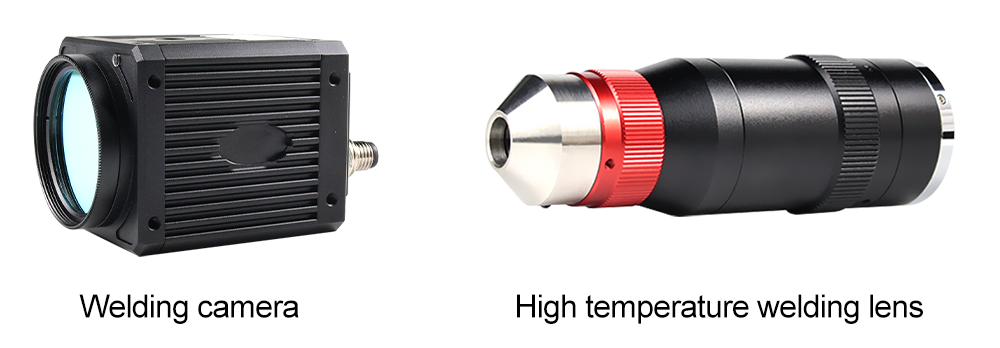
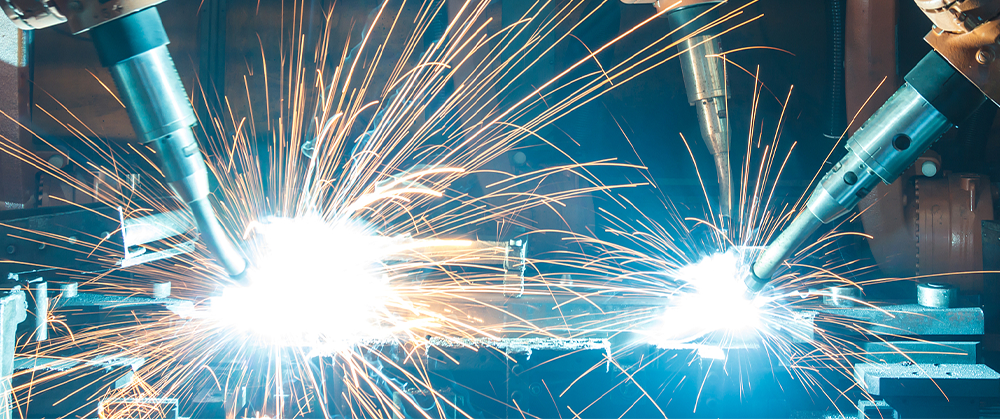
Choosing the right weld monitoring camera means aligning hardware capabilities with your automation tier—not just process requirements. Robotic welding cells performing high-volume, repeatable tasks need ruggedized, high-speed cameras (120+ fps) with active spatter shielding and sustained thermal tolerance (40°C ambient near arc zones). These systems must maintain stable tracking of dynamic weld pools while resisting debris, electromagnetic interference, and radiant heat. In contrast, high-mix lines require adaptability: programmable logic controller (PLC) integration, auto-calibration for rapid part changeovers, and software-flexible algorithms that adjust to varying joint configurations (e.g., butt, fillet, T-joint). Key selection criteria include:
- Resolution: Minimum 1280×720 for reliable defect identification at working distances
- Compatibility: Native support for industrial protocols including EtherNet/IP, PROFINET, and OPC UA
- Thermal Tolerance: Verified operation above 40°C in proximity to open arcs
- Software Flexibility: Configurable analytics modules that scale with joint complexity
Mismatched equipment drives unplanned downtime and inconsistent quality. One industry study found production lines lose $740k annually from weld-related stoppages (Ponemon Institute, 2023). For high-mix environments, cameras with automated calibration cut changeover times by up to 65% versus manual setups—directly improving line utilization and ROI.
Seamless Integration of Weld Monitoring Cameras with Industrial Ecosystems
Modern weld monitoring camera systems close critical data gaps across manufacturing workflows by embedding into existing industrial ecosystems via standardized, deterministic communication protocols. Synchronization with Programmable Logic Controllers (PLCs), Manufacturing Execution Systems (MES), and robotic controllers enables closed-loop quality control—where imaging insights directly inform equipment actions. Precision timing, achieved through IEEE 1588 Precision Time Protocol (PTP), eliminates millisecond-level drift between image capture, analysis, and actuation. In high-speed automotive welding, synchronization errors under 5 μs reduce defect misidentification by 22%.
Synchronization with Robotic Controllers, PLCs, and MES via Time-Triggered Protocols
Time-triggered architectures—such as TTEthernet—guarantee deterministic data exchange by allocating fixed transmission windows for time-critical signals. When a robotic arm initiates a weld path, the camera captures arc stability metrics within 50 ms and relays them to the PLC, which can adjust voltage, wire feed, or travel speed in real time. MES integration logs these micro-adjustments alongside weld metadata (material grade, operator ID, environmental conditions), building auditable, traceable production histories. Leading aerospace manufacturers report 17% faster AS9100 certification cycles using this tightly synchronized approach.
Edge Processing vs. Cloud Analytics: Latency, Bandwidth, and Compliance Trade-Offs
| Processing Approach | Average Latency | Bandwidth Impact | Ideal Use Case |
|---|---|---|---|
| Edge Computing | <8ms | Minimal (local) | Real-time defect correction, safety-critical parameter adjustments |
| Cloud Analytics | 120–500ms | High (continuous 4K streams) | Cross-factory trend analysis, long-term process optimization, predictive maintenance modeling |
Edge devices execute spatter detection, melt pool centroid tracking, and thermal gradient analysis locally—enabling sub-10 ms corrective feedback essential for nuclear, medical, and defense applications where regulatory compliance mandates on-premise data residency (e.g., ASME BPVC Section IX, ITAR). Cloud-based analytics aggregate anonymized thermal anomaly patterns across global facilities but face bandwidth bottlenecks with high-resolution video. Hybrid deployments—where edge handles 90% of time-sensitive decisions and cloud manages strategic insights—deliver optimal balance across latency, security, and scalability.
Ready to Elevate Your Welding Quality Control with a High-Performance Weld Monitoring Camera?
A reliable weld monitoring camera is the foundation of automated welding quality control—no manual inspection or basic imaging system can match its real-time defect detection, process traceability, and compliance capabilities for industrial welding operations. By selecting a weld monitoring camera with HDR and SWIR imaging, AI-powered analytics, and seamless industrial ecosystem integration, you’ll reduce scrap rates, cut rework costs, and ensure compliance with the strictest industry standards.
For industrial-grade weld monitoring camera solutions tailored to your robotic welding, high-mix production, or mission-critical application, or to build a fully integrated welding quality control system with complementary lenses, lighting, and AI analytics tools (as offered by HIFLY), partner with a provider rooted in industrial machine vision expertise. HIFLY’s 15 years of experience spans weld monitoring camera design, OEM custom manufacturing, and end-to-end welding automation system integration—backed by ISO 9001:2015 certification, global regulatory compliance support, and dedicated engineering services. Contact us today for a no-obligation consultation, custom sample testing, or to design a weld monitoring solution optimized for your production line.