EN
EN


Why Choose CoaXPress for High-Speed Vision
In the field of machine vision, as image data grows larger and transmission requirements become more demanding, traditional interfaces often struggle to meet project needs. This is why the CoaXPress (CXP) interface has become the choice for many high-speed vision systems.
Why is it being adopted by an increasing number of high-end projects? The answer is simple: fast enough, stable enough, and capable of transmitting over longer distances.
If you are evaluating industrial camera interfaces—especially in scenarios with extremely high demands on bandwidth and stability, such as high-speed inspection, wafer inspection, and scientific imaging—this article will help you clearly understand the value and boundaries of CXP at a glance.
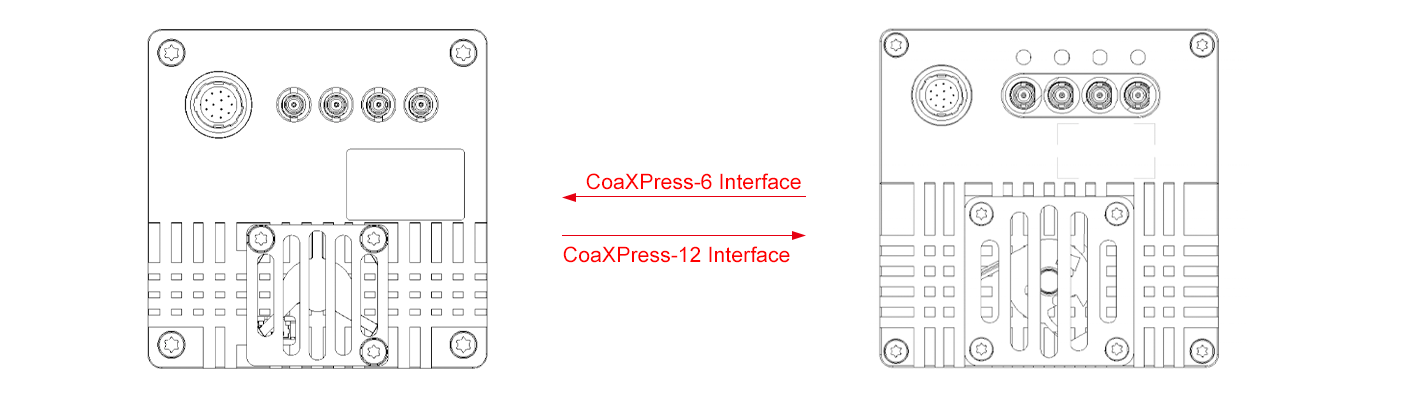
Ⅰ. Bottom line first: CXP is an interface built for "high-performance vision"
In industrial machine vision, an interface is never just about "transmitting data." It directly determines whether the system can run, run reliably, and be easily expanded later. The core attributes of CXP can be summed up in eight words: high-speed transmission, stable and reliable. This is why it is widely used in demanding fields such as high-speed inspection, wafer inspection, and scientific imaging.
II. Just how fast is CXP?
Currently, there are two common standards for CXP: CXP‑6 and CXP‑12. Their maximum per‑channel transmission rates are:
Type |
Max. per‑channel data rate |
CXP‑6 |
6.25 Gbps |
CXP‑12 |
12.5 Gbps |
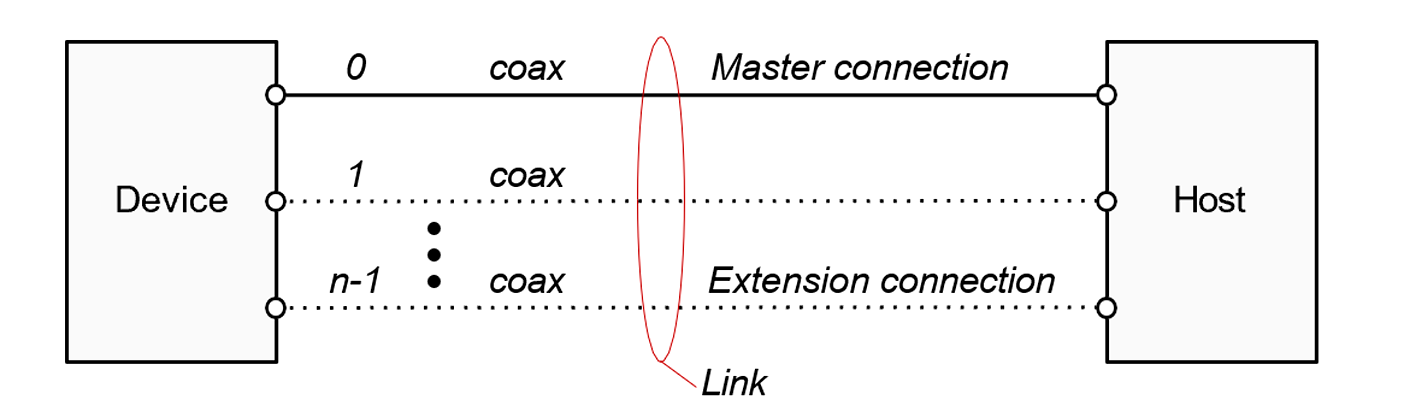
If multi-channel configurations are used, such as 2-channel or 4-channel, the total bandwidth can be further increased. This means that when faced with ultra‑high-speed, high-resolution image data, CXP can still maintain strong processing capability.
III. Not just fast – it also transmits over long distances
Many people only look at speed when choosing an interface. But when a project is actually deployed, cable length often proves equally critical. Compared to some interfaces that are only suitable for short‑distance transmission, CXP also excels in transmission distance: typical transmission distances range from 50 meters to 170 meters (different vendor solutions may vary), but overall, its transmission capability is significantly better than most common industrial interfaces. What does this mean? In projects with large equipment, multi-station production lines, or long distances between cameras and host computers, CXP allows for more flexible deployment. It is not just “adequate” – it is truly more suitable for complex field environments.
IV. Why do many high‑end vision systems choose CXP?
1. Mature protocol, strong stability
CXP is an international standard and was designed from the outset for high‑speed image transmission. Its protocol stack is mature, reliability is high, and the bit error rate during transmission is low. This is important for mission-critical systems. Often, what a project truly fears is not “a bit slower” but “occasional instability.” High speed brings efficiency, but stability determines whether the system can run reliably over the long term.
2. Sufficient bandwidth, ideal for large-volume image transmission
The per-channel bandwidth is already impressive. When dealing with large-format images, continuous high-speed acquisition, real-time processing, etc., the advantages of CXP become even more evident. Particularly in scenarios such as:
• Inspecting high-speed moving objects
• Processing high-resolution, large-format images
• Vision systems with extremely high real‑time requirements
In these applications, the interface is not a supporting actor – it sets an upper limit on performance. And CXP is precisely prepared for such upper limits.
V. Limitations
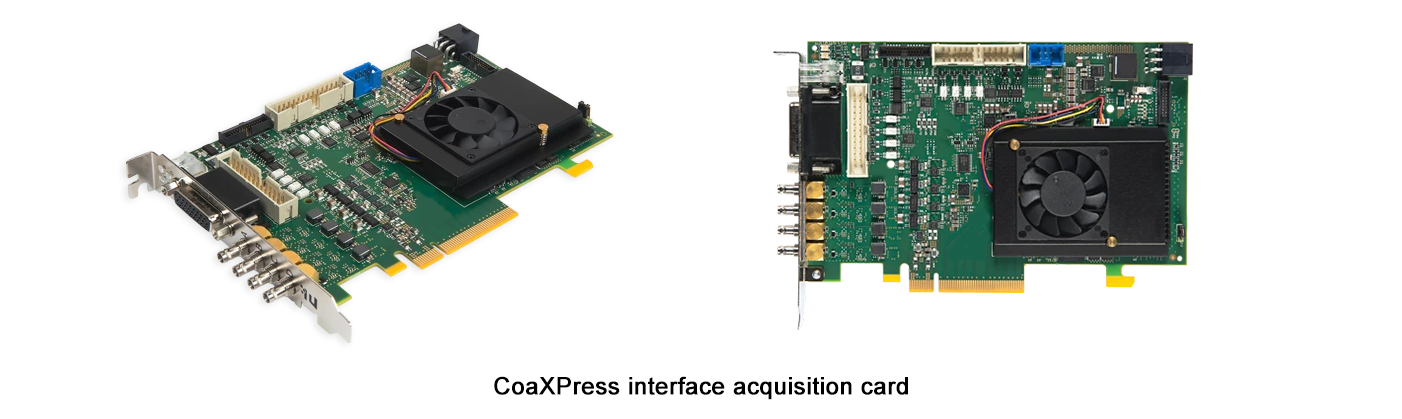
1. Requires a dedicated frame grabber
Similar to Camera Link, CXP cameras generally must be paired with a dedicated frame grabber to receive images. This means:
• Not plug-and-play
• Requires additional hardware support
• Installation, adaptation, and debugging have certain technical thresholds
For performance-oriented systems, this is not a problem. But for projects with limited budgets or a need for rapid deployment, this must be considered in advance.
2. Higher overall system cost
The cost of CXP is not limited to the frame grabber. Its specialized cables are also typically more expensive than those of common interface solutions. So for the entire system, the equation is often: camera + cable + frame grabber = higher total investment. This also determines that CXP is more suitable for applications with high performance requirements and relatively sufficient budgets. It is not a “general low‑cost solution” but rather a high‑end performance‑oriented choice.
VI.Which projects are truly suitable for CXP?
If your project falls into the following categories, CXP is well worth considering:
• Ultra-high-speed image acquisition, e.g., PCB inspection, high-speed industrial sorting
• High-resolution, large-format image processing -large data volumes, high demands on interface bandwidth
• Applications with large system layouts and long transmission distances-significant distance between camera and host
• High-end vision systems with extremely high demands on stability and real-time performance – where system reliability and continuous operation are critical