EN
EN


3D Camera Guide for Machine Vision & Robotics
In today’s scalable industrial automation landscape, the 3D camera is the foundational technology enabling robotic systems to operate with spatial intelligence, precision, and adaptability in unstructured, dynamic factory environments. As a 15-year global leader in machine vision solutions, HIFLY Technology (Shenzhen) designs and manufactures industrial-grade 3D camera systems backed by ISO 9001:2015 certification, 30+ invention patents, and a track record of serving 2,500+ OEM and manufacturing clients across 30+ countries. This guide breaks down the critical value of the 3D camera for robotics, core 3D sensing technologies, high-impact industrial use cases, and key selection criteria for OEMs and system integrators.
Why 3D Cameras Are Essential for Reliable Machine Vision in Robotics
The Limitations of 2D Vision in Dynamic Robotic Environments
2D vision systems capture flat images—lacking the depth perception critical for spatial reasoning and physical interaction. In dynamic environments like warehouses, lighting variations cause up to 30% more misidentification errors than 3D alternatives. Robots routinely fail at bin-picking when parts shift or overlap, and struggle with reflective or transparent surfaces. Without z-axis data, collision risks rise significantly during high-speed motion, forcing costly workarounds: precision fixturing, controlled lighting, or manual intervention—all incompatible with scalable, flexible automation.
How 3D Camera Technologies Work: Stereo Vision, Time-of-Flight, and Structured Light
Three proven technologies deliver industrial-grade depth sensing: stereo vision, time-of-flight (ToF), and structured light. Stereo vision uses dual synchronized cameras to triangulate distance—mimicking human binocular depth perception. ToF sensors emit infrared pulses and measure return time to generate real-time depth maps, excelling in low-light or high-speed scenarios. Structured light projects precise patterns onto surfaces; distortions are analyzed to reconstruct geometry with sub-millimeter accuracy—ideal for metrology and quality inspection. All three output dense point clouds used for robust object localization, pose estimation, and dimensional analysis—enabling robots to operate reliably in unstructured, changing environments.
Key Industrial Applications of 3D Cameras in Robotics
Bin Picking, Depalletizing, and Assembly: Real-World Performance Gains
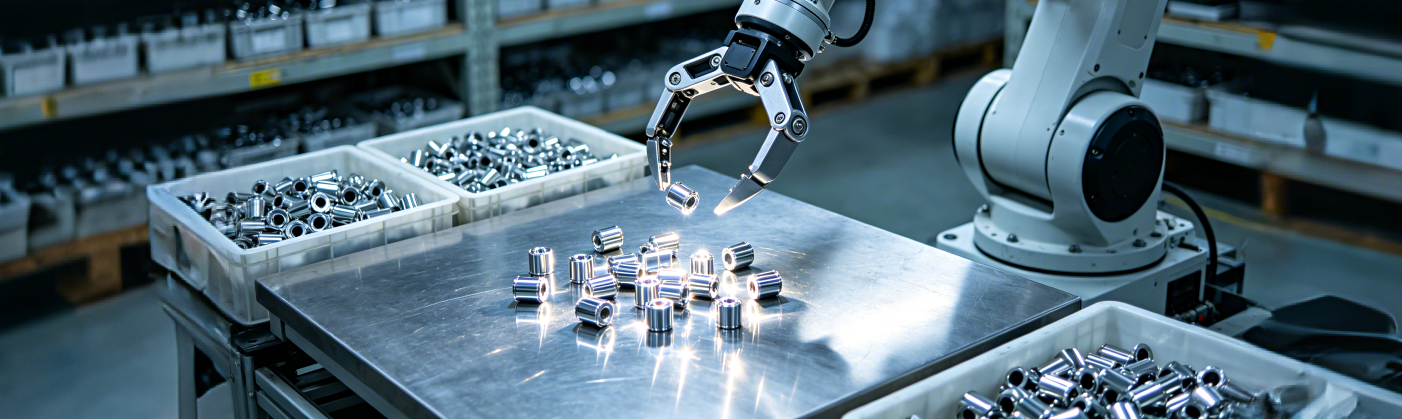
3D cameras eliminate the ambiguity that plagues 2D systems in cluttered, variable scenes. By resolving object position, orientation, and occlusion in real time, they enable robotic arms to pick parts from randomized bins with sub-millimeter repeatability—boosting cycle times by up to 40%. In depalletizing, depth-aware perception allows adaptive path planning around irregular, shifting loads while maintaining safe standoff distances. During precision assembly, 3D-guided alignment ensures micron-level part mating, slashing scrap rates and eliminating manual repositioning steps previously required to compensate for 2D’s spatial blind spots.
Enabling Autonomous Mobile Robots with 3D Obstacle Perception
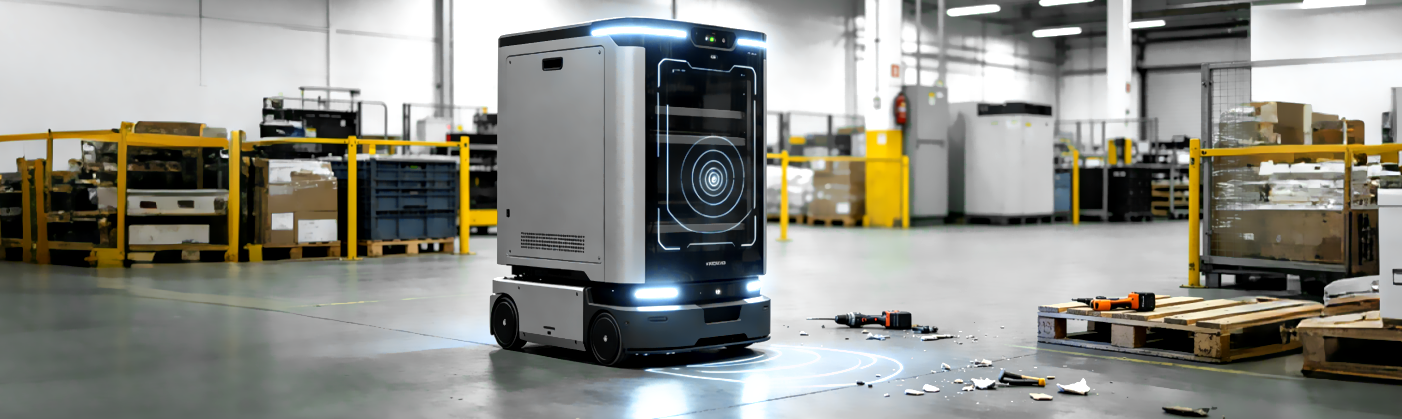
Modern AMRs rely on 3D cameras—not just for navigation, but for true situational awareness. These sensors generate high-fidelity, real-time depth maps capable of detecting obstacles as small as 5 cm—including crouching personnel, dropped tools, or pallet debris—without infrastructure changes like floor markings or QR codes. This enables safe, collaborative operation alongside humans and autonomous rerouting in response to dynamic obstructions. Field deployments show a 30% improvement in material transport throughput, while meeting ISO/TS 15066 safety requirements for power and force limiting in shared workspaces.
How to Select the Right 3D Camera for Your Robotics Application
Balancing Accuracy, Speed, and Environmental Robustness
For OEMs and system integrators, selecting the right industrial 3D camera requires balancing three core, interdependent performance pillars: measurement accuracy, frame rate, and environmental ruggedness. For bin-picking or precision assembly, sub-millimeter depth accuracy from your 3D camera is non-negotiable—but higher resolution often trades off against speed. Applications involving moving conveyors or fast-moving AMRs demand sustained frame rates of 30+ fps from your 3D camera to maintain closed-loop robotic control.
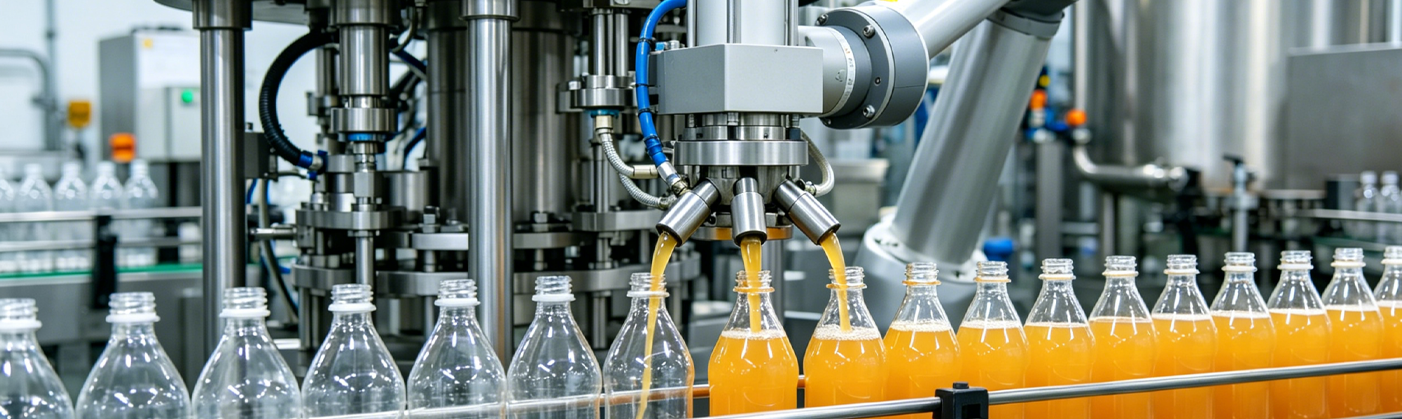
Environmental hardening is equally decisive: an IP65/67-rated 3D camera housing resists dust and washdowns common in food & beverage and automotive manufacturing; active IR illumination ensures consistent performance across ambient lighting shifts; and a wide operating temperature range (–10°C to 50°C) prevents thermal drift or sensor failure in unconditioned facilities. HIFLY’s 3D camera lineup addresses all three pillars, with custom OEM configurations available to match your specific robotic application’s accuracy, speed, and environmental requirements.
Ensuring Seamless Integration: ROS 2, NVIDIA Isaac, and Industrial SDK Compatibility
Deployment velocity for your robotic system depends heavily on the software interoperability of your chosen 3D camera. Prioritize a 3D camera with native ROS 2 support, leveraging standardized message types (e.g., sensor_msgs/PointCloud2) and TF2 integration for plug-and-play sensor fusion with robotic controllers. For AI-driven perception pipelines, a 3D camera with NVIDIA Isaac-optimized models streamlines deployment of deep learning models on Jetson platforms. On the industrial automation side, a GigE Vision and GenICam-compliant 3D camera integrates directly with PLCs and HMIs without custom middleware. Pre-built Python and C++ SDKs reduce configuration time by up to 40%, per industry benchmarks—and vendors offering version-controlled firmware, comprehensive API documentation, and long-term support ensure scalability across your hardware generations.
Ready to Elevate Your Robotic Automation with a High-Performance 3D Camera?
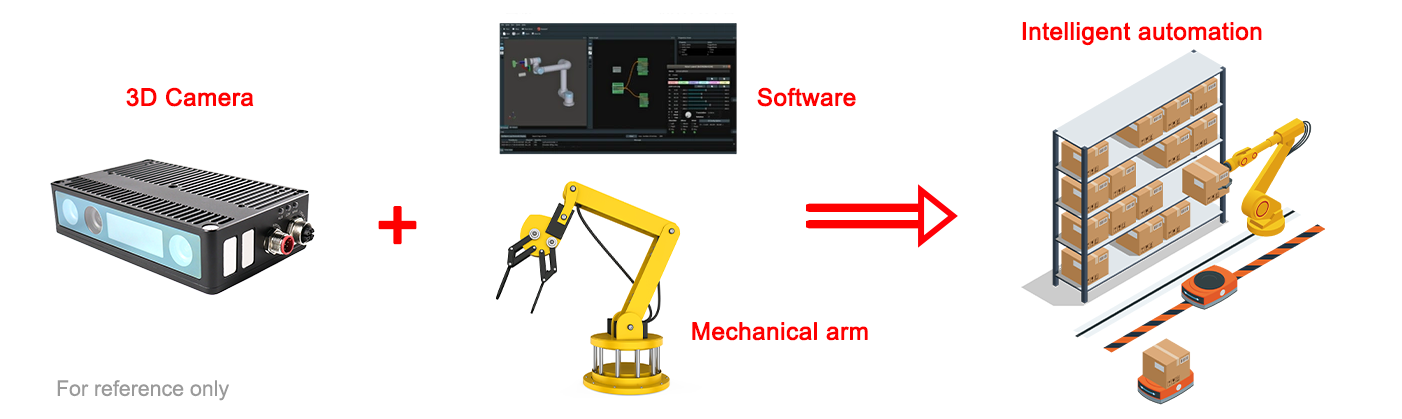
The 3D camera is the backbone of reliable, flexible robotic automation—no 2D workarounds or advanced algorithms can overcome the lack of spatial depth data in dynamic industrial environments. By selecting a 3D camera matched to your application’s accuracy, speed, and environmental needs, you’ll unlock faster cycle times, reduced scrap, lower manual intervention, and fully scalable automation for your manufacturing or logistics operation.
For industrial-grade 3D camera solutions tailored to your robotic application, or to build a fully integrated machine vision system with complementary lenses, lighting, and AI processing tools (as offered by HIFLY), partner with a provider rooted in industrial machine vision expertise. HIFLY’s 15 years of experience spans 3D camera design, OEM custom manufacturing, and end-to-end vision system integration—backed by ISO 9001:2015 certification, global technical support, and flexible OEM/ODM cooperation models. Contact us today for a no-obligation consultation, custom sample testing, or to design a 3D camera solution optimized for your robotic automation project.
Frequently Asked Questions (FAQ)
Q: Why are 2D vision systems insufficient for robotics?
2D vision systems lack depth perception, which is crucial for accurate spatial reasoning, collision avoidance, and interacting with dynamic environments like warehouses. They often require costly workarounds like controlled lighting or manual intervention.
Q: What are the main technologies behind 3D cameras in robotics?
The three primary technologies are stereo vision, time-of-flight (ToF), and structured light. Each has specific advantages for different industrial applications, like depth measurement, low-light performance, and high accuracy.
Q: How do 3D cameras improve bin-picking and assembly tasks?
3D cameras provide real-time depth perception, enabling robots to handle occluded, overlapping, or randomly arranged parts. This ensures high precision and reduces error rates, boosting productivity and cycle times.
Q: What should I consider when selecting a 3D camera?
Key factors include accuracy, frame rate, and environmental robustness. For example, applications requiring sub-millimeter precision need highly accurate sensors, while high-speed operations require fast frame rates. Durability features, like IP65/67 ratings, are also important for industrial environments.
Q: What software compatibility is essential for integrating 3D cameras?
Look for cameras with native ROS 2 and NVIDIA Isaac support. Compatibility with GigE Vision, GenICam, and pre-built SDKs in Python or C++ can significantly streamline deployment and integration.