EN
EN


How Industrial Lenses Ensure Accurate Machine Vision Results
The Critical Role of Industrial Lens in Measurement Accuracy
Why optical errors from industrial lenses are the leading cause of machine vision failure
When industrial lenses have optical flaws like chromatic aberration or spherical distortion, they mess up measurement accuracy pretty badly. Looking at manufacturing audit reports, we find that around 60% of all false rejects in automated inspection systems come down to these unresolved lens issues. Small distortions can throw off image alignment compared to actual measurements, which causes serious problems in precision work such as checking semiconductor wafers or verifying medical devices. To stop these kinds of failures, companies need to focus on proper lens calibration and optimizing the entire optical path. Simply adjusting sensors or software isn't enough to fix what's fundamentally an optics problem.
How lens-sensor alignment dictates geometric fidelity: Controlling distortion, vignetting, and image circle coverage
Precise mechanical coupling between lens and image sensor governs geometric accuracy across three interdependent parameters:
- Distortion control minimizes barrel or pincushion effects that skew dimensional measurements
- Vignetting management ensures uniform illumination across the full field of view
- Image circle coverage must exceed sensor dimensions to prevent edge data loss
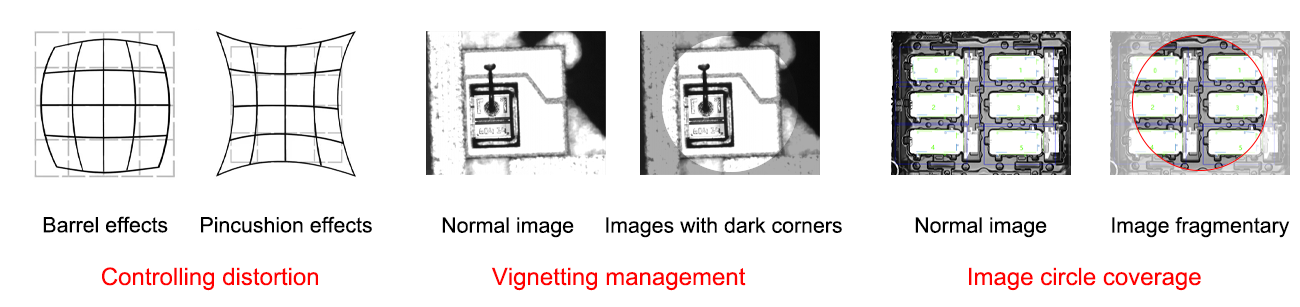
Misalignment introduces parallax errors exceeding 0.1%—a threshold that breaches aerospace component tolerances. Field studies confirm optimized lens-sensor configurations reduce dimensional uncertainty by up to 80% compared to misaligned setups.
Key Industrial Lens Selection Criteria for High-Accuracy Applications
Focal length, working distance, and field of view: Optimizing precision within physical constraints
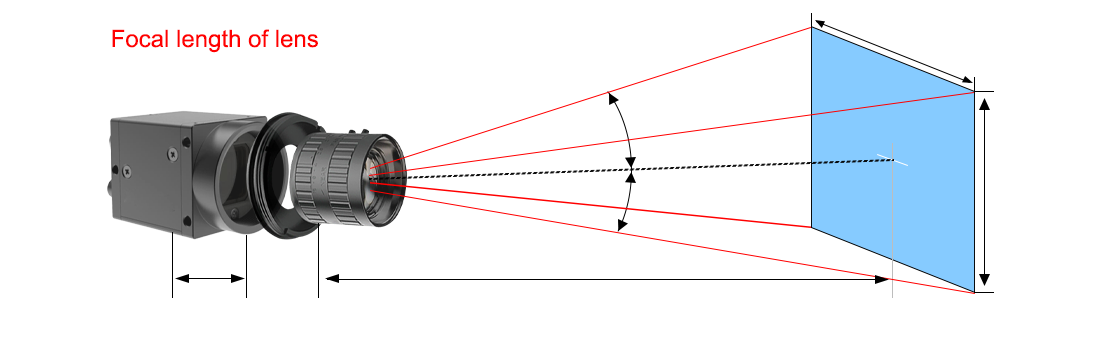
Getting the right focal length is all about finding that sweet spot between sensor size, working distance (WD), and what we call field of view (FOV). When using shorter focal lengths, the field of view gets wider but the depth of field shrinks quite a bit. On the flip side, longer lenses give us narrower fields of view but they do boost magnification levels. For those working in semiconductor inspection, getting these numbers wrong can lead to serious problems like geometric distortions that go past the acceptable ±0.1% range. There are also real world limitations to consider. The space available for robotic arms or where conveyors need to be positioned often sets hard limits on how far back the camera can sit. At the same time, whatever field of view we end up with needs to cover all important features without making things blurry. And here's something interesting about sensors and lenses working together. If someone pairs a 5 megapixel sensor with a poor quality lens, roughly 37% of possible measurement accuracy just disappears according to recent 2023 studies in metrology. That's why matching sensor capabilities with good optics matters so much in practice.
Telecentric vs. entocentric industrial lenses: Eliminating parallax error in dimensional metrology
Telecentric lenses fix a common problem with measurements where objects at different distances appear distorted. They keep the same magnification no matter how far away something is from the lens, which makes them great for measuring things like round parts or layered components. Standard lenses work differently because they let light hit the sensor at angles, creating those pesky parallax issues we all know too well. With telecentric optics, the light stays parallel as it hits the sensor surface. This matters a lot when checking tiny details on bearings, for instance. Regular lenses can throw off readings by around 3% just based on where the camera happens to be positioned. Entocentric lenses still have their place, especially when looking for flaws on surfaces, but when precision matters down to microns and depth becomes critical, there really isn't any substitute for telecentric technology in metrology applications.
| Lens Type | Parallax Error | Ideal Use Case | Cost Impact |
|---|---|---|---|
| Telecentric | Near-zero | Dimensional gauging | 2–4× higher |
| Entocentric | Up to 5% | Presence verification | Standard |
The 2024 Machine Vision Report confirms telecentric adoption reduces calibration drift by 89% in automotive metrology systems—delivering long-term accuracy despite higher initial investment.
Translating Optical Performance Metrics into Real-World Accuracy
MTF, distortion mapping, and aberration control: From lab specifications to verified pass rates in pharmaceutical packaging inspection
Industrial lenses convert laboratory optical specifications into measurable production outcomes through three validated metrics:
- Modulation Transfer Function (MTF) quantifies contrast retention at increasing spatial frequencies; values above 0.6 at 50 lp/mm reliably detect micro-defects like cracked vial necks
- Distortion mapping, calibrated to under 0.1% barrel or pincushion deviation, ensures label placement accuracy within ±0.05mm tolerances
- Multi-wavelength aberration control minimizes chromatic focal shifts to preserve edge acuity across diverse packaging materials
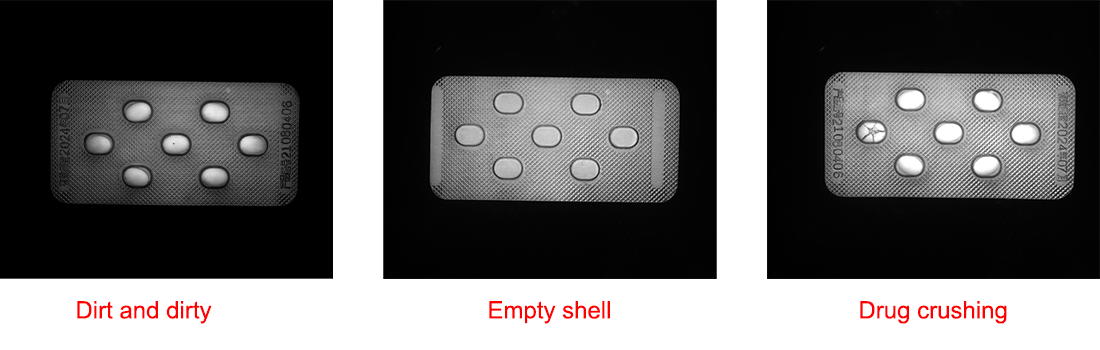
The numbers really matter when it comes to inspection reliability. Pharmaceutical companies that use advanced lens testing methods like MTF analysis, distortion checks, and aberration validation get defect detection rates above 99.8% for serious issues. That's way better than the typical 92-95% range seen with regular optical systems. Such accuracy keeps problems like off-center tamper seals, unreadable batch numbers, and tiny particles out of the product stream before they reach customers. Think about what this means financially - product recalls typically run around $740,000 according to Ponemon Institute research from last year. When manufacturers tie their equipment specs to real-world production data, they not only meet FDA requirements under 21 CFR Part 11 but also save money by avoiding unnecessary rejections of good products.
Validating Industrial Lens Performance in Production Environments
Industrial lenses don't just need to meet lab standards they actually have to work properly when installed on factory floors where things get messy. Temperature changes throughout the day, constant machine vibrations, and contact with various chemicals all throw wrenches into what happens during controlled tests. A recent case study in the automotive sector showed that even though lab tests were sped up to simulate years of use, they completely missed the damage caused by road salt exposure that was clearly visible after actual deployment in harsh environments. This highlights why real world testing is so important for building accurate reliability models. When it comes to precision matters such as checking medication quality, top manufacturers aren't taking chances anymore. They've started running regular checks on their optical systems to make sure everything stays within spec over time.
- Environmental stress testing: Simulating thermal cycling and mechanical shock to assess lens stability
- In-line MTF monitoring: Tracking modulation transfer function drift during sustained operation
- Distortion mapping: Comparing baseline geometric accuracy against periodic production samples
The Ponemon Institute reported in 2023 that about two thirds of machine vision errors caused by unvalidated optical parts show up within just six months after installation. To fix this problem, leading manufacturers have started running complete validation tests on each unit in less than five seconds. These quick checks cover every single item produced without slowing down the assembly line, and they link how well lenses perform to actual product defects we see later on. By constantly comparing measurement data with optical settings, these systems maintain incredibly precise measurements at the sub-pixel level even when production conditions change throughout the day.
Ready to Elevate Your Machine Vision Accuracy with Industrial Lenses?
Industrial lenses are not a secondary component of machine vision systems; they are the foundation of measurement accuracy and defect detection reliability. From minimizing optical errors and optimizing lens-sensor alignment to selecting the right telecentric or entocentric lens for your use case, every decision about industrial lenses directly impacts your production yields, false reject rates, and overall operational efficiency.
With 15 years of machine vision expertise, HIFLY Technology offers a comprehensive range of industrial lenses, including high-precision telecentric lenses, entocentric lenses, and custom optical solutions, engineered to match the accuracy demands of your specific application. Our lenses are calibrated for seamless integration with HIFLY's industrial cameras and machine vision lighting, creating a fully optimized optical system for your inspection and metrology workflows. Backed by ISO 9001:2015 certification and global technical support, we ensure your industrial lenses deliver consistent lab-grade precision in the real world of factory production.
Contact us today for a no-obligation consultation to select and calibrate the industrial lenses that will maximize your machine vision system's accuracy and reliability.