EN
EN


Area Scan Camera Guide: Benefits & Industrial Applications
How Area Scan Cameras Work: Core Technology and Imaging Fundamentals
Area Scan Camera Definition and Operational Principle
Area scan cameras take complete 2D images all at once with their rectangular pixel arrays, basically freezing whatever is happening in front of them whether it’s still objects or things moving very precisely. These are different from line scan cameras that build pictures one row at a time. Area scan models give full frame shots right away, making them great for checking quality on production lines, taking measurements, and guiding machinery during assembly processes. When light comes through the lenses, it hits either CCD or CMOS sensors inside the camera body. The tiny photodiodes there turn incoming light particles into electrical charges. After this happens, the system converts those signals from analog format to digital data so we can actually see what’s going on in real time. Think about finding tiny defects just microns across or measuring parts down to exact dimensions. Even though they work kind of like regular cameras we use for photos, industrial versions need to be tough enough for factory environments, have accurate timing when triggered, and fit smoothly into automated systems where every millisecond counts.
CCD vs. CMOS Sensors: Architecture, Speed, and Noise Performance in Industrial Contexts
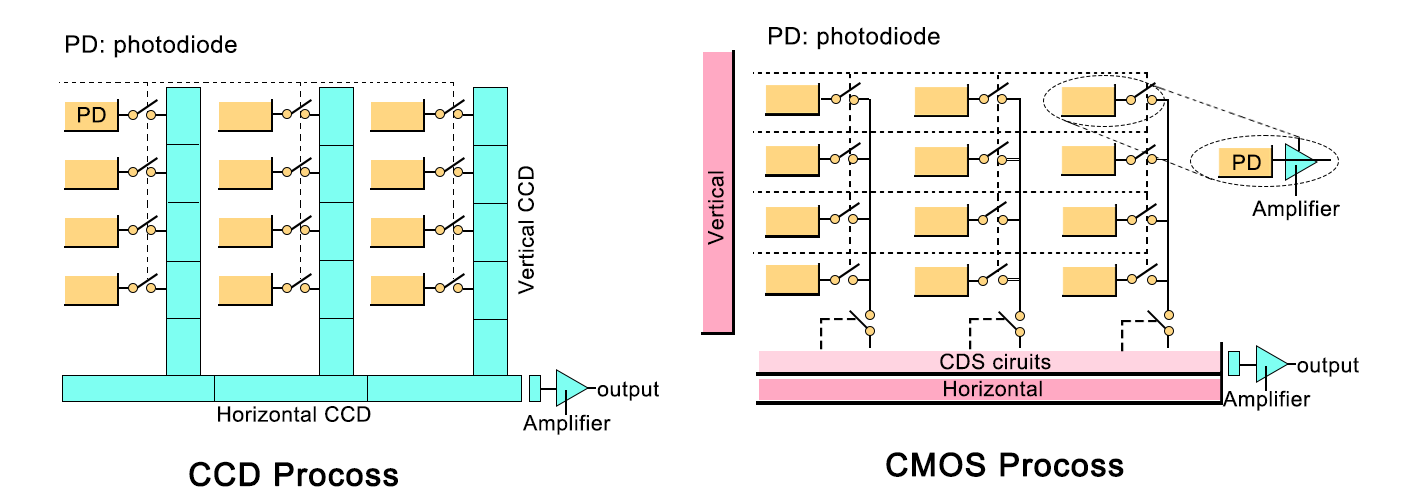
The fundamental differences between CCD and CMOS sensors lie mainly in how they handle data and their overall system tradeoffs. With CCD technology, all the collected electrical charges move through each pixel toward one central amplifier. This setup gives really good image consistency and used to produce much less noise, which made them great for things like night vision equipment or lab work where light levels are very low. But there’s a catch here too. The way CCDs operate serially means they can’t capture images as quickly and tend to consume more electricity during operation. On the other hand, CMOS sensors have tiny amplifiers built right into every individual pixel. This allows multiple areas of the sensor to process information simultaneously, making possible frame rates over 300 frames per second something that matters a lot when inspecting electronic components at scale. These days, improvements in CMOS design using things like pinned photodiodes and double sampling techniques have closed the gap on noise performance compared to older CCD models. For most factory automation applications today, CMOS is clearly winning out because it captures images about ten times faster than similar sized CCD sensors while using dramatically less power sometimes as much as a hundred times less! Plus, these CMOS chips scale better for embedding into various types of machines and devices across different industries.
Critical Performance Metrics: Frame Rate, Pixel Size, Exposure Control, and Quantum Efficiency
Selecting the right area scan camera hinges on four interdependent metrics:
| Metric | Industrial Impact | Typical Range |
|---|---|---|
| Frame Rate | Determines throughput compatibility with moving production lines | 30–500 fps |
| Pixel Size | Balances resolution, sensitivity, and field-of-view; larger pixels gather more light | 1.4–7.4 μm |
| Exposure Control | Enables microsecond-precision timing to eliminate motion blur on conveyors | 1 μs–1 sec adjustable |
| Quantum Efficiency | Directly impacts low-light capability and required illumination intensity | 40–80% (monochrome CMOS) |
Quantum Efficiency or QE basically measures how many incoming photons actually get turned into usable electrons. This matters a lot in fields such as pharmaceutical packaging. Back-illuminated CMOS sensors that hit over 70% QE work really well here because they can still do accurate inspections even when there’s not much light around. Combine these sensors with global shutter tech that captures all image pixels at once instead of scanning them one by one, and manufacturers gain clear images without motion artifacts. The result? They spot tiny defects down to less than 10 microns across in both car parts production lines and electronic component assembly processes where precision is absolutely essential.
Why Choose an Area Scan Camera? Key Advantages for Industrial Automation
Area scan cameras offer unmatched cost efficiency, integration simplicity, and adaptability for automated visual inspection. Their single-exposure, full-frame capture eliminates the complex motion synchronization required by line-scan or 3D profiling systems—making them ideal for stationary parts, intermittent motion, or precisely timed conveyor stops.
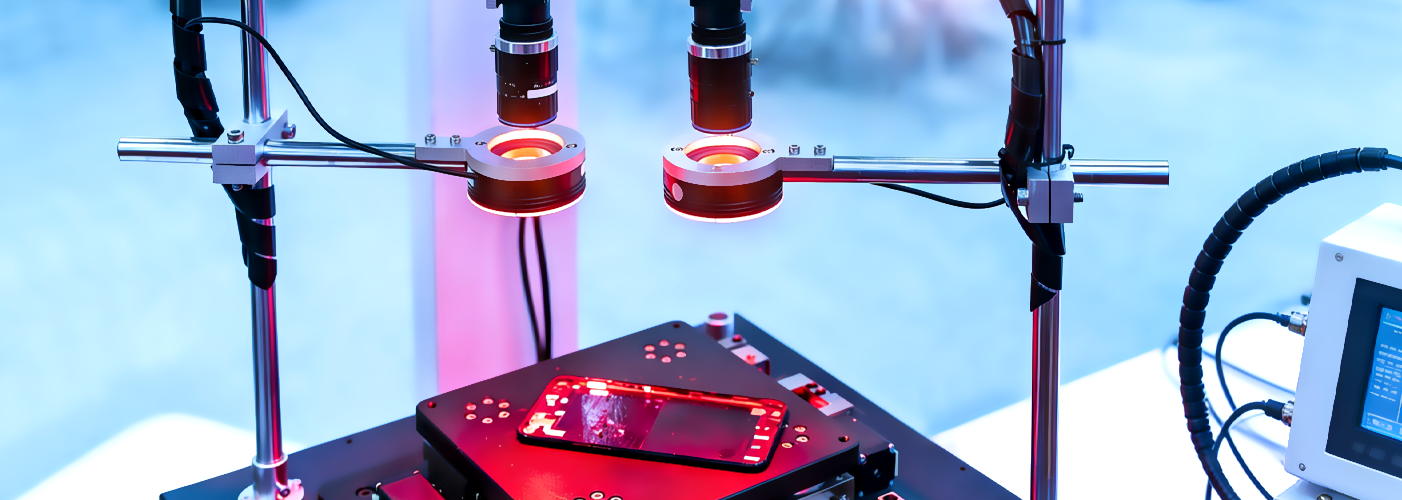
This operational simplicity translates directly to ROI: deployments achieve up to 23% lower integration costs versus alternative architectures while maintaining flexibility across product changeovers and line reconfigurations. In electronics PCB inspection, area scan systems demonstrate 7% higher defect capture rates, per Ponemon Institute’s 2023 industrial vision benchmark study.
Their versatility extends reliably to measurement, positioning, and presence/absence verification—particularly where consistent lighting and object stability are achievable. Benefits include:
- Reduced processing hardware requirements (no need for specialized line-scan frame grabbers or motion controllers)
- Native compatibility with industry-standard machine vision software (e.g., HALCON, VisionPro, OpenCV)
- Lower maintenance overhead from fewer moving components and simpler optical setups
Manufacturers deploy these cameras to achieve near-zero false positives in critical checks—while sustaining throughput up to 60 fps—making them foundational to high-accuracy, high-reliability automation.
Top Industrial Applications of Area Scan Cameras
Precision Quality Inspection: Electronics PCBs, Automotive Components, and Pharmaceutical Packaging
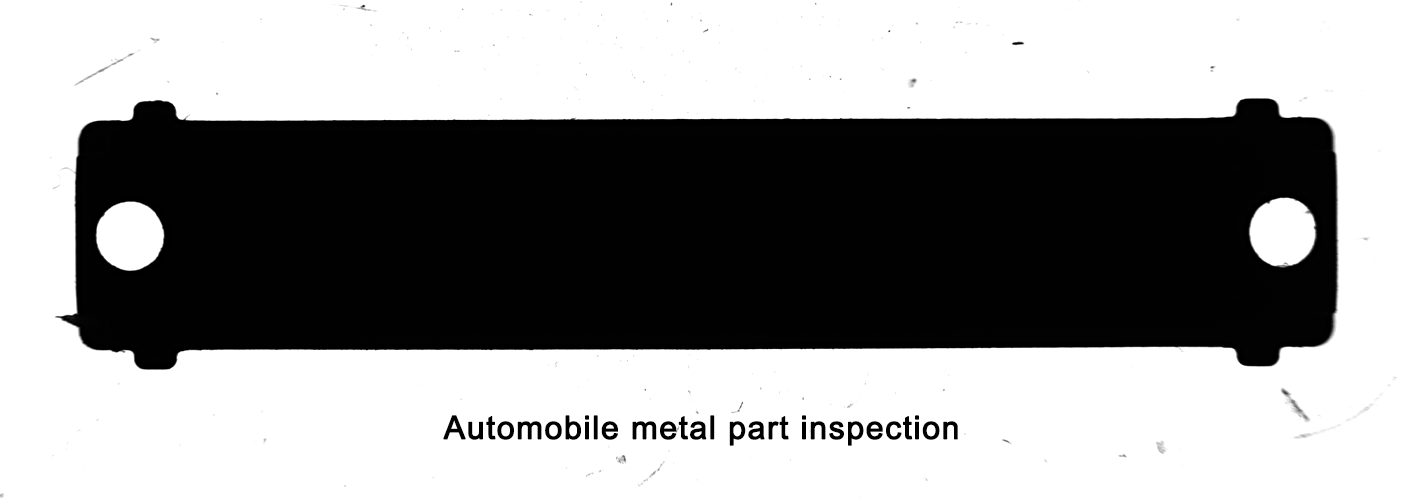
Area scan cameras have become pretty much the go-to solution for detailed 2D inspections in industries where quality matters most. Take electronics manufacturing for instance these devices can spot tiny details down to around 10 microns in size. They catch problems like solder bridges forming between components, find when passive elements are missing altogether, and even detect those pesky BGA chips that get placed incorrectly on printed circuit boards. The automotive industry relies heavily on them too, checking engine blocks and transmission casings within tight tolerances of plus or minus 5 micrometers. Surface issues such as porous areas from casting, leftover machining scratches, or inconsistent coatings don’t stand a chance against their scrutiny. When it comes to pharmaceutical packaging operations, area scan cameras ensure that blister packs are properly sealed, labels face the right direction, text remains readable, and pills are counted accurately with nearly perfect reliability. These checks happen incredibly fast too, processing over 60 units per minute without breaking stride. Because everything happens in one quick snapshot, defects get flagged instantly and faulty products get rejected before they reach customers, cutting down waste significantly compared to older inspection techniques or relying solely on human inspectors.
Measurement, Positioning, and Defect Detection in High-Accuracy Manufacturing Workflows
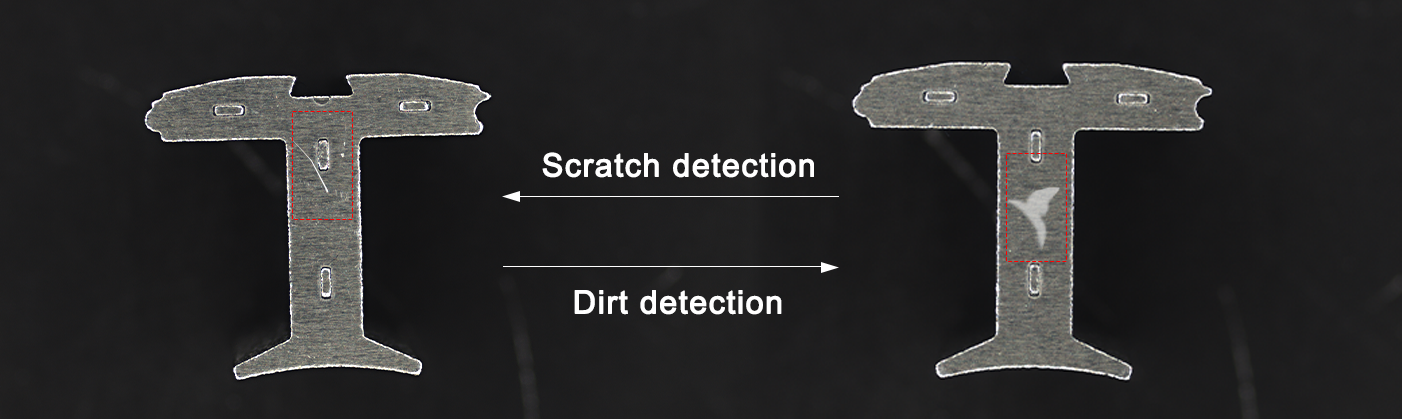
Area scan cameras go well beyond simple inspection work, acting almost like precision measurement tools in manufacturing settings. These devices can measure all sorts of dimensions without touching anything - distances, angles, radius measurements, diameter checks - and repeat those measurements within just 3 micrometers. That kind of accuracy helps meet GD&T standards and confirms product quality when checking the first sample pieces. When connected to robotic systems, these cameras provide amazing positioning control down to sub-pixel levels. Think about placing tiny semiconductor dies or aligning battery cells where even the smallest error matters. The cameras have what’s called a global shutter feature which means they capture clear images even when things are moving quickly through production lines. They spot tiny issues like hairline fractures in toughened glass surfaces, problems with welds on pipe connections, or weaving flaws in specialized fabrics. All this happens while running full inspections on every item passing by at conveyor belt speeds reaching 2 meters per second, and manufacturers typically see rejection errors happening less than half a percent of the time.
Selecting the Right Area Scan Camera: Matching Specifications to Application Needs
Picking the right area scan camera involves matching key specs to what the actual setup can handle physically and operationally. Resolution is usually where to start looking. Sensors above 5 megapixels work great for spotting tiny details during PCB inspections, but these cameras eat up more processing power and need bigger storage space. So manufacturers have to weigh those needs against what their existing vision systems can actually process without slowing down production. When dealing with fast moving assembly lines, like those sorting auto parts at speed, frame rate becomes king. Cameras capable of 100 frames per second or better help eliminate motion blur issues that plague slower models. Sometimes this means going with a slightly less detailed image just to keep things running smoothly through the factory floor.
Sensor type remains context-dependent: CMOS is preferred for speed, power efficiency, and cost in most factory-floor applications; CCD retains niche value only in ultra-low-noise, static-scene scenarios like certain pharmaceutical or microscopy tasks.
Key specification-application pairings include:
| Specification | Application Consideration | Performance Impact |
|---|---|---|
| Pixel Size | Low-light metal part inspection | Larger pixels (≥3.45 μm) increase photon collection, reducing image noise by up to 40% |
| Global Shutter | Fast-moving conveyor systems | Eliminates motion distortion—essential for accurate measurement and defect localization |
| Quantum Efficiency | Solar cell quality control | Sensors with 80% QE reveal micro-cracks and shunt paths invisible to standard optics |
| Dynamic Range | Welding seam inspection | 100 dB+ range preserves detail in extreme contrast environments (e.g., arc flash + base metal) |
Getting exposure right matters a lot when dealing with different lighting situations. Short exposures below 10 microseconds help avoid image overload from those intense strobe lights, whereas exposures stretching out to nearly a full second work better in darker environments. When it comes to setting things up, GigE Vision makes life easier with its plug and play setup through regular Ethernet cables that can run up to 100 meters long. This works great for factories spread across multiple locations. Camera Link still has its place though, mainly in specialized cases where massive data transfer speeds are needed for quick 3D measurements. The bottom line is matching all these specs to what actually happens on the production floor leads to better results overall fewer bad readings and faster processing times across the board.
Ready to Elevate Your Industrial Inspection with Area Scan Cameras?
Area scan cameras are the foundation of reliable, high-accuracy automated inspection—no vision system can deliver consistent results without a camera matched to your application's precision, speed, and environmental needs. By aligning sensor type, performance metrics, and ruggedness to your production workflow, you'll unlock lower false reject rates, higher throughput, and measurable ROI for your manufacturing operation.
For industrial-grade area scan camera solutions tailored to your unique application, or to build a fully integrated machine vision system with complementary lenses, lighting, and software (as offered by HIFLY), partner with a provider rooted in industrial machine vision expertise. HIFLY's 15 years of experience spans area scan cameras, line scan cameras, and end-to-end vision systems—backed by ISO 9001:2015 certification, 30+ invention patents, and support for 2,500+ clients across 30+ countries. Contact us today for a no-obligation consultation to optimize your area scan camera setup.