EN
EN


Industrial Lens Applications in Manufacturing & Robotics
Why Industrial Lens Performance Defines Machine Vision Success
The Core Challenge: Bridging Optical Physics with Real-World Production Demands
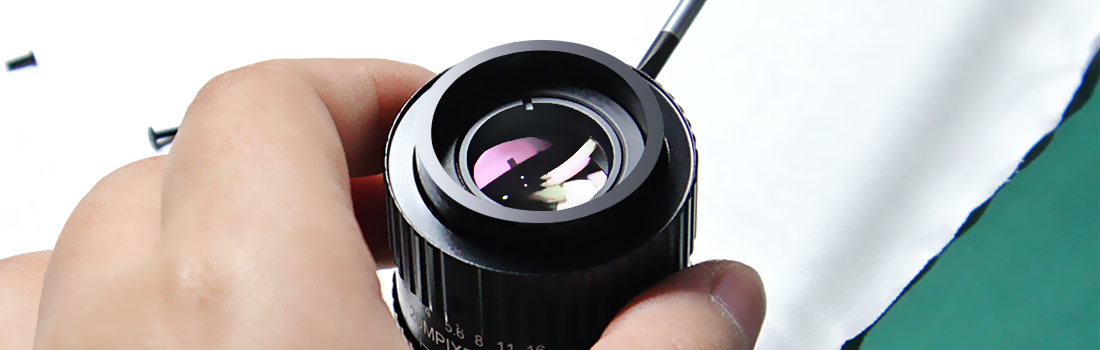
Industrial lenses have to deal with constant mechanical wear and environmental challenges all day long. Think about vibrations, temperature fluctuations often going past ±15°C, plus dealing with oil mist and tiny particles getting everywhere, yet they still need to keep their optical precision down to the micron level. These aren't your lab quality optics we're talking about here. On factory floors, lenses face real-world issues like conveyor belts moving at over 2 meters per second and sudden changes in surrounding conditions. According to research published last year in an automation journal, nearly seven out of ten machine vision problems actually come from optics breaking down under these harsh conditions. Engineers really struggle with keeping important specs intact when temperatures swing or humidity affects how light bends through the glass. That's why manufacturers are now developing special lens housings that reduce internal stress and applying advanced anti-reflective coatings at the nanoscale level. These coatings not only push away dirt and grime but also maintain better than 95 percent light transmission, which is absolutely crucial for clear imaging in industrial settings.
Key Optical Parameters That Make or Break Inspection & Guidance: Resolution, DOF, Distortion, and MTF
Four interdependent optical parameters govern industrial lens effectiveness in automated systems:
- Resolution must exceed sensor Nyquist frequency by 20–30% to prevent aliasing during sub-pixel defect detection.
- Depth of Field (DOF) determines tolerance for part height variation; insufficient DOF contributes to 19% of inspection errors (A3 Automation Report 2024).
- Distortion below 0.1% is essential for metrology—where just 1° angular error translates to a 500 µm positional deviation at 1 m working distance.
- MTF, measuring contrast retention across spatial frequencies, must exceed 0.6 at 100 lp/mm to reliably decode 2D codes on reflective surfaces.
Because optimizing one parameter often compromises another, application-specific balancing—enabled by computational optical design—is essential.
| Parameter | Target Threshold | Failure Impact | Compensation Technique |
|---|---|---|---|
| Resolution | ≥1.5x sensor Nyquist | Blurred edges, false rejects | Telecentric optics |
| DOF | ≥±3% of WD | Focus-related scrap (up to 12%) | Aperture optimization |
| Distortion | <0.3% barrel/pincushion | Dimensional misreads | Software correction |
| MTF | 0.5 @ 50 lp/mm | Contrast loss in low-light | Anti-reflective coatings |
Industrial Lens Applications in High-Precision Automated Inspection
Semiconductor Wafer Inspection: How Telecentric Industrial Lenses Achieve Sub-5µm Defect Detection
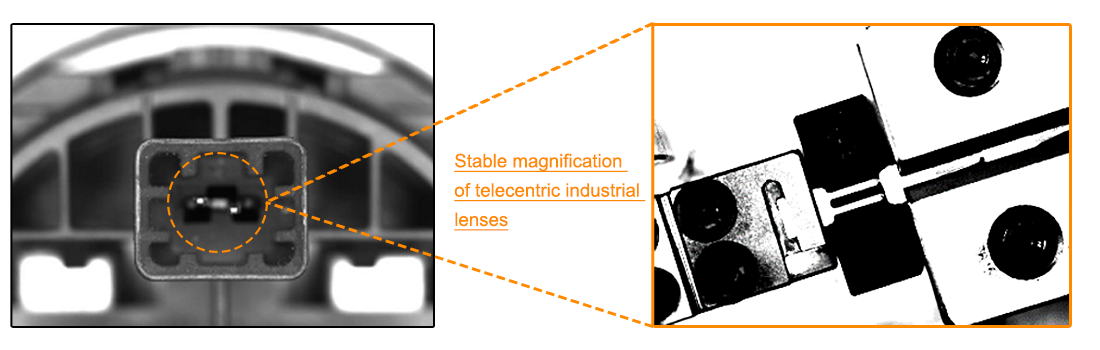
Industrial telecentric lenses make it possible to spot defects smaller than 5 microns on semiconductor wafers because they get rid of those pesky perspective distortions and keep magnification consistent no matter what the working distance happens to be. The secret sauce here is their parallel light path design, which keeps measurements stable even when dealing with those tricky height variations that come up naturally in multi layer 3D NAND structures during manufacturing. And let's not forget the bottom line impact these lenses have. They cut down on false rejects by around 30% in large scale fabrication plants, which saves companies serious money over time. Plus they work great in cleanrooms certified under ISO 14644-1 standards, so there's no compromise on quality control either.
Food & Pharma Packaging Verification: Sealed, IP67-Rated Industrial Lenses for Harsh-Line Environments
Industrial lenses rated IP67 work great on packaging lines regulated by USDA and FDA standards. These lenses handle high pressure wash downs, steam cleaning, and chemicals without losing their optical quality. The housing is completely sealed against moisture and built with materials that resist corrosion. They perform reliably even when subjected to vibrations as intense as 15G forces and operate across temperatures ranging from minus ten degrees Celsius all the way up to sixty degrees. For food processing facilities especially, this matters a lot because one small packaging error could lead to massive recall costs exceeding seven hundred forty thousand dollars according to Ponemon Institute research from 2023. That makes durable optics essential equipment rather than something extra nice to have. Compliance requirements and controlling expenses depend heavily on having inspection systems that won't fail under harsh conditions.
Industrial Lens Integration in Robotics Perception Systems
Dynamic Guidance: Mitigating Motion Blur and Calibration Drift at 300+ mm/s with Synchronized Lens-Sensor Design
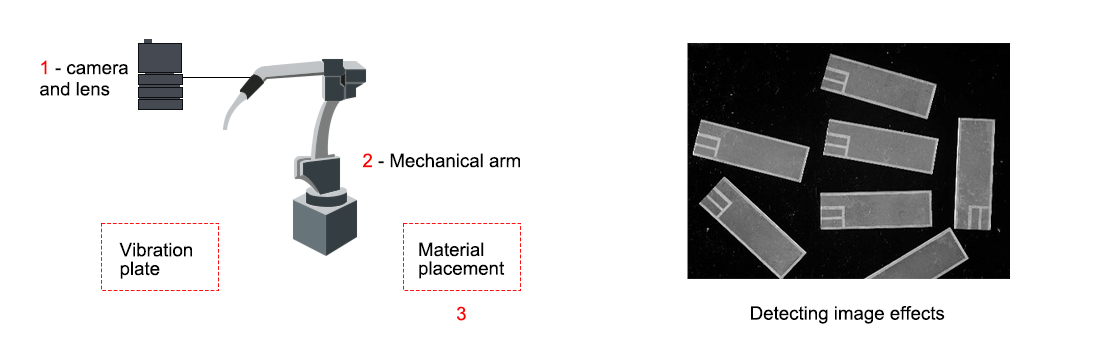
Getting robots to move faster than 300 millimeters per second creates serious challenges for image capture systems. At these speeds, lenses and sensors need to work together almost perfectly to avoid blurry images and drifting calibration. Special mounts that resist vibrations keep everything aligned even when subjected to strong shocks above 5 Gs. Materials that don't expand much with temperature changes help maintain focus despite heat from motors or environmental shifts. The depth of field has to be just right too so the camera stays focused during fast movements. According to Robotics Today last year, if vibrations go beyond 5 G levels, positioning accuracy drops around 12%. Good design solves this problem by matching the camera's shutter timing with robot movements, taking sharp pictures in just half a millisecond at top speed. Real time adjustments also fix tiny drift issues as they happen. This kind of precision matters a lot for tasks where components have to fit together exactly, and for checking product quality while things are still moving along production lines.
Selecting the Right Industrial Lens: A Practical Decision Framework
Application-First Criteria: Working Distance, FOV, Resolution, and Environmental Ruggedness (IP67, Shock Resistance)
Lens selection must begin—not end—with the application’s physical and operational realities. Four criteria are non-negotiable:
- Working distance (WD) dictates integration feasibility within robotic cells or conveyor layouts.
- Field of view (FOV) must match inspection coverage needs: too narrow risks missing defects; too wide wastes sensor resolution.
- Resolution must resolve target features—for example, matching a 5 µm semiconductor defect to sensor pixel pitch.
- Environmental ruggedness, including IP67 sealing and 15G shock resistance, ensures reliability in washdown, high-vibration, or thermally unstable settings.
Overlooking these factors correlates with 22% higher downtime costs (Ponemon 2023). Validation against actual operating conditions—not datasheet specs alone—is the only way to guarantee long-term machine vision performance.
Ready to Optimize Your Manufacturing & Robotics with Industrial Lenses?
Industrial lenses are the unsung heroes of automated manufacturing and robotic perception. Their performance directly impacts defect detection accuracy, robotic guidance reliability, and overall production efficiency, even in the harshest industrial conditions. From telecentric lenses for semiconductor wafer inspection and IP67 - rated optics for food/pharma packaging to synchronized lens - sensor designs for high - speed robotics, the right optical solution is tailored to your unique application's needs.
With 15 years of machine vision expertise, HIFLY Technology offers a comprehensive range of industrial lenses for manufacturing and robotics, including telecentric, IP67 - sealed, and vibration - resistant options. These are engineered for seamless integration with industrial cameras and robotic perception systems. Backed by ISO 9001:2015 certification and global technical support, our optics are calibrated to deliver lab - precise performance in the real - world factory floors and robotic workflows.
Contact us today for a no - obligation consultation to select the industrial lens that aligns with your manufacturing or robotics application's precision, environmental, and integration needs.