EN
EN


The Application of Machine Vision Cameras in License Plate Recognition Projects
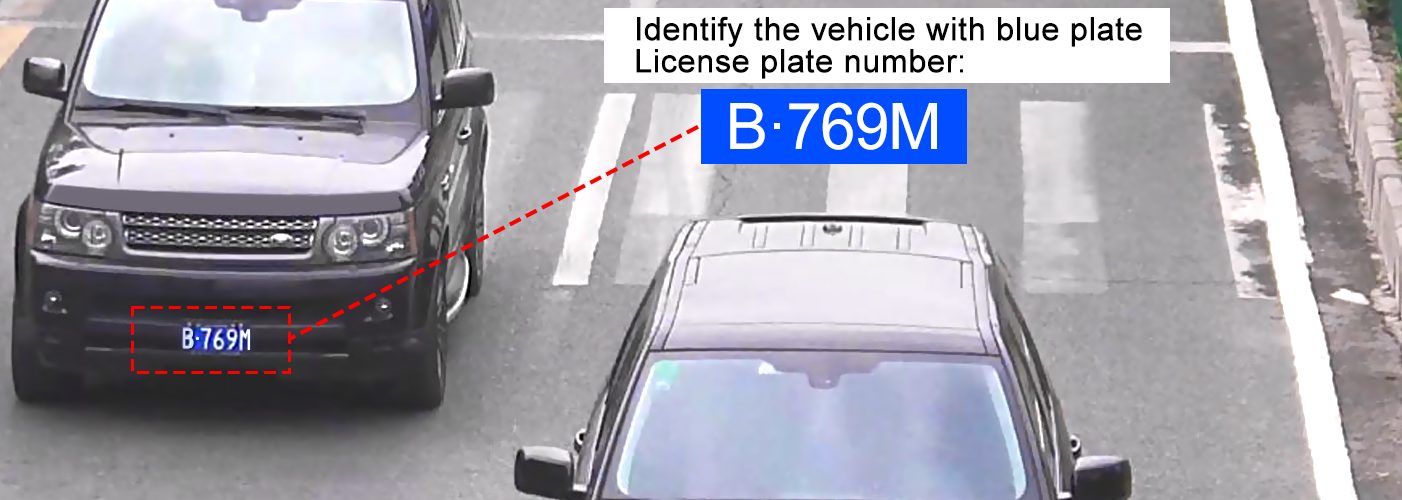
Machine vision cameras are the core of LPR systems, determining accuracy by capturing high-quality license plate images. This article briefly covers their selection, software coordination and practical optimization for LPR projects.
1. Camera Selection: The Foundation of LPR
LPR-specific machine vision cameras require high-definition imaging and strong environmental adaptability. Key criteria include resolution (2-megapixel for short distances, 4-5-megapixel for long distances), frame rate (15-30 FPS for low speed, 30-60 FPS for high speed), and light performance (≤0.01 lux sensitivity, ≥120 dB WDR, integrated IR lighting).
Lenses should match capture distance (8-12 mm for short, 12-25 mm for long, zoom for variable scenarios) with a ≤30° camera-vehicle angle. Interfaces like Gigabit Ethernet (long-distance) and USB 3.0 (small-scale) plus GenICam support simplify system integration.
2. Software Coordination: Realizing Intelligent Recognition
Machine vision cameras provide image data, and LPR software forms a closed loop through preprocessing (optimizing image quality), positioning (locating license plates), segmentation (separating characters), recognition (converting images to text), and data output.
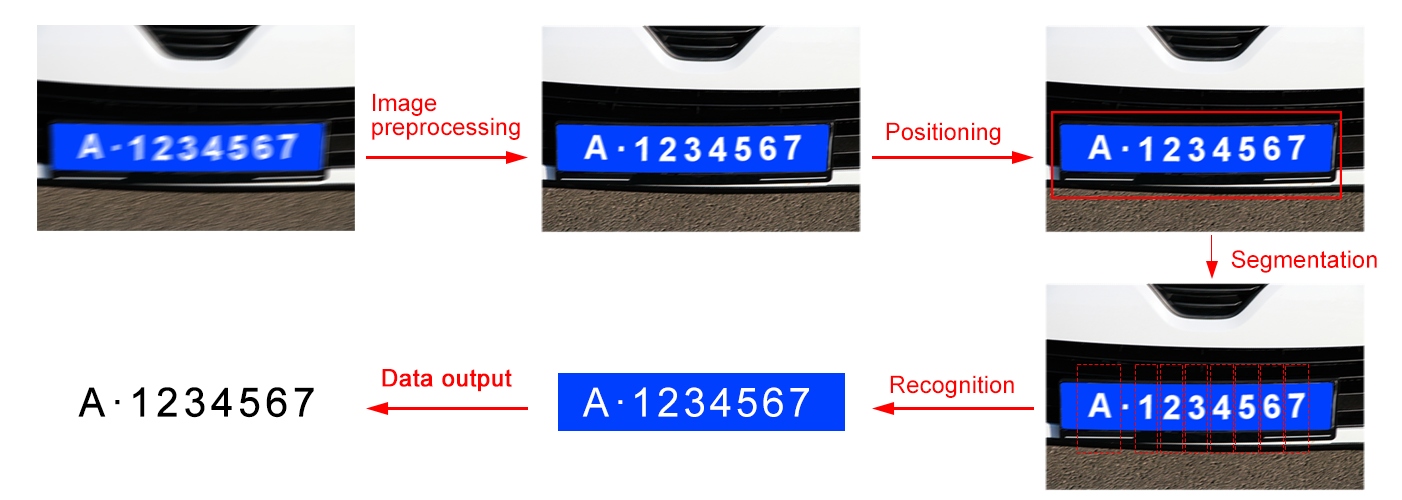
Software performance is closely linked to camera quality: clearer camera images reduce preprocessing difficulty and improve recognition accuracy, while high camera frame rates enable multi-frame comparison for more stable results, integrating with upper-level systems for practical application.
3. Conclusion
In summary, machine vision cameras are the key to the stable and efficient operation of LPR projects, with their selection (focusing on resolution, frame rate, light performance, lenses and interfaces) and software coordination being mutually reinforcing. Regarding price, it varies with camera specifications—2-megapixel basic models are cost-effective for small parking lots, while 4-5-megapixel high-performance cameras with advanced functions are more suitable for high-demand scenarios such as highways, balancing cost and project requirements to achieve optimal LPR application effects.